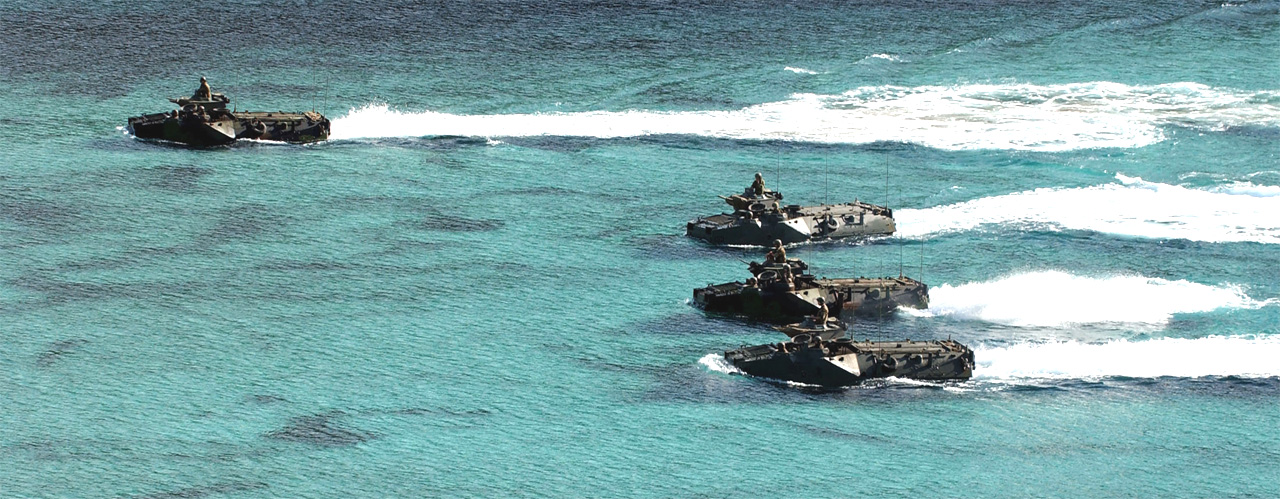
№ 02

Armoured Fighting Vehicles
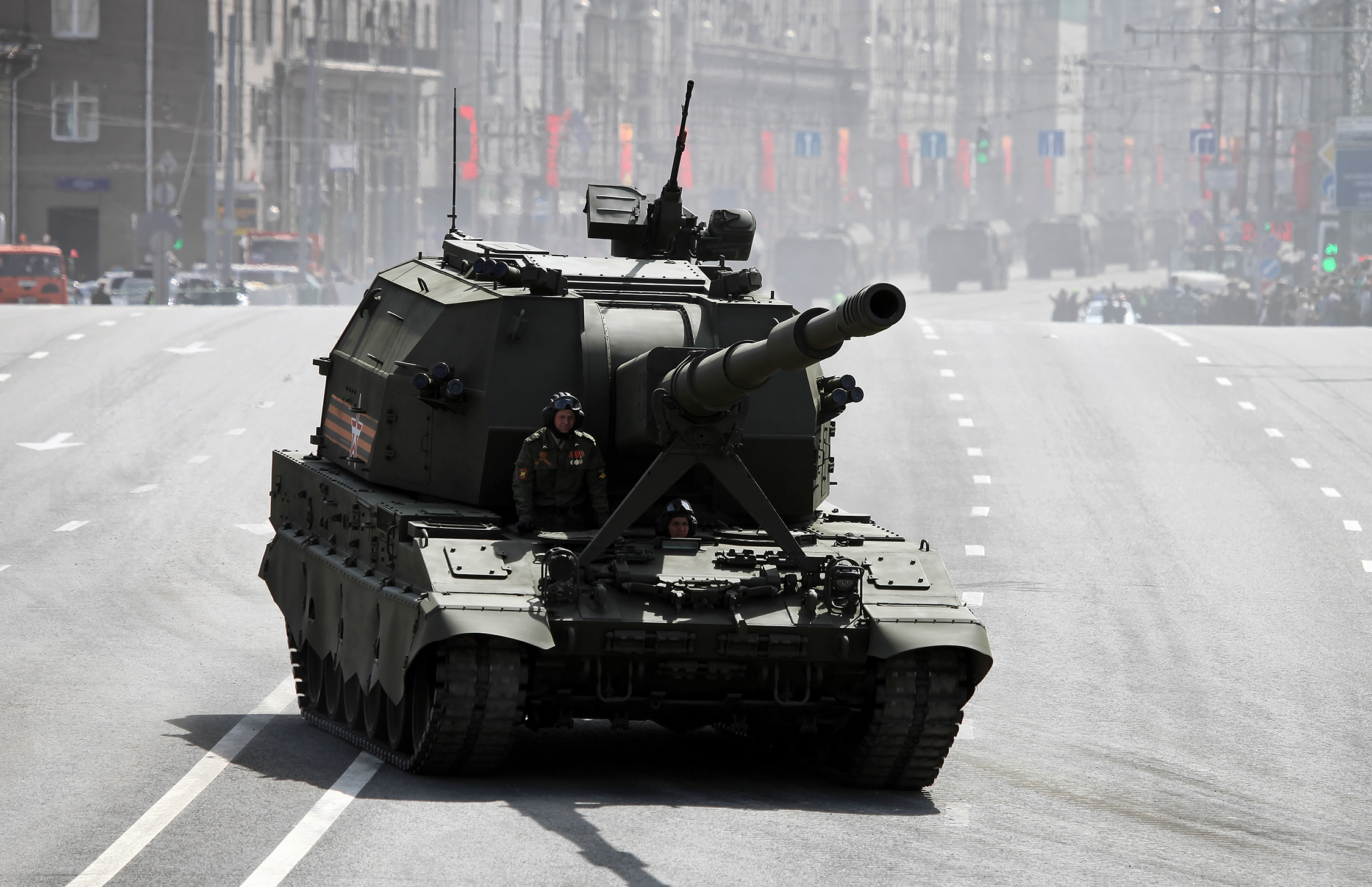
18 entries
AFV · 02 · 001 Self-propelled Gun / Howitzer · Amphibious, divisional level USSR · Russia · RUS

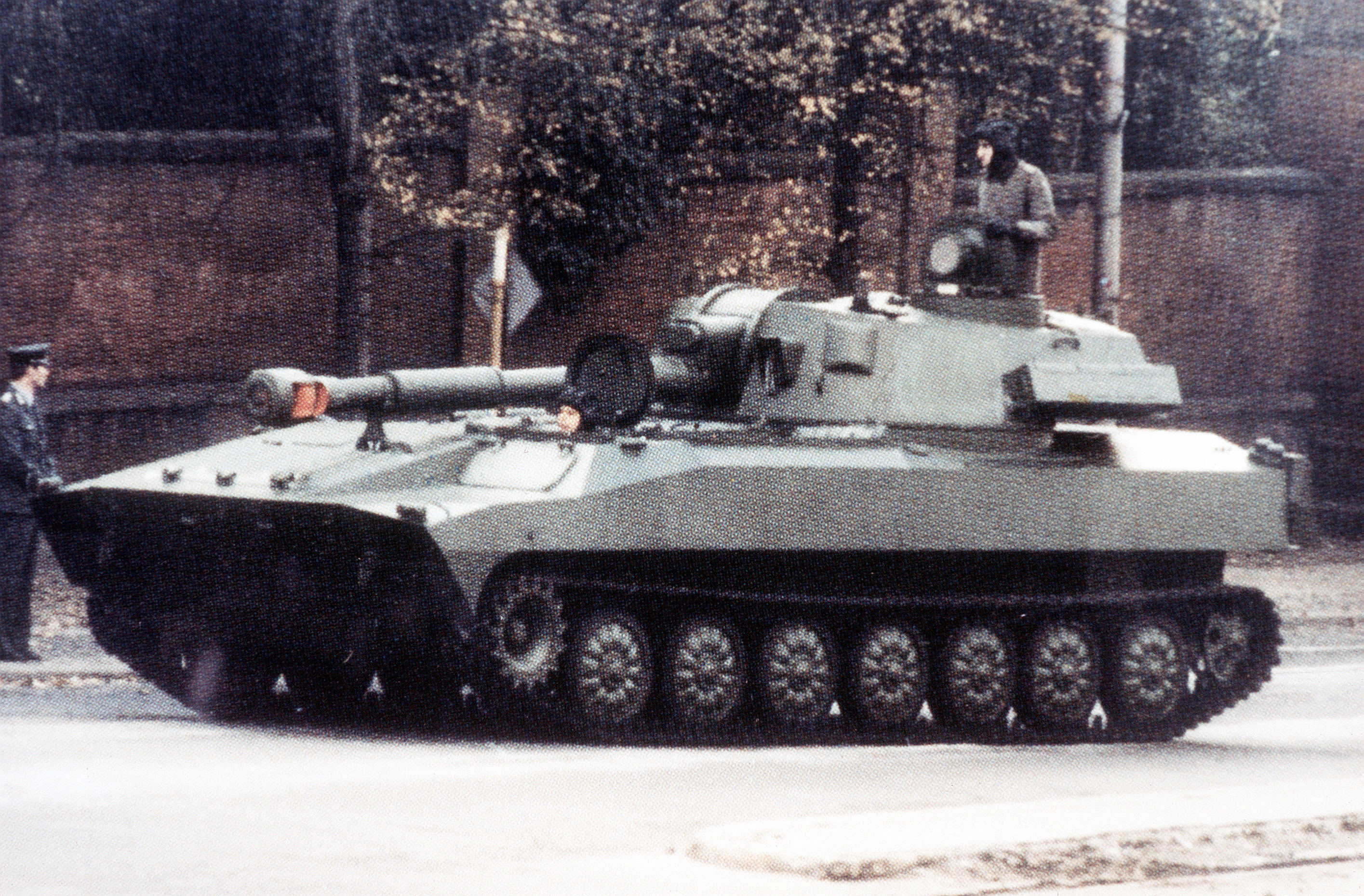
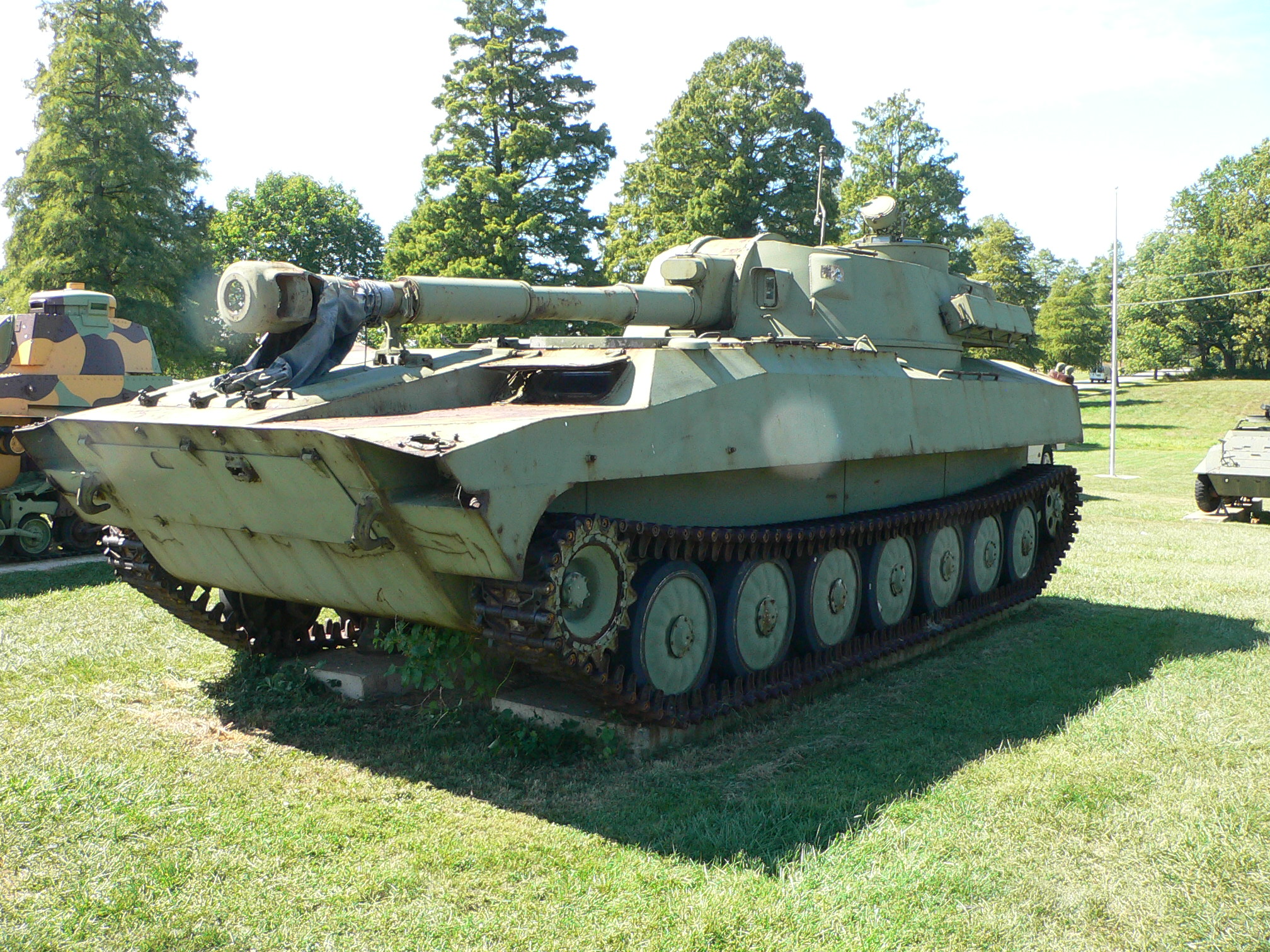
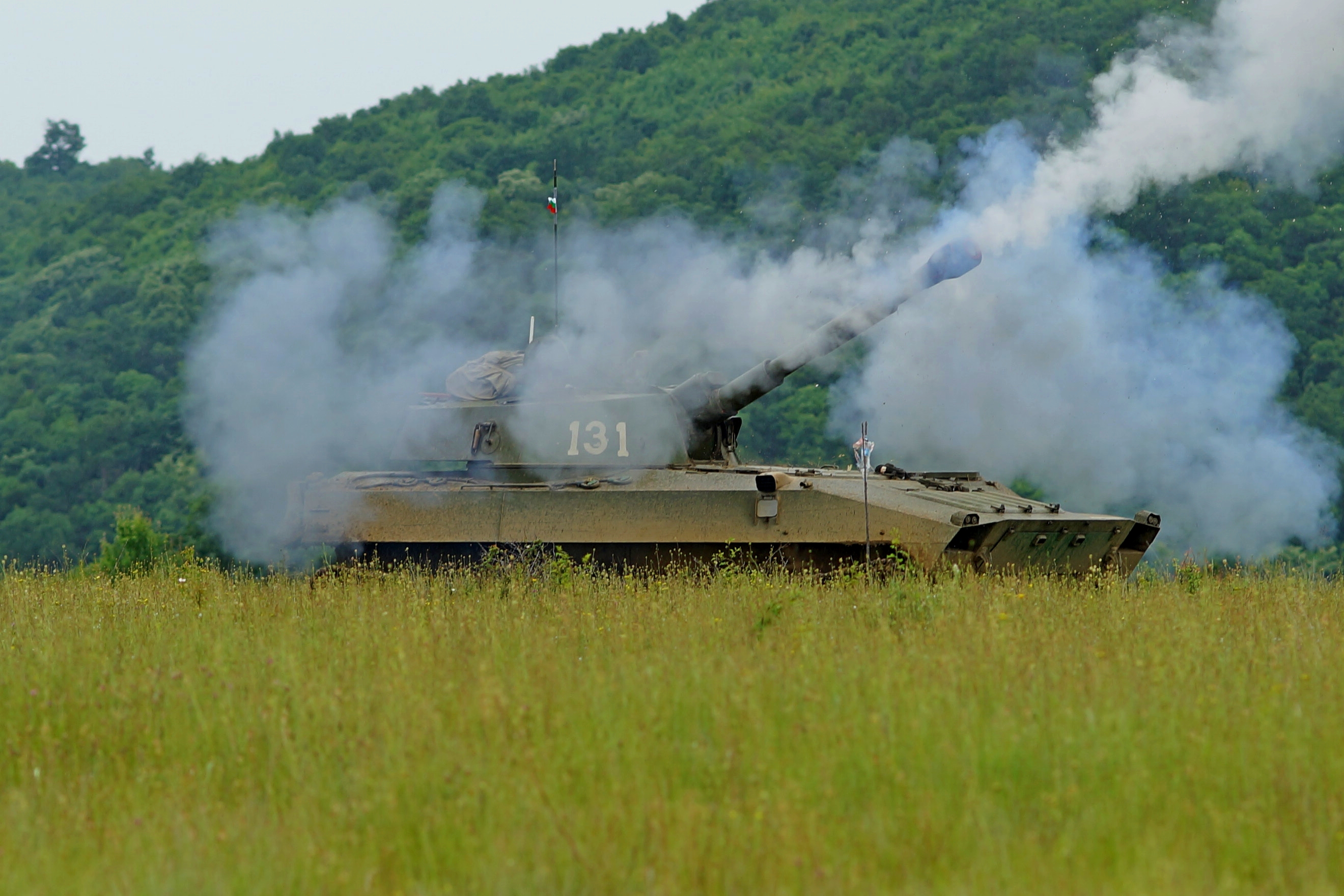
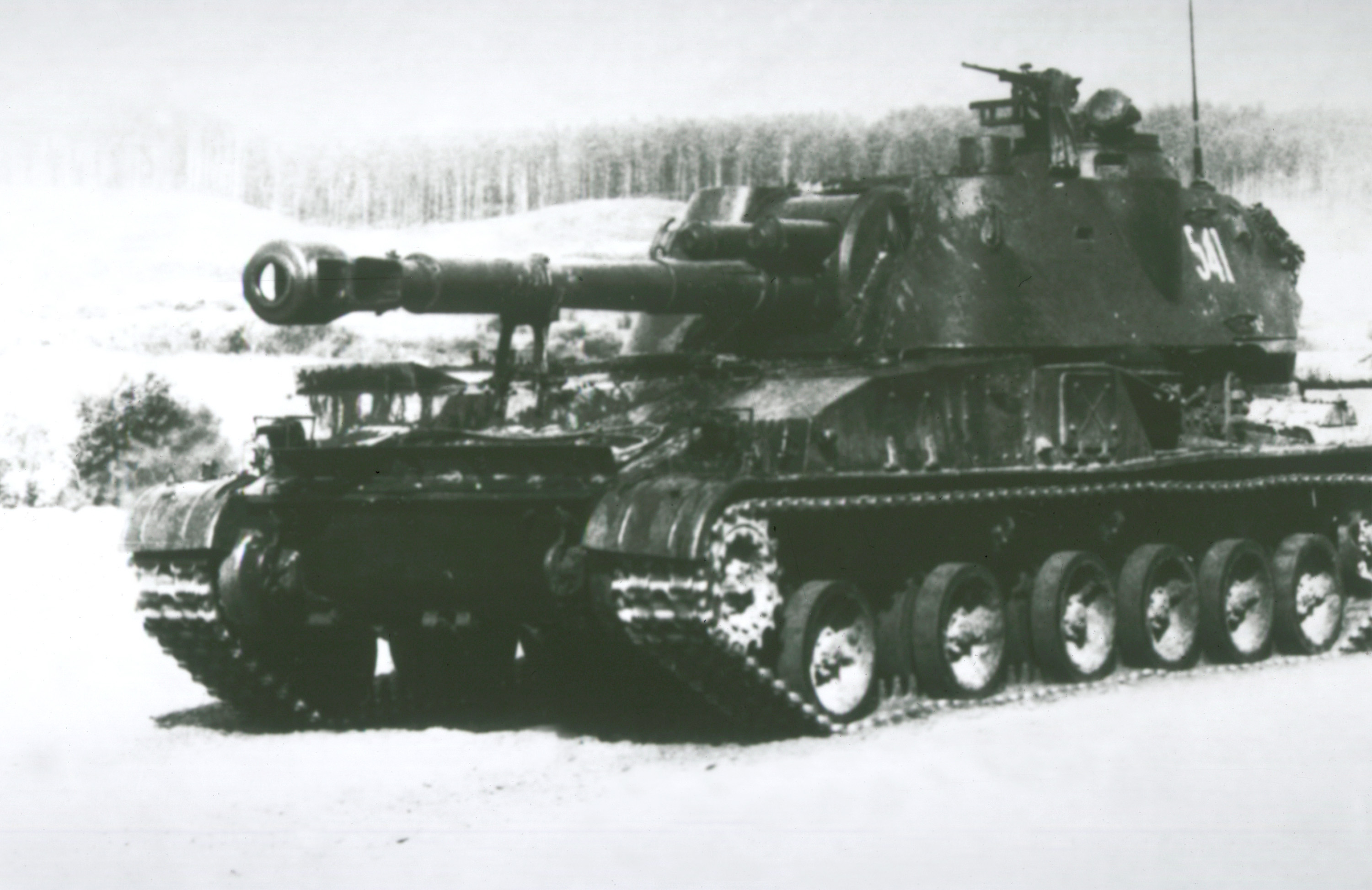
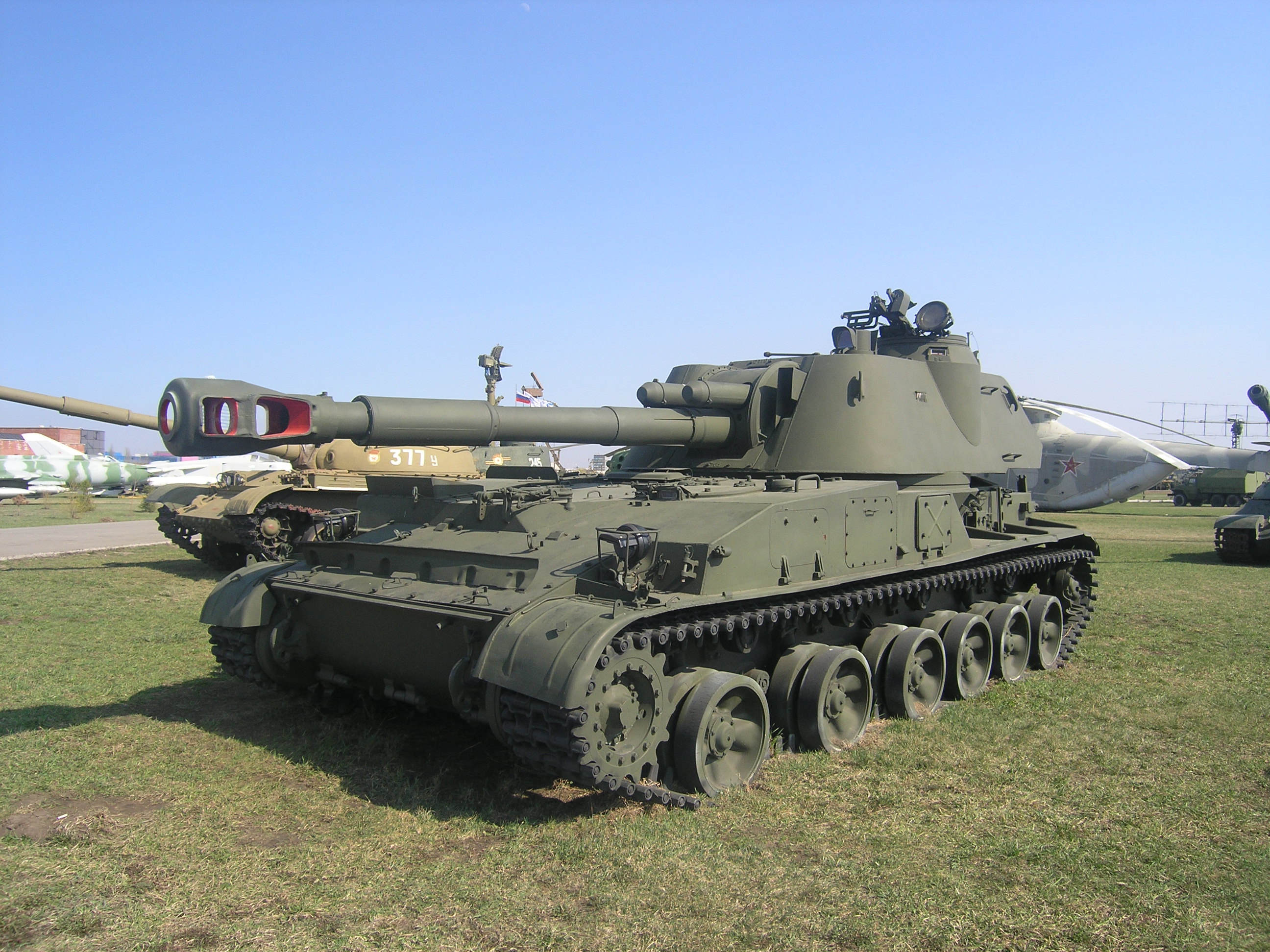
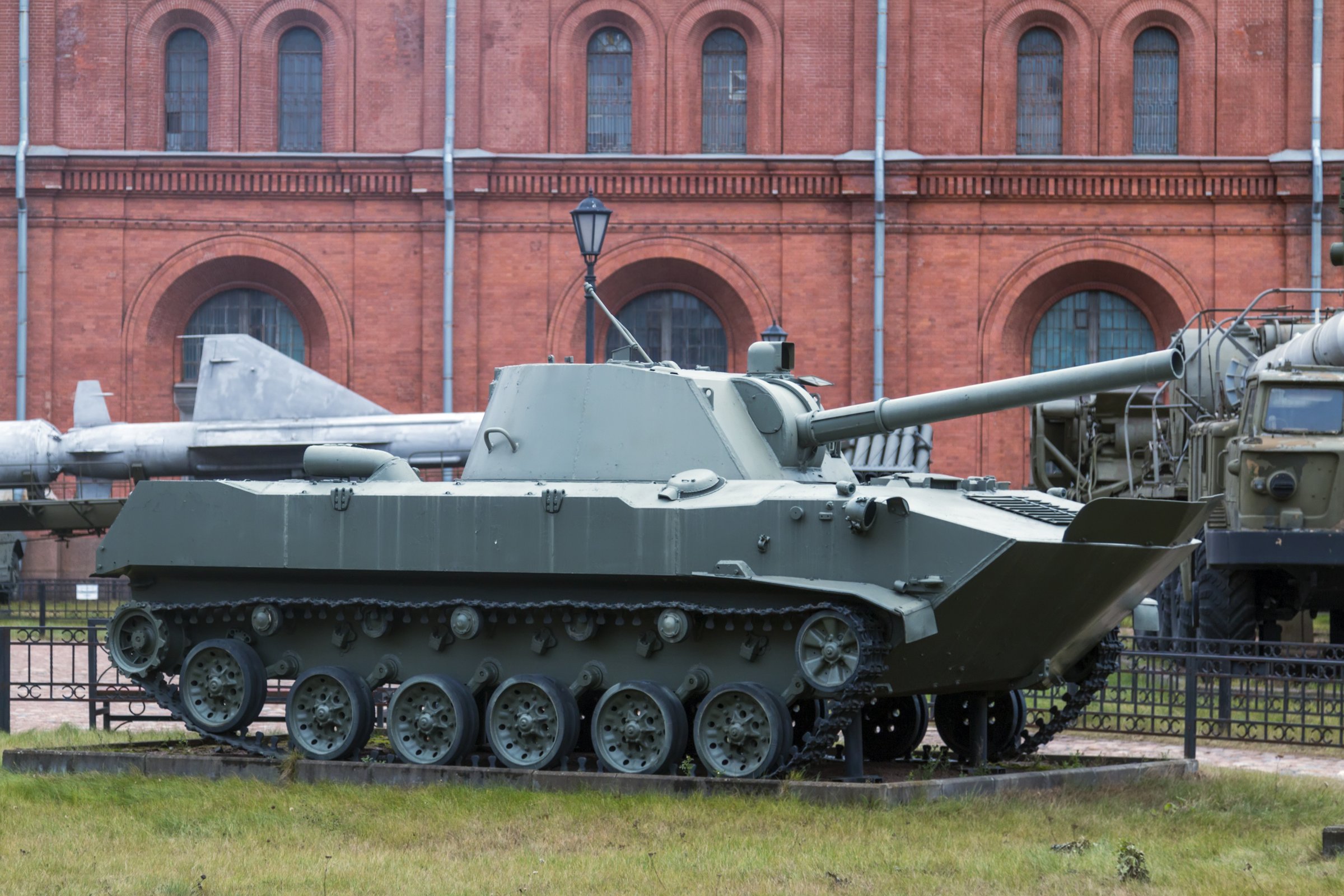
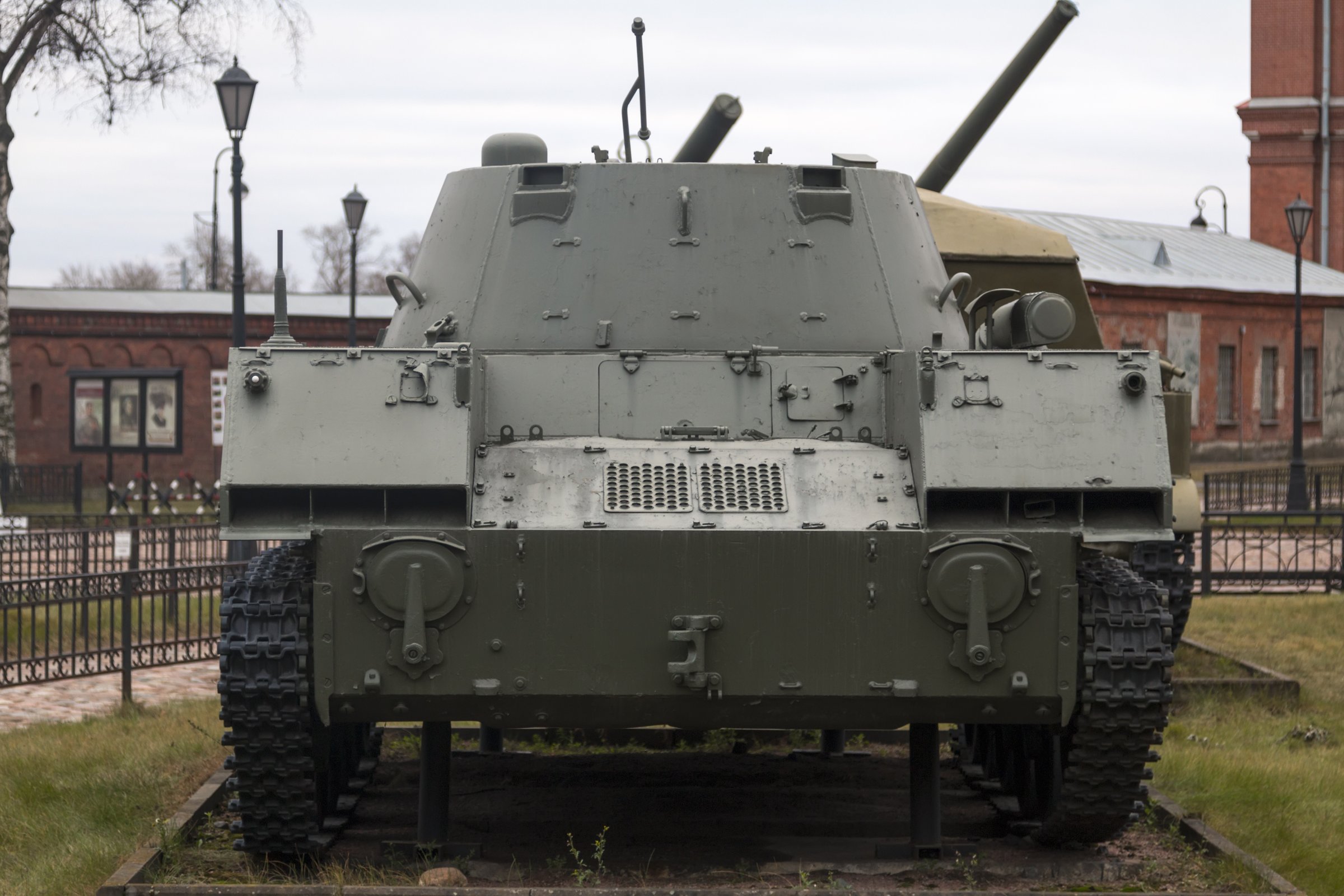
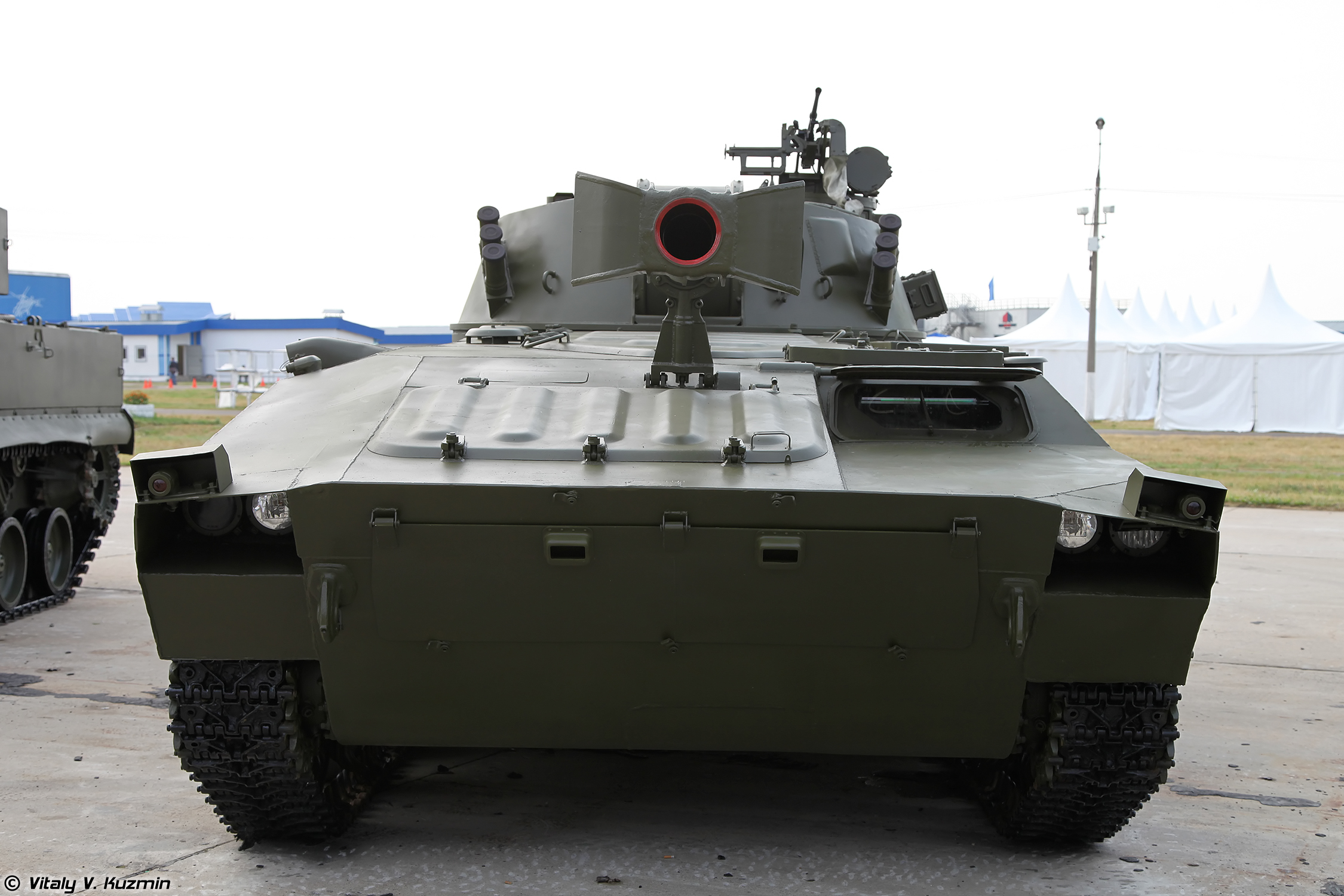
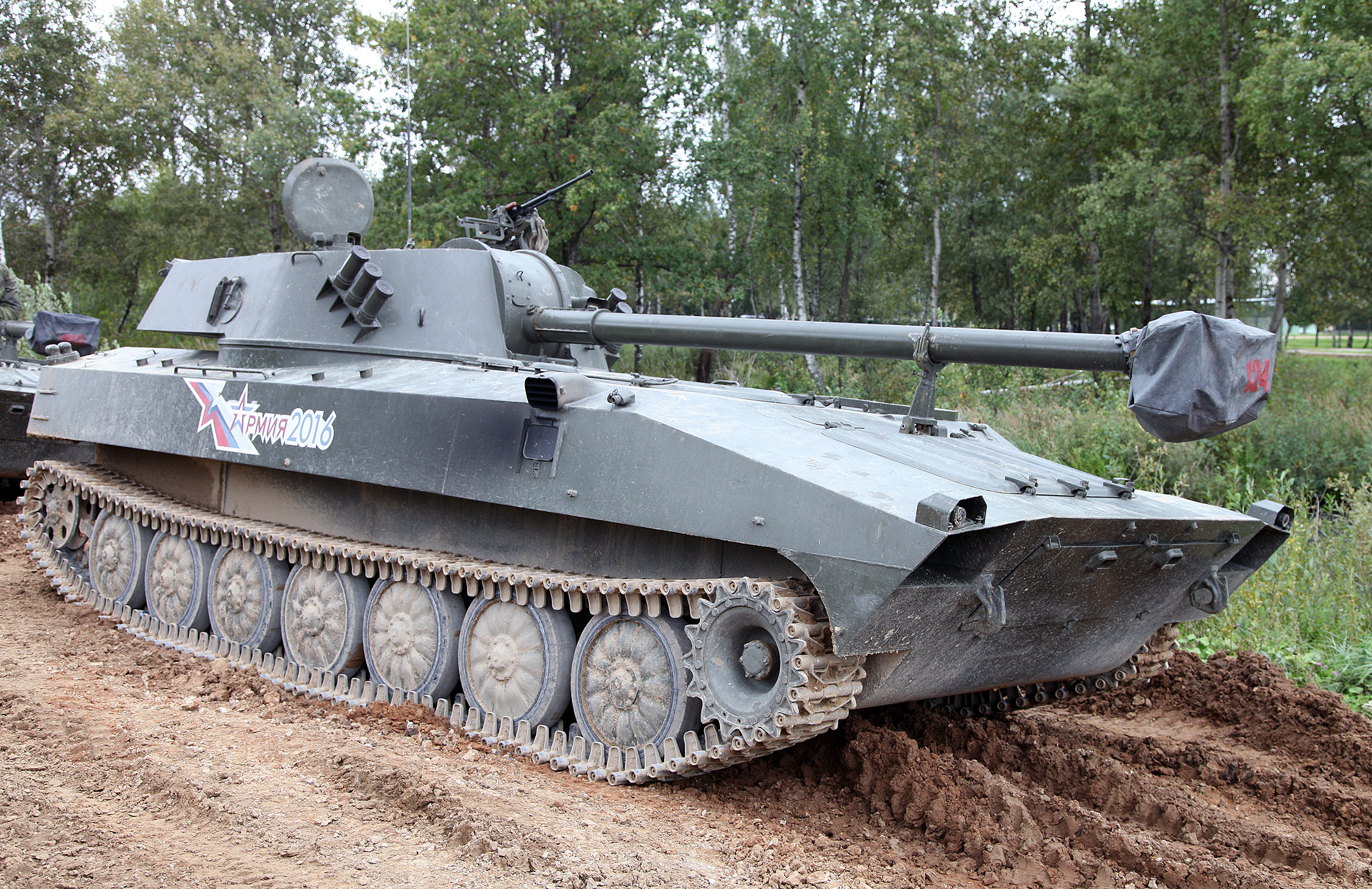
2S1M1“Gvozdika”

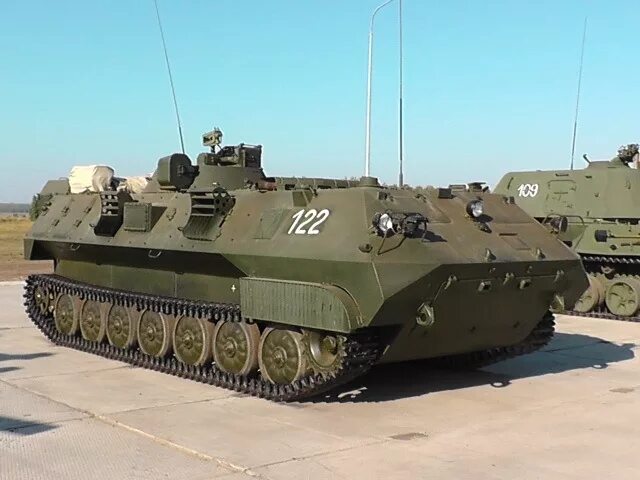
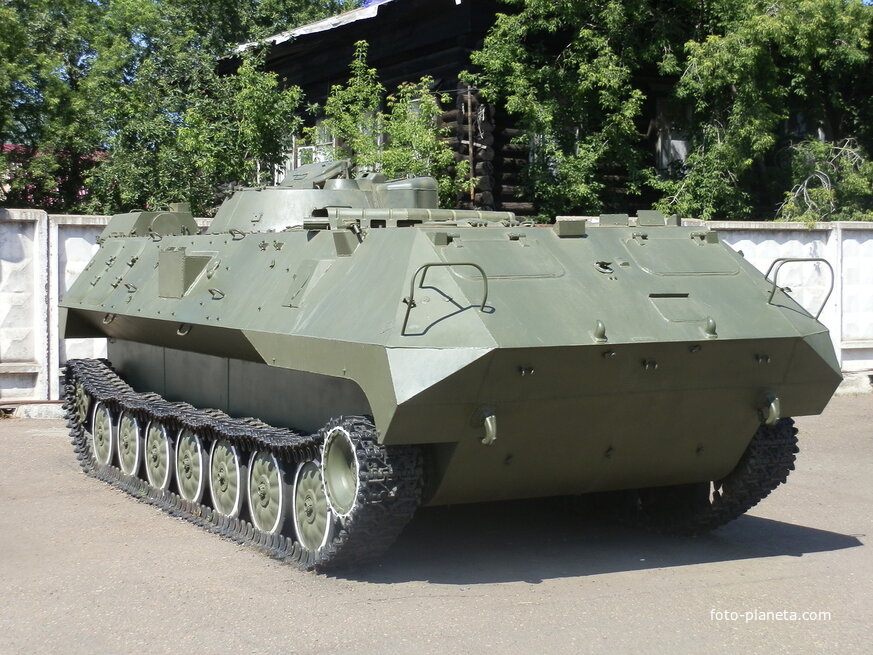
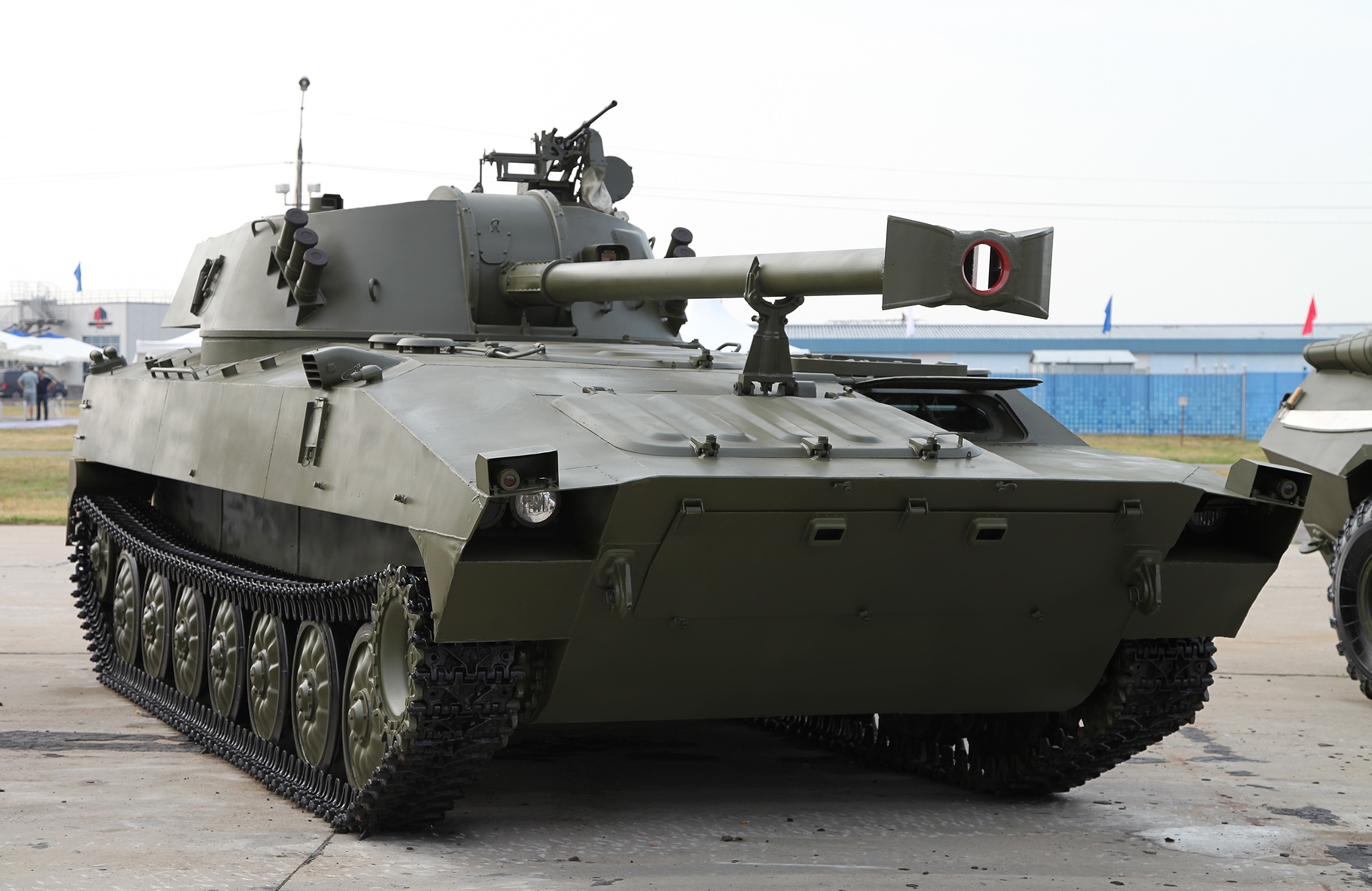
122 mm self-propelled howitzer on MT-LB chassis
M1974 · KhTZ
Fig. 02·001 — side view · photo silhouette
0 — 5 м
2S1 “Gvozdika”: 122 mm 2A31 on the amphibious MT-LB chassis.
Status
In service · since 2024
Выпущено
≈ 10 000 units
Производитель
KhTZ (Kharkov) · VgTZ (Volgograd)

Role

A light amphibious 122 mm self-propelled howitzer at the divisional level, designed to replace the towed M-30 in motorised rifle formations. The turret is mounted on an extended MT-LB chassis, which lets the vehicle ford water obstacles unprepared by churning its tracks. The 2A31 gun — a development of the D-30 barrel — gives a range of up to 15.2 km with HE shells and up to 21.9 km with rocket-assisted projectiles. The M1 variant adds an automated fire-control system (“Mashina-M”), digital communications, and supports the “Kitolov-2M” guided round.

Specifications

  • Combat mass 15,7 t
  • Length (gun forward) 7,26 m
  • Hull length 7,26 m
  • Width 2,85 m
  • Height 2,74 m
  • Ground clearance 0,40 m
  • Crew 4 pers.
  • Chassis MT-LB (extended, 7 road wheels)
  • Engine YaMZ-238N · 240 hp diesel
  • Max speed (road) 60 km/h
  • Max speed (afloat) 4,5 km/h
  • Operational range 500 km
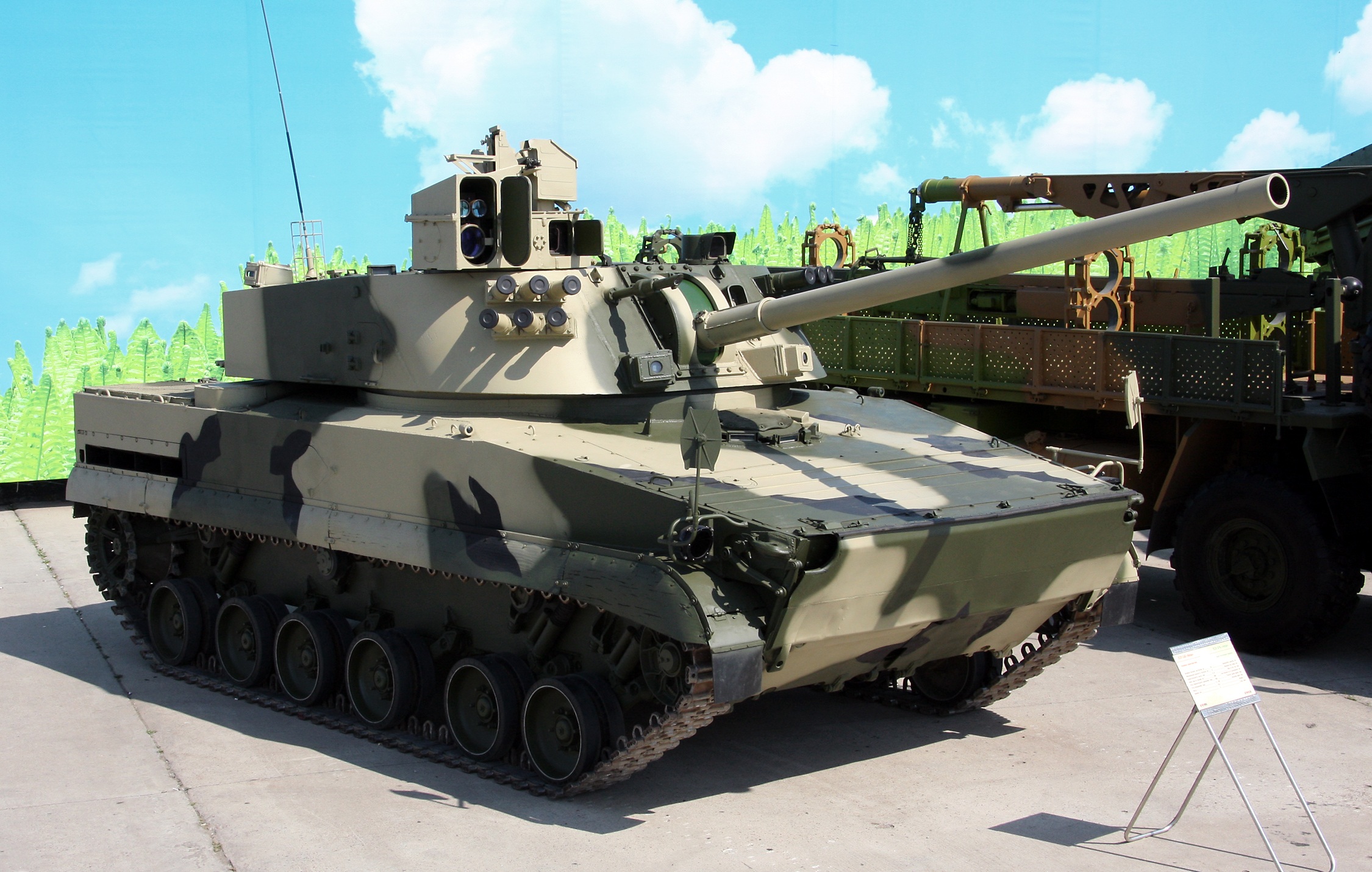
  • Main gun 122 mm 2A31
  • Elevation −3 … +70 °
  • Traverse 360 °
  • Range, HE shell до 15,2 km
  • Range, rocket-assisted до 21,9 km
  • Ammunition load 40 rds
  • Rate of fire 4—5 rds/min
  • Armour до 20 mm (small-arms protection)

Модификации

2С1 «Гвоздика» (base model, since 1971) 2С1М (ammo stowage and comms upgrade) 2С1М1 (automatic FCS, Kitolov-2M, 2003) 2С34 «Хоста» (based on 2S1) Raad-1 (Iran, copy on Boragh chassis)
Family 2S1M1 lineage: 2
  1. AFV · 02 · 001 2S1M1 “Gvozdika” ← you are here САУ · RUS
  2. AFV · 02 · 034 2S34 “Khosta” САУ · RUS

Operators

SUN (USSR, original) RUS BLR UKR POL BUL IRN +20
AFV · 02 · 003 Self-propelled Gun / Howitzer · Divisional level USSR · Russia · RUS

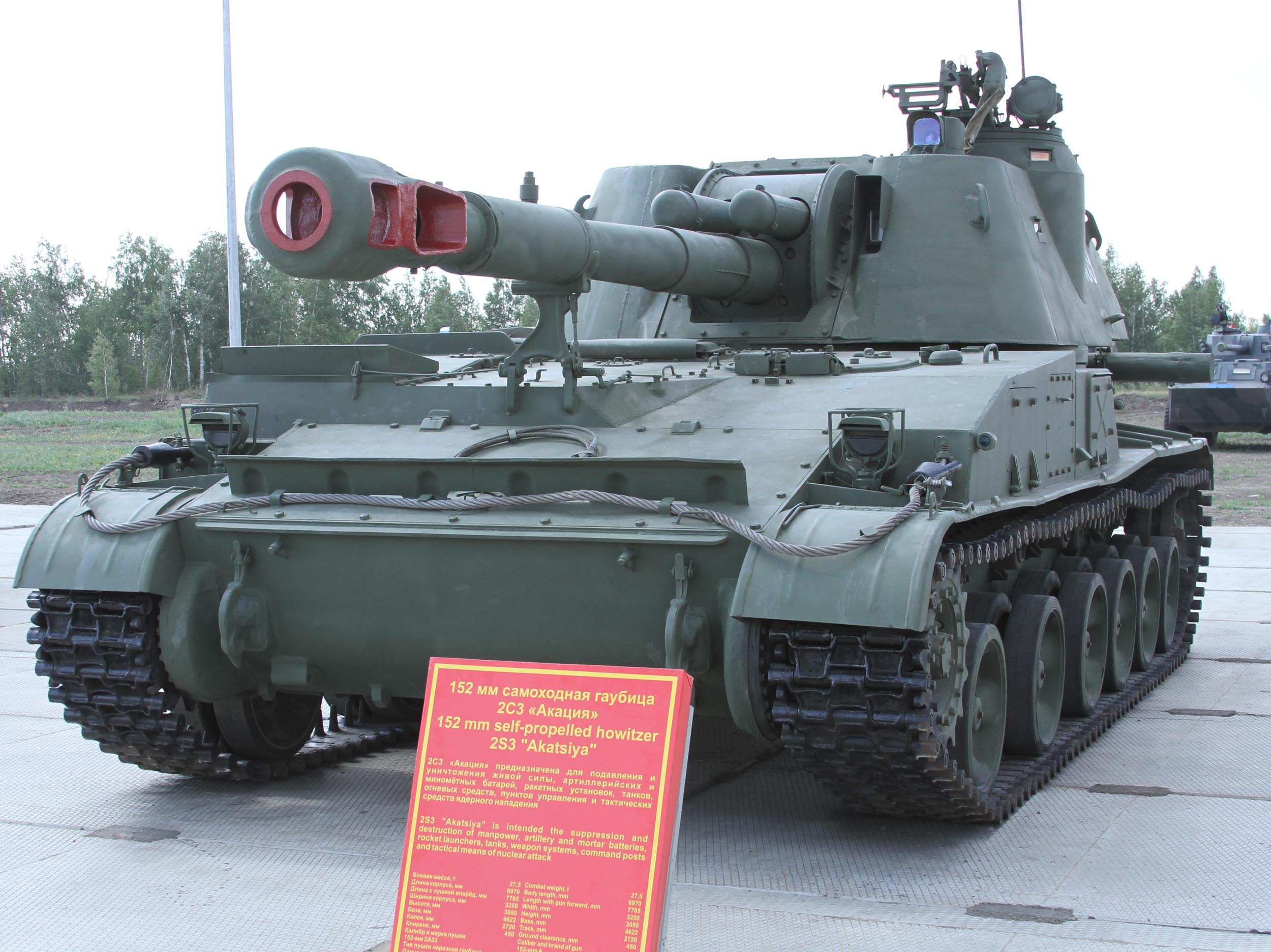
2S3M2“Akatsiya-M2”

152 mm divisional self-propelled howitzer
M1973 / SO-152 · Uraltransmash
Fig. 02·003 — side view · photo silhouette
0 — 5 м
2S3 “Akatsiya”: 152 mm 2A33 in a turret on the “Object 303” tracked chassis.
Status
In service · since 2024
Выпущено
≈ 4 000 units
Производитель
Uraltransmash (Yekaterinburg)

Role

The main 152 mm divisional self-propelled howitzer of the Soviet Army through the 1970s–1980s, developed under the “Object 303” designation at Uraltransmash to replace the towed D-1 and ML-20. Still in service with the Russian Army, gradually being replaced by the newer 2S19 “Msta-S” and 2S35 “Koalitsiya-SV”. The turret carries the 152 mm rifled 2A33 howitzer — a derivative of the towed D-22 — with semi-automatic loading in the horizontal barrel position. The bespoke tracked chassis (Object 303) is unified with the SU-100P and uses an engine-forward / fighting compartment-aft layout, allowing a large rear hatch for mechanised resupply directly from the ground. The M2 is a 2006 upgrade: “Uspekh” automated fire-control, support for the “Krasnopol” and “Santimetr” guided shells, and modernised sights and radios.

Specifications

  • Combat mass 27,5 t
  • Length (gun forward) 8,40 m
  • Hull length 7,76 m
  • Width 3,25 m
  • Height 3,05 m
  • Ground clearance 0,45 m
  • Crew 4 pers.
  • Chassis “Object 303” (unified with SU-100P)
  • Engine V-59 · 520 hp diesel
  • Power-to-weight 18,9 hp/t
  • Max speed (road) 60 km/h
  • Operational range 500 km
  • Main gun 152 mm 2A33 (rifled howitzer)
  • Elevation −4 … +60 °
  • Traverse 360 °
  • Range, HE shell до 17,4 km
  • Range, rocket-assisted до 24 km
  • Range, “Krasnopol” guided shell до 18 km (with M2)
  • Ammunition load 46 rds
  • Rate of fire 3,5 rds/min
  • Fire-control system “Uspekh” (automatic FCS) (with M2)
  • AA machine gun 7.62 mm PKT
  • Armour до 30 mm (small-arms protection)

Модификации

2С3 «Акация» (base model, since 1971) 2С3М (increased ammo load, 1975) 2С3М1 (new 1P5 sight, 1987) 2С3М2 (“Uspekh” FCS, Krasnopol PGM, 2006) 2С3М3 (experimental, new gun) 2С19 «Мста-С» (main successor, since 1989)
Family 2S3M2 lineage: 3
  1. AFV · 02 · 003 2S3M2 “Akatsiya-M2” ← you are here САУ · RUS
  2. AFV · 02 · 019 2S19M2 “Msta-S” САУ · RUS
  3. AFV · 02 · 035 2S35 “Koalitsiya-SV” САУ · RUS

Operators

SUN (USSR, original) RUS BLR UKR KAZ UZB SYR +15 (including former Warsaw Pact members)
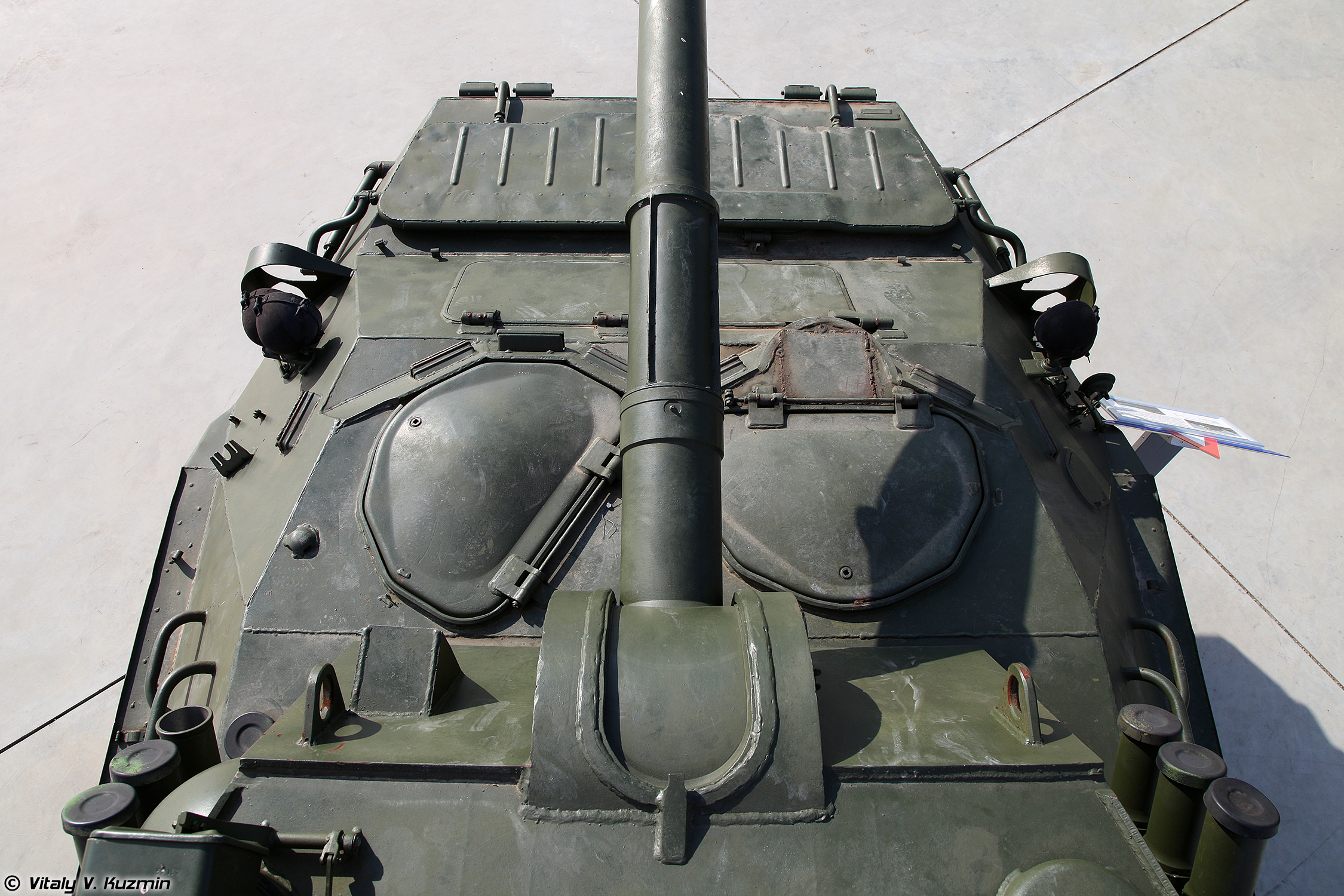
AFV · 02 · 004 Self-propelled Gun / Howitzer · Corps level · breech-loaded USSR · Russia · SUN

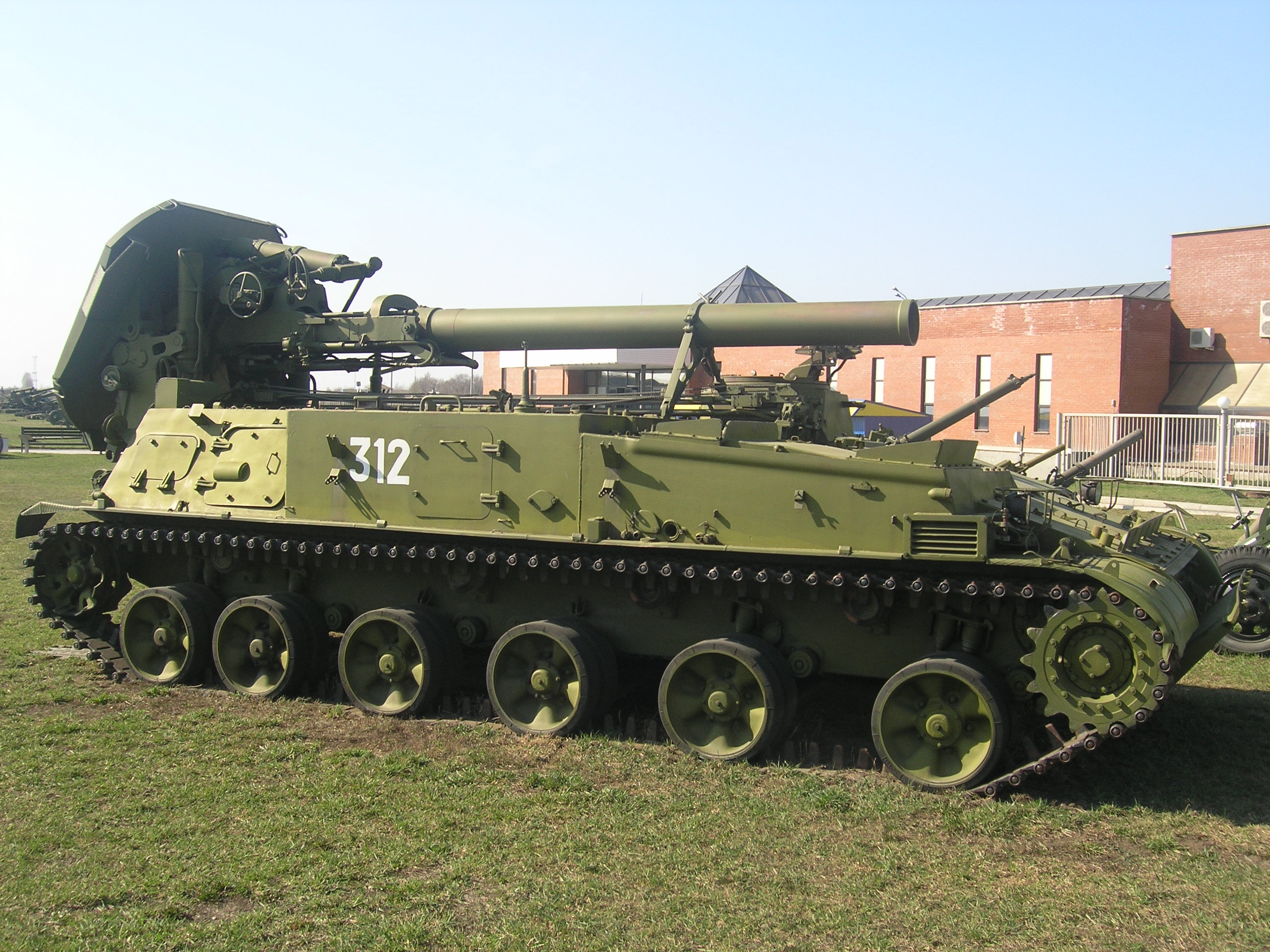
2S4“Tyulpan”

240 mm heavy self-propelled mortar
M1975 / SM-240 · Uraltransmash
Fig. 02·004 — top view · photo silhouette
0 — 6 м
2S4 “Tyulpan”: 240 mm 2B8 mortar on the “Object 305” tracked chassis.
Status
In service · since 2024
Выпущено
≈ 588 units
Производитель
Uraltransmash (Sverdlovsk)

Role

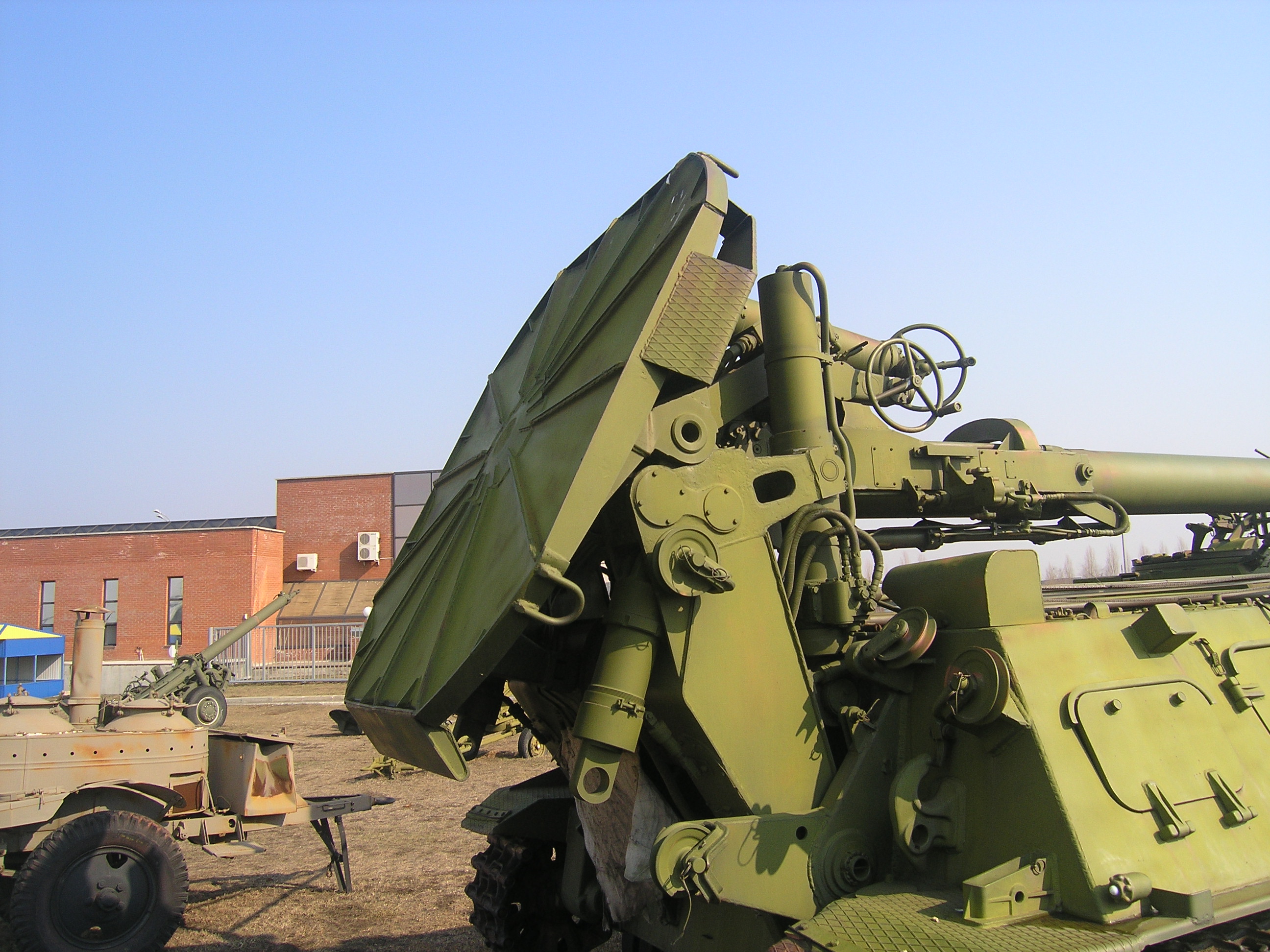
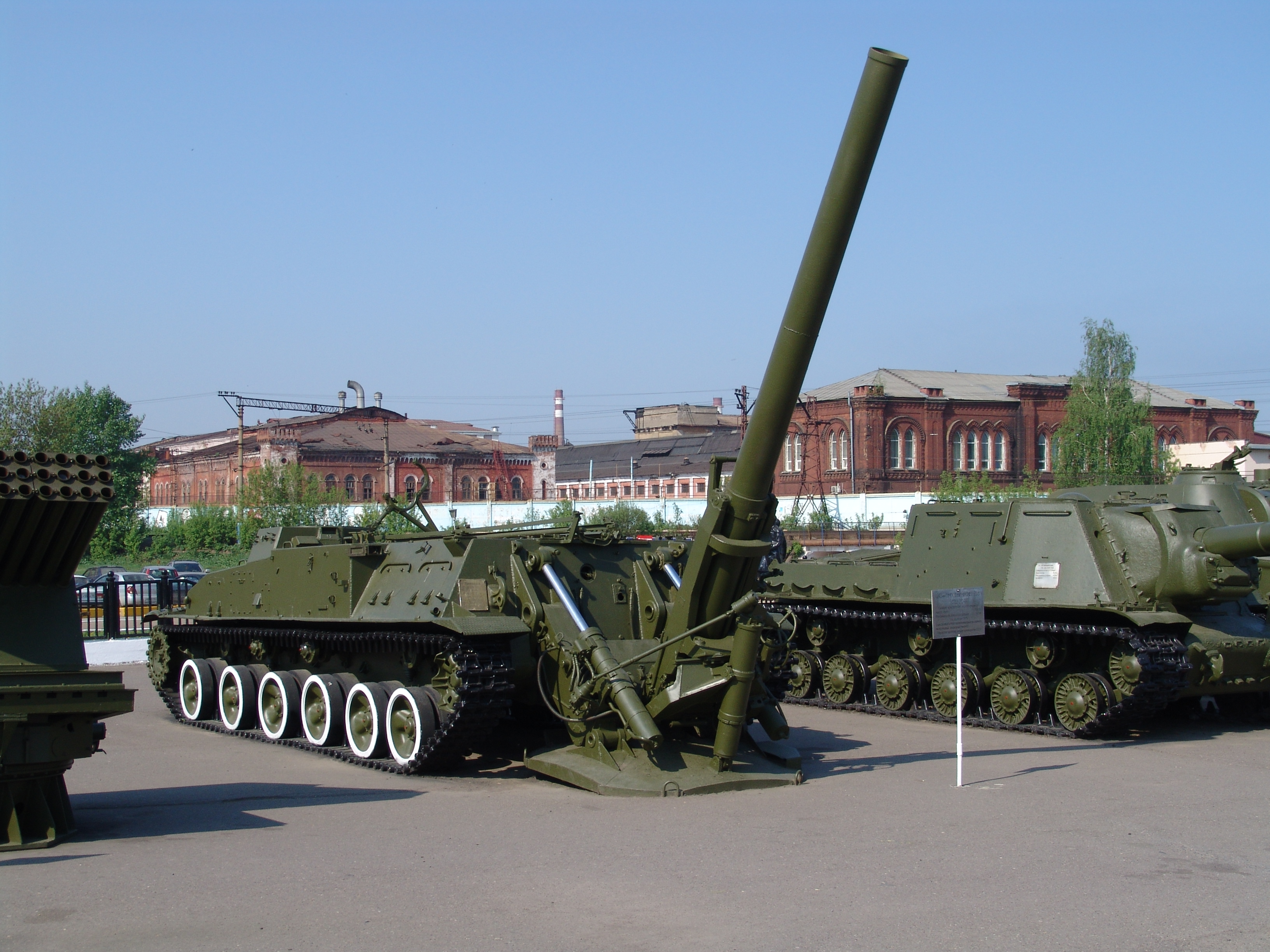
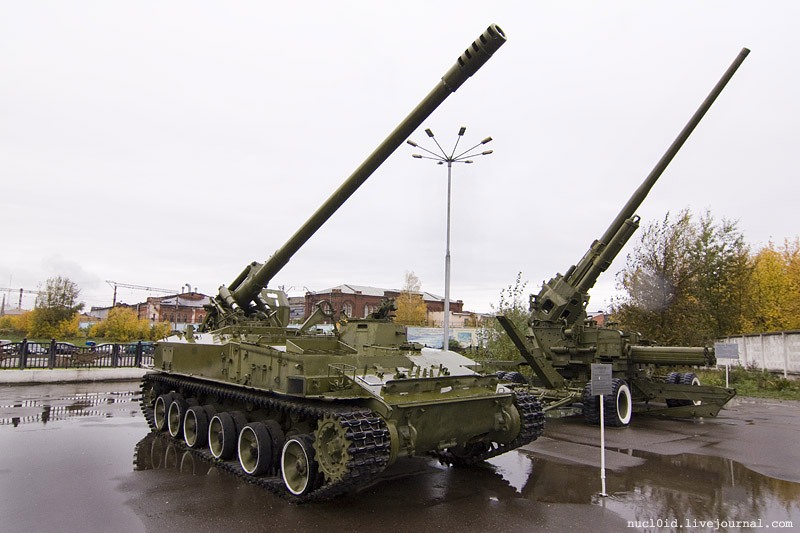
The only serially produced self-propelled mortar of 240 mm calibre in the world, developed at Uraltransmash in 1969 to replace the towed M-240 in the High Command Reserve artillery. Adopted in 1971. It uses the rifled, breech-loaded 2B8 mortar with hydraulic loading, mounted on the “Object 305” chassis (unified with the 2K11 “Krug” air-defence system). In travel mode the barrel is stowed on the roof; in firing mode it is raised over the rear and rests on a hydraulic spade dug into the ground. Designed to destroy hardened fortifications, bridges, command posts, ammunition depots, and concentrations of armour at ranges up to 9.5 km with the regular F-864 round (130 kg) and up to 19 km with the 3F2 “Gagara” rocket-assisted round. It can fire the laser-guided “Smelchak” round and the 3B4 “Smerch” tactical nuclear round of up to 2 kt yield. Used in Afghanistan (1979–1989), Chechnya (1999–2000), Syria (since 2017) and in the Russian-Ukrainian conflict. After thirty years in reserve some vehicles were brought back into service from 2017. Production ended in 1988 (~588 units).

Specifications

  • Combat mass 27,5 t
  • Length (travel) 8,50 m
  • Hull length 6,45 m
  • Width 3,25 m
  • Height (travel) 3,20 m
  • Height (firing position) ≈ 5,05 m (with barrel raised)
  • Ground clearance 0,45 m
  • Crew 4 + 5 pers. (crew)
  • Chassis “Object 305” (unified with 2K11 “Krug”)
  • Engine V-59 · 520 hp diesel
  • Power-to-weight 18,9 hp/t
  • Max speed (road) 62 km/h
  • Operational range 500 km
  • Mortar 240 mm 2B8 (rifled, breech-loaded)
  • Elevation +50 … +80 °
  • Traverse ±10 ° (without chassis turn)
  • Range, HE mortar (F-864) до 9,5 km
  • Range, rocket-assisted (3F2) до 19 km
  • Range, “Smelchak” guided shell до 9,5 km (laser-guided)
  • Nuclear round 3B4 “Smerch” (up to 2 kt)
  • Ammunition stowage 40 rds (onboard 20+20)
  • Rate of fire ≈ 1 rds/min
  • Sight PG-1M · MPM-44M (panoramic)
  • Ammunition resupply vehicle 2F106 (on MT-LB chassis)
  • Armour до 20 mm (small-arms protection)

Модификации

2С4 «Тюльпан» (base model, since 1971) 2С4М (improved hydraulics, 1983) 2С4М1 (comms and FCS upgrade, 2017)

Operators

SUN (USSR, original) RUS UKR BLR KAZ CZE (in storage) SYR (transferred from Russia)
AFV · 02 · 005 Self-propelled Gun / Howitzer · Corps level · open mount USSR · Russia · SUN

2S5“Giatsint-S”

152 mm long-range self-propelled gun
M1981 / 2A37 “Hyacinth” · Uraltransmash
Fig. 02·005 — top view · photo silhouette
0 — 9 м
2S5 “Giatsint-S”: 152 mm 2A37 (L/47) in open mount on the “Object 307” chassis.
Status
In service · since 2024
Выпущено
≈ 2 000 units
Производитель
Uraltransmash (Sverdlovsk)

Role

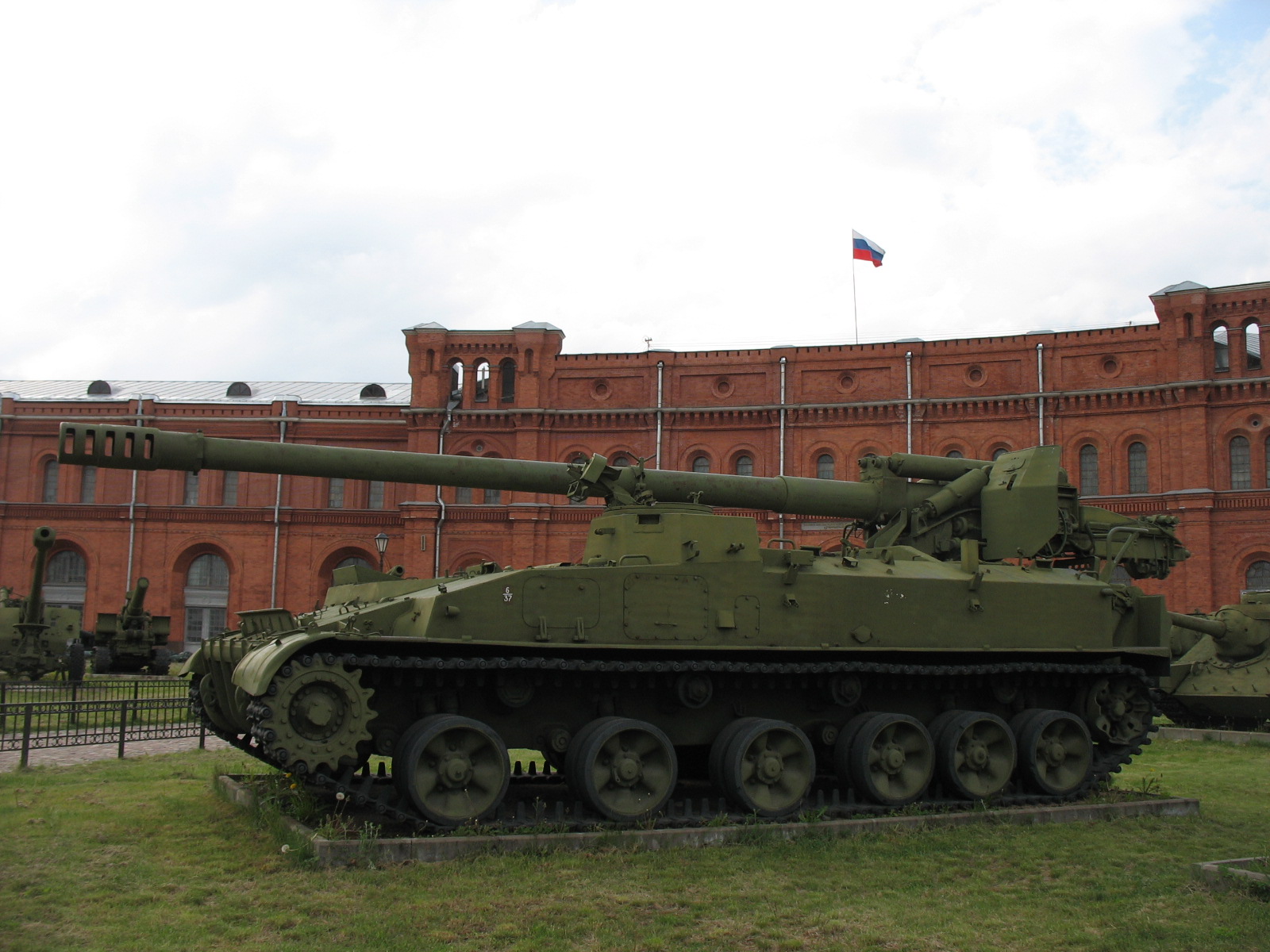
A Soviet 152 mm long-range self-propelled gun at the corps level, developed at Uraltransmash under the “Object 307” designation as a counterpart to the American 175 mm M107. Adopted in 1976. It mounts the 2A37 rifled gun with a 47-calibre barrel (7.14 m) — at the time of its introduction the longest-ranged among production self-propelled guns in the world: up to 28.5 km with the standard HE 3OF29 (47 kg) and up to 33 km with the rocket-assisted 3OF30. It can fire the 3VB8 tactical nuclear round. The gun is mounted on a pedestal behind an open fighting compartment without a turret; the crew works outside the vehicle. The “Object 307” chassis is original-tracked and shares components with the 2K11 “Krug” SAM system and the 2S4 “Tyulpan” mortar. Ammunition stowage is 30 rounds, with separate-loading projectile and charge. Intended for counter-battery fire and engagement of tactical missile systems and rear-area targets. Produced at Uraltransmash from 1977 to 1991 (~2 000 units). Used in Afghanistan (1979–1989), Chechnya (1994–1996), Syria (since 2017) and in the Russian-Ukrainian conflict. In the 1990s Finland purchased nine examples from Ukraine under the designation 152 TELAK 91.

Specifications

  • Combat mass 28,2 t
  • Length (gun forward) 8,95 m
  • Hull length 6,78 m
  • Barrel length 7,14 m (L/47)
  • Width 3,25 m
  • Height 2,76 m
  • Ground clearance 0,45 m
  • Crew 5 pers.
  • Chassis “Object 307” (unified with 2K11 “Krug”)
  • Engine V-59 · 520 hp diesel
  • Power-to-weight 18,4 hp/t
  • Max speed (road) 63 km/h
  • Operational range 500 km
  • Main gun 152 mm 2A37 (rifled gun)
  • Elevation −2 … +57 °
  • Traverse ±15 ° (without chassis turn)
  • Range, HE shell (3OF29) до 28,5 km
  • Range, rocket-assisted (3OF30) до 33 km
  • Nuclear round 3VB8 (tactical)
  • Ammunition stowage 30 rds (separate-loading)
  • Rate of fire 5—6 rds/min
  • Loading mechanism hydro-mechanical (pressure type)
  • Sight OP-4M · PG-1M
  • AA machine gun 7.62 mm PKT
  • Armour до 30 mm (small-arms protection)

Модификации

2С5 «Гиацинт-С» (base model, since 1976) 2С5М (upgrade, new sight) 2С5М1 «Гиацинт-СМ» (experimental, digital FCS) 2А36 «Гиацинт-Б» (towed variant of the gun) 152 TELAK 91 (Finnish designation, 1990s)

Operators

SUN (USSR, original) RUS UKR (significant fleet) BLR FIN (9 units, purchased from Ukraine) UZB ETH +5
AFV · 02 · 007 Self-propelled Gun / Howitzer · Corps level · High Command Reserve USSR · Russia · RUS

2S7M“Malka”

203 mm self-propelled gun at corps level
M1975 / SO-203 · LKZ
Fig. 02·007 — side view · photo silhouette
0 — 13 м
2S7M “Malka”: 203 mm rifled 2A44 gun on the “Object 216” chassis.
Status
In service · since 1976
Выпущено
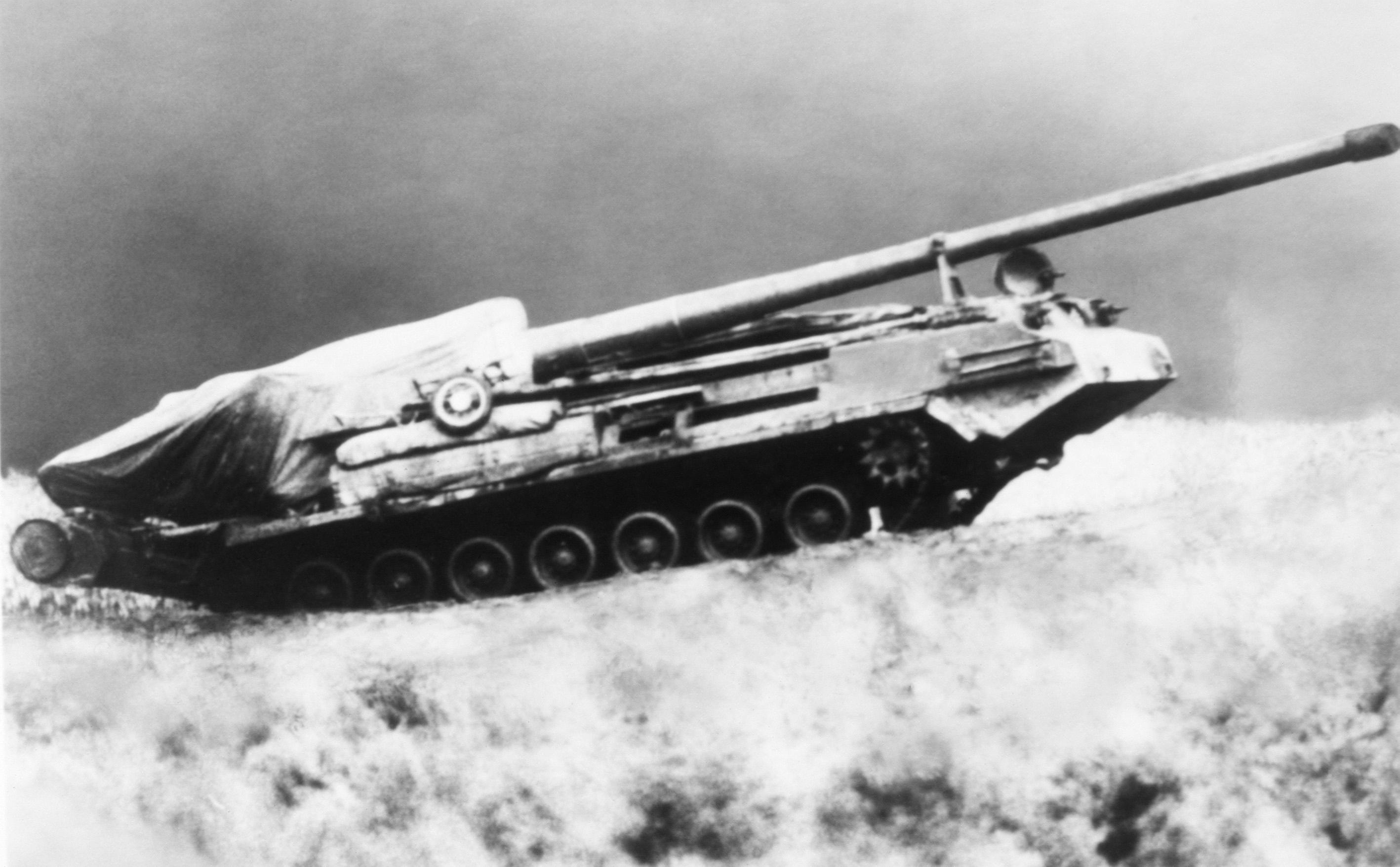
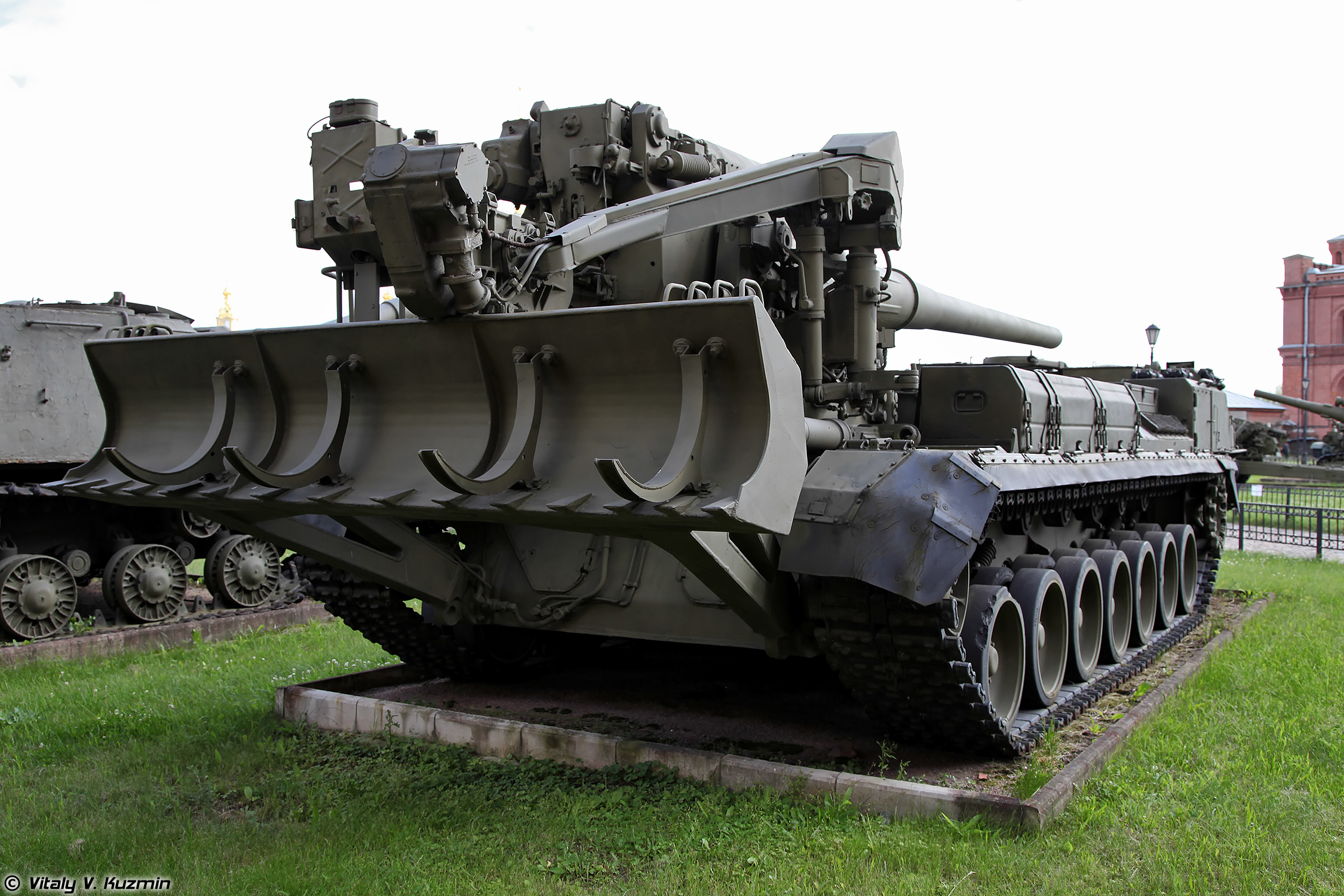
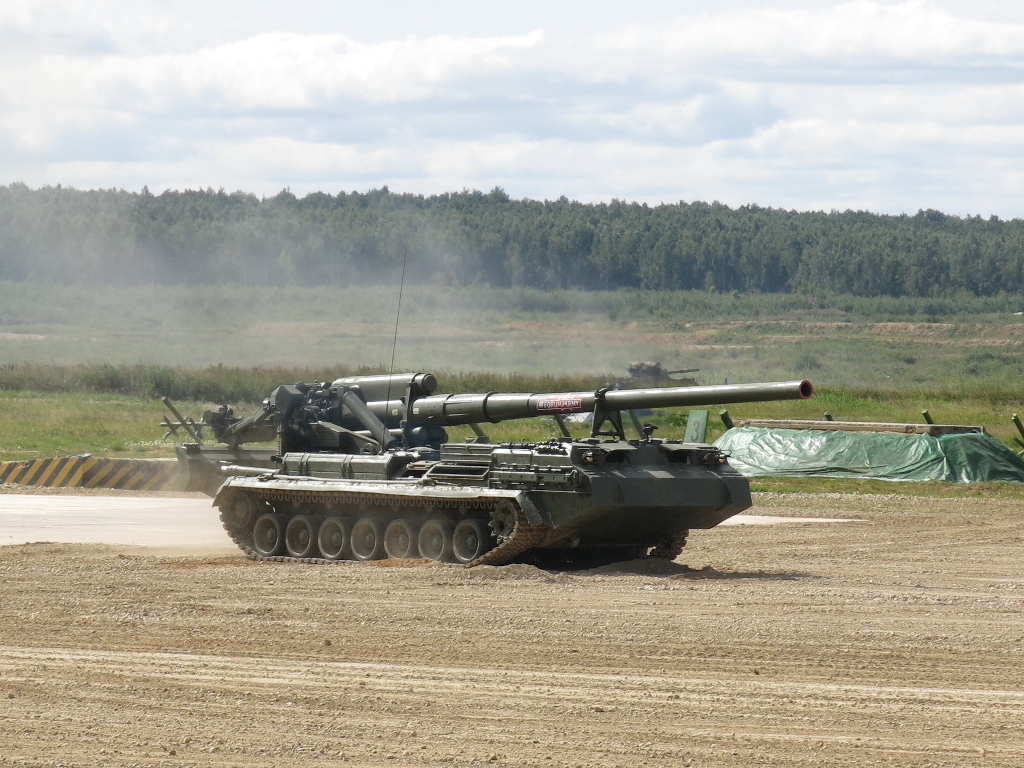
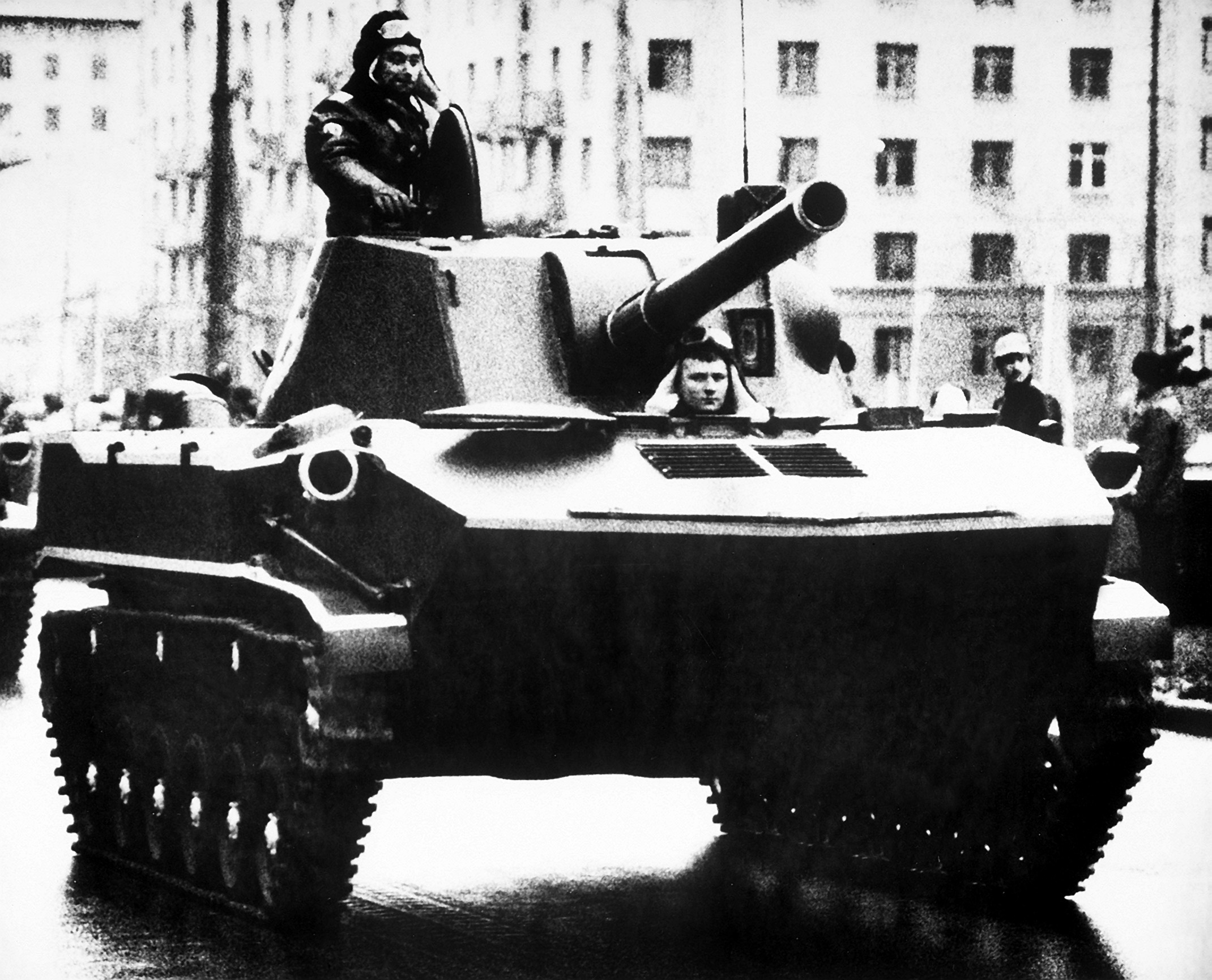
≈ 500 units (incl. base 2S7)
Производитель
Kirov Plant (Leningrad)

Role

A Soviet/Russian 203 mm self-propelled gun at the corps level, part of the High Command Reserve. The base 2S7 “Pion” was developed by the Kirov Plant (Leningrad) under the “Object 216” designation and adopted in 1975 as the longest-ranged serial self-propelled gun in the world — a status it still retains. 2S7M “Malka” (1986) is a deep upgrade: the running gear was reinforced using T-80 components (V-84B diesel, 840 hp), an automated loading system was introduced (raising the rate of fire to 2.5 rounds per minute from the original 1.5), and the sights and communications suite were updated. The 2A44 gun with a 56-calibre barrel (11.2 m) achieves a range of up to 37.4 km with the standard high-explosive 3OF43 (110 kg) and up to 47.5 km with the rocket-assisted 3OF44. The 3VB2 tactical nuclear round of 2 kt yield and concrete-piercing 3OF43 can be fired. Ammunition stowage is 8 rounds on the vehicle, with main supply coming from the ground or from the 9T234 ammunition resupply vehicle. The crew works in the open (4 men in the cab plus 2 loaders). The system saw service in Afghanistan (1985–1989), Chechnya (1995–1996), Syria (since 2017) and in the Russian–Ukrainian conflict (since 2022). After thirty years in reserve some vehicles were returned to service from 2017; a modernisation programme to the “Malka-M” level is underway.

Specifications

  • Combat mass 46,5 t
  • Length (gun forward) 13,12 m
  • Hull length 10,50 m
  • Barrel length 11,20 m (L/56)
  • Width 3,38 m
  • Height 3,00 m
  • Ground clearance 0,40 m
  • Crew 4 + 2 pers. (cab + loaders)
  • Chassis “Object 216” (T-80 components)
  • Engine V-84B · 840 hp diesel
  • Power-to-weight 18,1 hp/t
  • Max speed (road) 60 km/h
  • Operational range 650 km
  • Main gun 203 mm 2A44 (rifled gun)
  • Elevation 0 … +60 °
  • Traverse ±15 ° (without chassis turn)
  • Range, HE (3OF43) up to 37.4 km
  • Range, RAP (3OF44) up to 47.5 km
  • Nuclear round 3VB2 (up to 2 kt)
  • Ammunition stowage 8 rds (on vehicle)
  • Rate of fire 2.5 rds/min
  • Loading system autoloader (since 1986)
  • Resupply vehicle 9T234 (on 2S7 chassis)
  • Sight PG-1M · OP4M-87A (panoramic + direct)
  • Armour up to 10 mm (small-arms protection)

Модификации

2S7 “Pion” (base model, since 1975) 2S7M “Malka” (upgrade, since 1986) 2S7M1 (experimental, digital FCS) 2S7M “Malka-M” (modernisation programme since 2017)

Operators

SUN (USSR, original) RUS (Russian Ground Forces) UKR (significant fleet) BLR AGO (export) GEO (former) UZB CZE (in storage)
AFV · 02 · 009 Self-propelled Gun / Howitzer · Airborne, VDV divisional level USSR · Russia · RUS

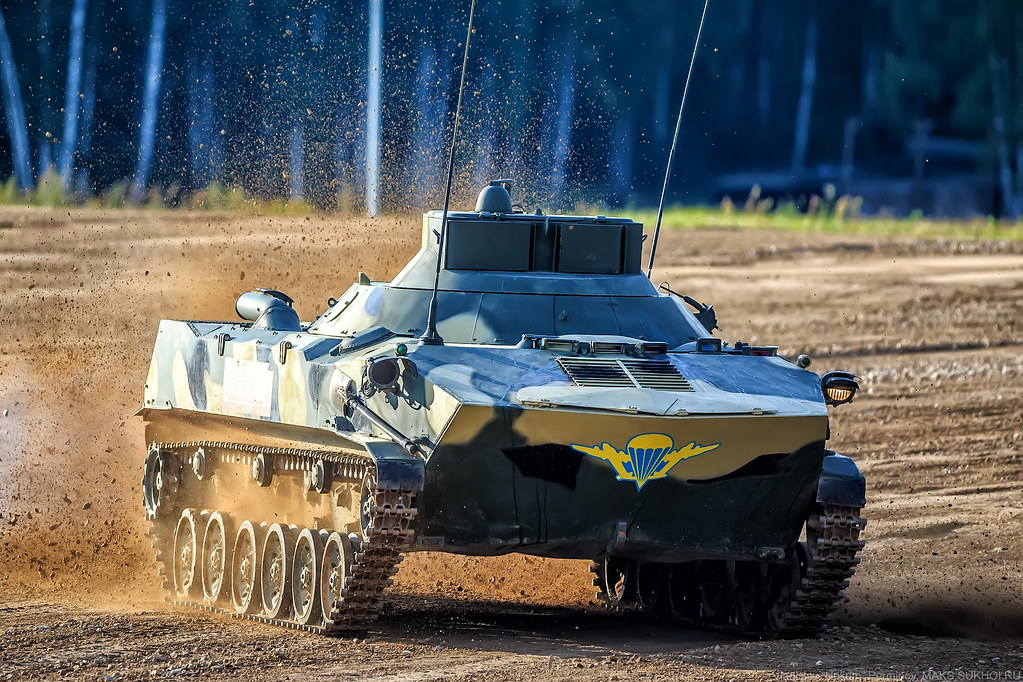
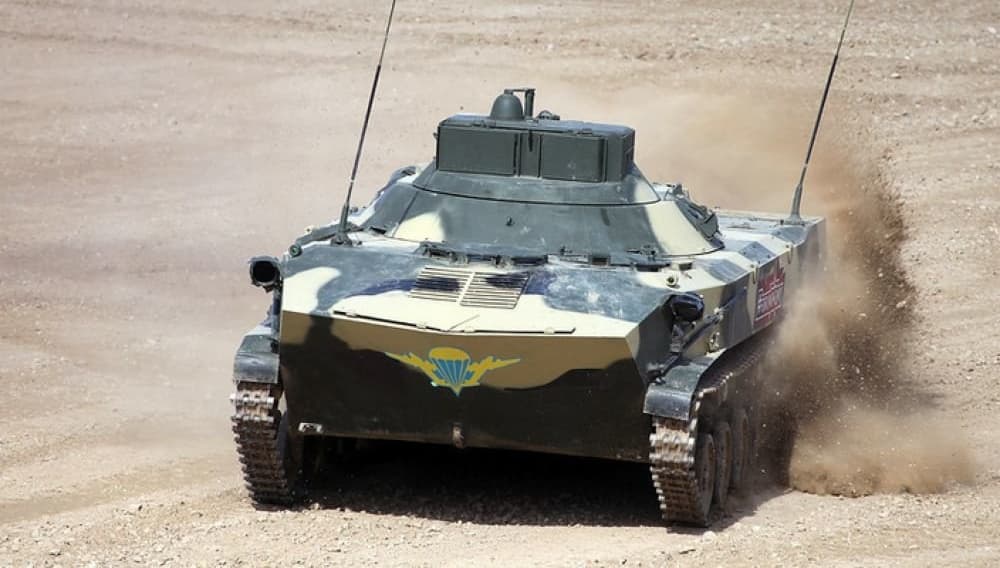
2S9-1M“Nona-SM”

120 mm airborne self-propelled gun-mortar on the BTR-D chassis
2S9 Nona-S · VgTZ
Fig. 02·009 — side view · photo silhouette
0 — 6 м
2S9-1M “Nona-SM”: 120 mm 2A51 on the amphibious BTR-D chassis.
Status
In service · since 1981
Выпущено
≈ 1 400 units (family total)
Производитель
VgTZ (Volgograd) · TsNII “Burevestnik”

Role

A light amphibious airborne self-propelled gun-mortar of the Russian Airborne Forces — the progenitor of the entire Soviet/Russian “Nona” family. The 2S9 “Nona-S” was developed by TsNII “Burevestnik” in the late 1970s on the BTR-D amphibious chassis to give the VDV its own organic artillery; it was adopted in 1981. The key innovation is the universal 120 mm rifled 2A51 gun-mortar, which fires high-explosive shells, rocket-assisted shells, mortar bombs of all types, and the shaped-charge OF-49 against armour. The 2S9-1M “Nona-SM” (2006) is a modernisation with a digital ballistic computer, a thermal channel for the commander, and support for the laser-guided “Kitolov-2” precision round (up to 9 km range). The vehicle is amphibious — it crosses water obstacles with two stern waterjets inherited from the BTR-D. It is air-droppable on a parachute platform; at 8.7 t it is the lightest SPG of any airborne force in the world. Crew of four inside the hull. Used in Afghanistan (1981—1989), Karabakh, both Chechen wars, Georgia (2008), Syria (from 2017), and Ukraine (from 2022). On the chassis and turret of the “Nona-S” the entire later family was built: the wheeled 2S23 “Nona-SVK” (BTR-80), the tracked 2S31 “Vena” (BMP-3), and the 2S34 “Khosta” (on the 2S1 “Gvozdika”).

Specifications

  • Combat mass 8,7 t
  • Hull length 6,02 m
  • Width 2,63 m
  • Height 2,30 m
  • Ground clearance 0,42 m
  • Crew 4 pers. (inside hull)
  • Chassis BTR-D (amphibious, airborne)
  • Engine 5D20 · 240 hp diesel
  • Power-to-weight 27.6 hp/t
  • Max speed (road) 60 km/h
  • Max speed (afloat) 9 km/h
  • Waterborne propulsion two waterjets
  • Operational range 500 km
  • Main gun 120 mm 2A51 (rifled gun-mortar)
  • Elevation −4 … +80 °
  • Traverse ±35 ° (without chassis turn)
  • Range, HE up to 8.85 km
  • Range, RAP up to 12.8 km
  • Mortar range 0.5 — 7.1 km
  • Range, “Kitolov-2” PGM up to 9 km (laser-guided)
  • Ammunition stowage 25 rds
  • Rate of fire 6 — 8 rds/min
  • Fire-control system “Kapustnik-B” (from M-variants)
  • Armour small-arms protection (aluminium alloy)
  • Air-droppable parachute platform (Il-76, An-22, An-124)

Модификации

2S9 “Nona-S” (base model, since 1981) 2S9-1 (improved ammo feed, 1986) 2S9-1M “Nona-SM” (modernisation, digital FCS, 2006) 2S9-2 (experimental, longer barrel) 2S23 “Nona-SVK” (wheeled, on BTR-80, since 1990) 2S31 “Vena” (tracked, on BMP-3, since 2010) 2S34 “Khosta” (2S1 upgrade, since 2008)
Family 2S9-1M lineage: 4
  1. AFV · 02 · 009 2S9-1M “Nona-SM” ← you are here САУ · RUS
  2. AFV · 02 · 023 2S23 “Nona-SVK” САУ · RUS
  3. AFV · 02 · 031 2S31 “Vena” САУ · RUS
  4. AFV · 02 · 034 2S34 “Khosta” САУ · RUS

Operators

SUN (USSR, original) RUS (Russian Ground Forces, VDV) BLR KAZ UKR UZB TJK VEN (export)
AFV · 02 · 119 Reconnaissance Vehicle · Airborne, on BTR-D USSR · Russia · RUS

1V119“Reostat”

Mobile reconnaissance post — PRP-3
PRP-3 · VgTZ
Fig. 02·119 — side view · photo silhouette
0 — 5 м
Artillery reconnaissance post on the BTR-D chassis; air-droppable.
Status
In service · since 2024
Выпущено
≈ 700 units
Производитель
VgTZ (Volgograd)

Role

An airborne-artillery mobile reconnaissance post based on the BTR-D amphibious armoured personnel carrier. Intended for ground-target reconnaissance and fire control of 2S9 “Nona-S” batteries and other airborne-artillery systems. Carries electro-optical sensors, a laser rangefinder, a ground reconnaissance radar, navigation equipment, and an on-board computer for ballistic calculations. Air-droppable on a parachute platform.

Specifications

  • Combat mass 8,0 t
  • Hull length 5,88 m
  • Width 2,63 m
  • Height (over hull) 2,10 m
  • Crew 5 pers.
  • Engine 5D20 · 240 hp
  • Max speed (road) 60 km/h
  • Max speed (afloat) 10 km/h
  • Operational range 500 km
  • Armament 7,62 mm PKT
  • Wheelbase BTR-D

Модификации

1В119 1В119-1 (upgrade) 1В119М (electronics refresh)

Operators

SUN (USSR, original) RUS BLR UKR
AFV · 02 · 014 Reconnaissance Vehicle · Artillery support, on MT-LBu USSR · Russia · RUS

1V14“Mashina-S”

Battery senior officer reconnaissance-command vehicle (1V12 complex)
1V14 · NPO “Strela”
Fig. 02·014 — side view · photo silhouette
0 — 5 м
Reconnaissance-command vehicle on the MT-LBu chassis.
Status
In service · since 2024
Выпущено
≈ 2 200 units
Производитель
KhTZ (chassis) · NPO “Strela”

Role

The battery senior officer reconnaissance-command vehicle, part of the 1V12 “Maketa” automated artillery fire-control complex. Built on the light amphibious multi-purpose MT-LBu tractor. Carries electro-optical reconnaissance equipment, a laser rangefinder, navigation gear, and communication suites; it gathers data from adjacent reconnaissance assets and passes target designation to firing positions. Remains in service with both towed and self-propelled artillery batteries.

Specifications

  • Combat mass 15,7 t
  • Hull length 7,21 m
  • Width 2,85 m
  • Height (over hull) 2,42 m
  • Crew 6 pers.
  • Engine YaMZ-238V · 240 hp
  • Max speed (road) 60 km/h
  • Max speed (afloat) 5—6 km/h
  • Operational range 500 km
  • Armament 7,62 mm PKT
  • Wheelbase MT-LBu

Модификации

1В14 1В14М (upgrade) 1В14-3 (digital electronics)

Operators

SUN (USSR, original) RUS BLR UKR KAZ +5 (former Warsaw Pact members)
AFV · 02 · 019 Self-propelled Gun / Howitzer · Divisional level, heavy USSR · Russia · RUS

2S19M2“Msta-S”

152 mm divisional self-propelled howitzer
M1990 · Uraltransmash
Fig. 02·019 — side view · photo silhouette
0 — 5 м
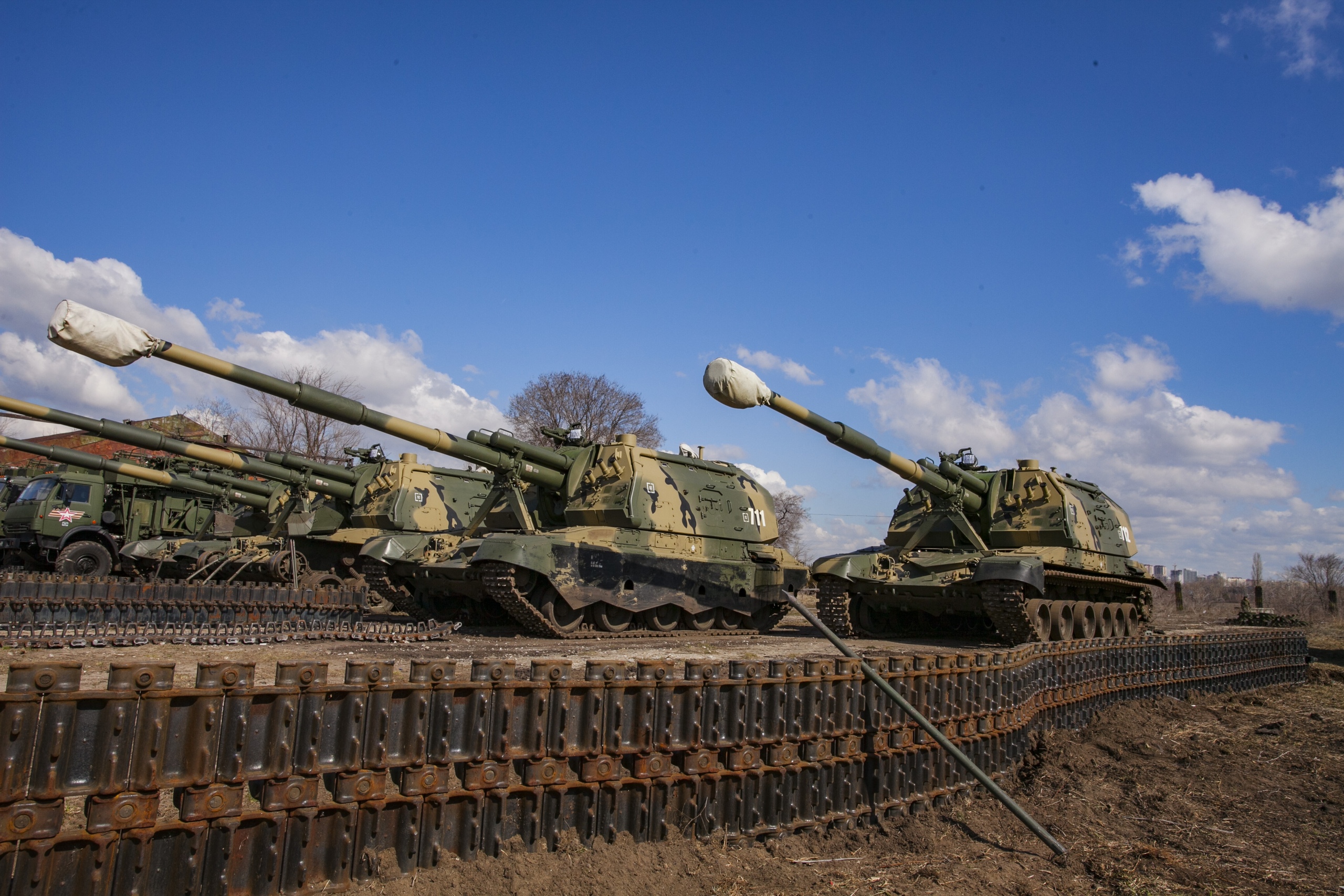
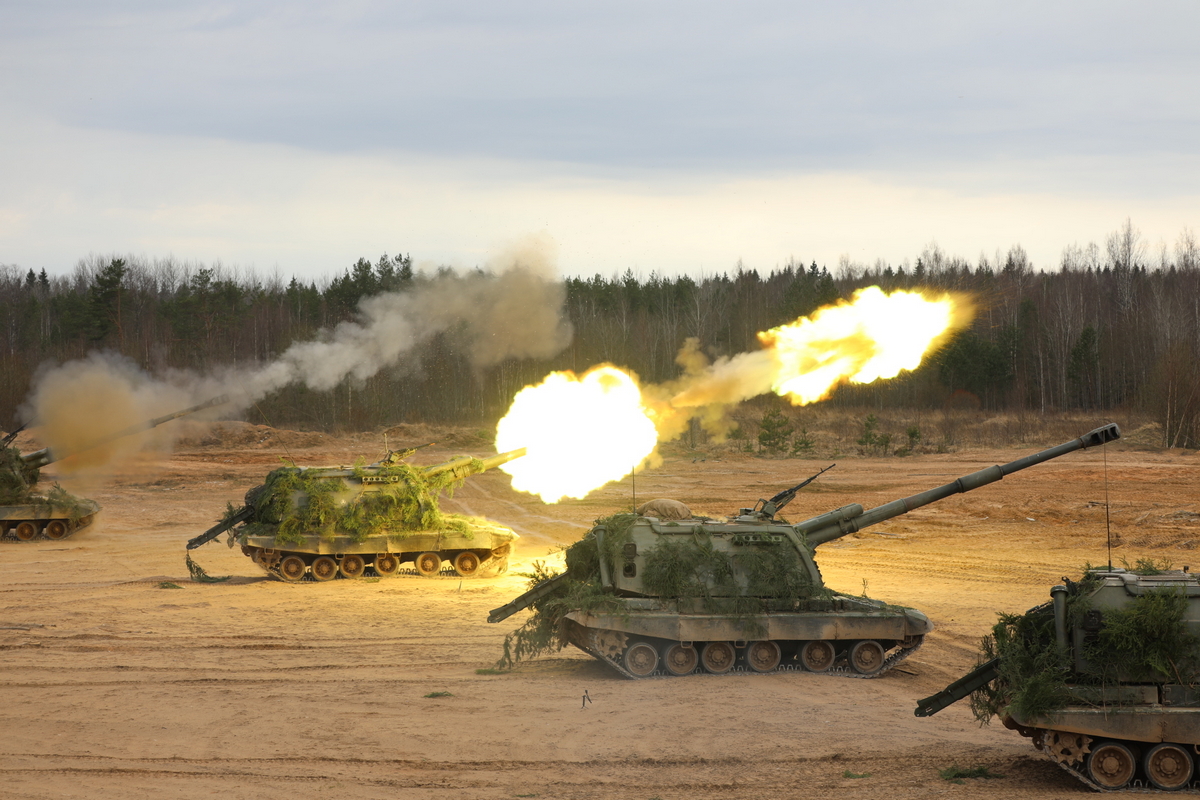
2S19 “Msta-S”: 152 mm 2A64 on its bespoke tracked chassis.
Status
In service · since 2024
Выпущено
≈ 700 units
Производитель
Uraltransmash (Yekaterinburg) · TsKB “Titan”

Role

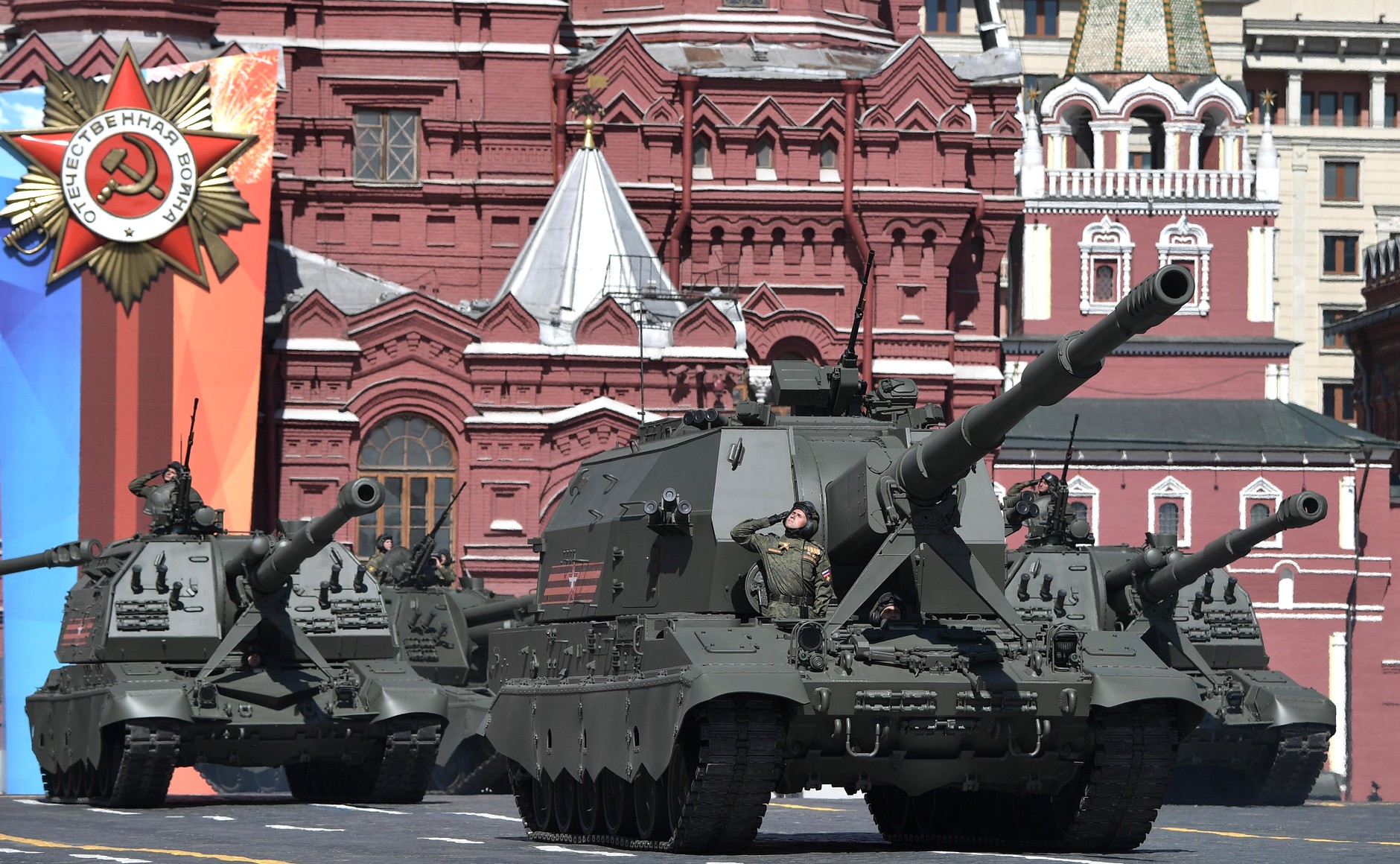
The principal divisional self-propelled howitzer of the Russian Armed Forces. Built on a dedicated tracked chassis using subsystems from the T-80 and T-72 tanks: a V-shaped V-84A diesel (840 hp) and torsion-bar suspension with six road wheels. The turret mounts the 152 mm 2A64 howitzer with a purpose-designed mechanised loading system that sustains up to 8 rounds per minute at any elevation. The vehicle is fully autonomous, with its own ballistic computer, navigation suite, and self-entrenching equipment. The M2 is a 2012 upgrade adding the “Uspekh-S” automated fire-control, digital radios, the “Lysukha” command-staff package, support for the “Krasnopol-M2” and “Santimetr-M” guided shells, and thermal sights. The family develops further into the 2S35 “Koalitsiya-SV” with an autoloader and unmanned turret.

Specifications

  • Combat mass 42 t
  • Length (gun forward) 11,92 m
  • Hull length 7,15 m
  • Width 3,38 m
  • Height 2,99 m
  • Ground clearance 0,45 m
  • Crew 5 pers.
  • Engine V-84A · 840 hp diesel
  • Power-to-weight 20 hp/t
  • Max speed (road) 60 km/h
  • Operational range 500 km
  • Main gun 152 mm 2A64
  • Elevation −4 … +68 °
  • Traverse 360 °
  • Range, HE shell до 24,7 km
  • Range, rocket-assisted до 28,9 km
  • Range, “Krasnopol” guided shell до 25 km
  • Ammunition load 50 rds
  • Rate of fire до 8 rds/min
  • Fire-control system “Uspekh-S” (automatic FCS)
  • AA machine gun 12.7 mm NSVT / Kord
  • Armour до 15 mm (small-arms protection)

Модификации

2С19 «Мста-С» (base model, since 1989) 2С19М1 (“Uspekh” FCS, 2008) 2С19М2 (new FCS, digital comms, 2012) 2С33 «Мста-СМ» (experimental, long 2A79 gun) 2С19М1-155 (export 155 mm NATO calibre) 2С35 «Коалиция-СВ» (next generation, unmanned turret)
Family 2S3M2 lineage: 3
  1. AFV · 02 · 003 2S3M2 “Akatsiya-M2” САУ · RUS
  2. AFV · 02 · 019 2S19M2 “Msta-S” ← you are here САУ · RUS
  3. AFV · 02 · 035 2S35 “Koalitsiya-SV” САУ · RUS

Operators

SUN (USSR, original) RUS BLR UKR AZE ETH VEN +3
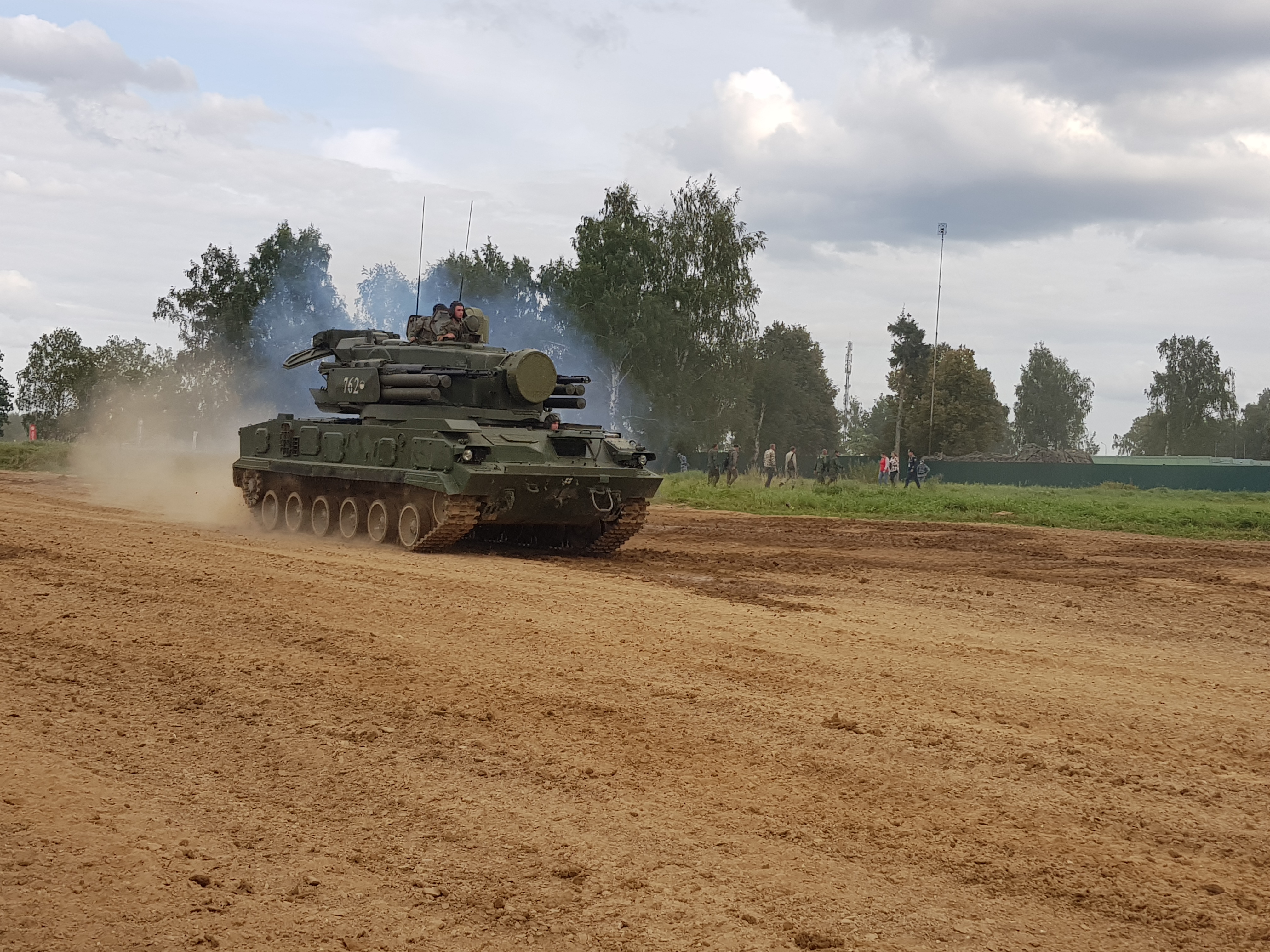
AFV · 02 · 022 Anti-aircraft Gun/Missile system · Close-range, divisional level USSR · Russia · RUS

2K22M“Tunguska-M”

Anti-aircraft gun/missile system on GM-352M chassis
SA-19 “Grison” · KBP / UMZ
Fig. 02·022 — side view · photo silhouette
0 — 5 м
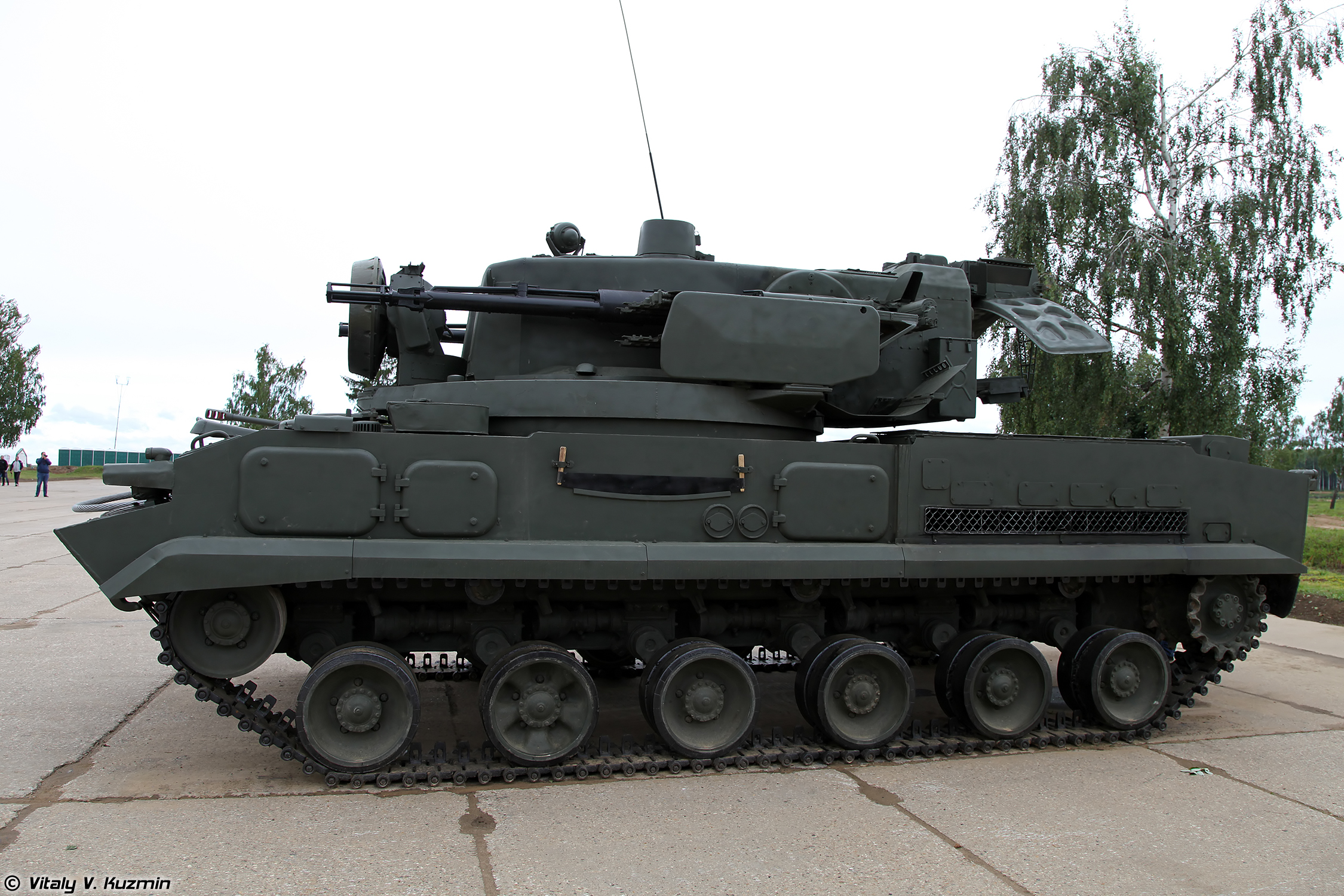
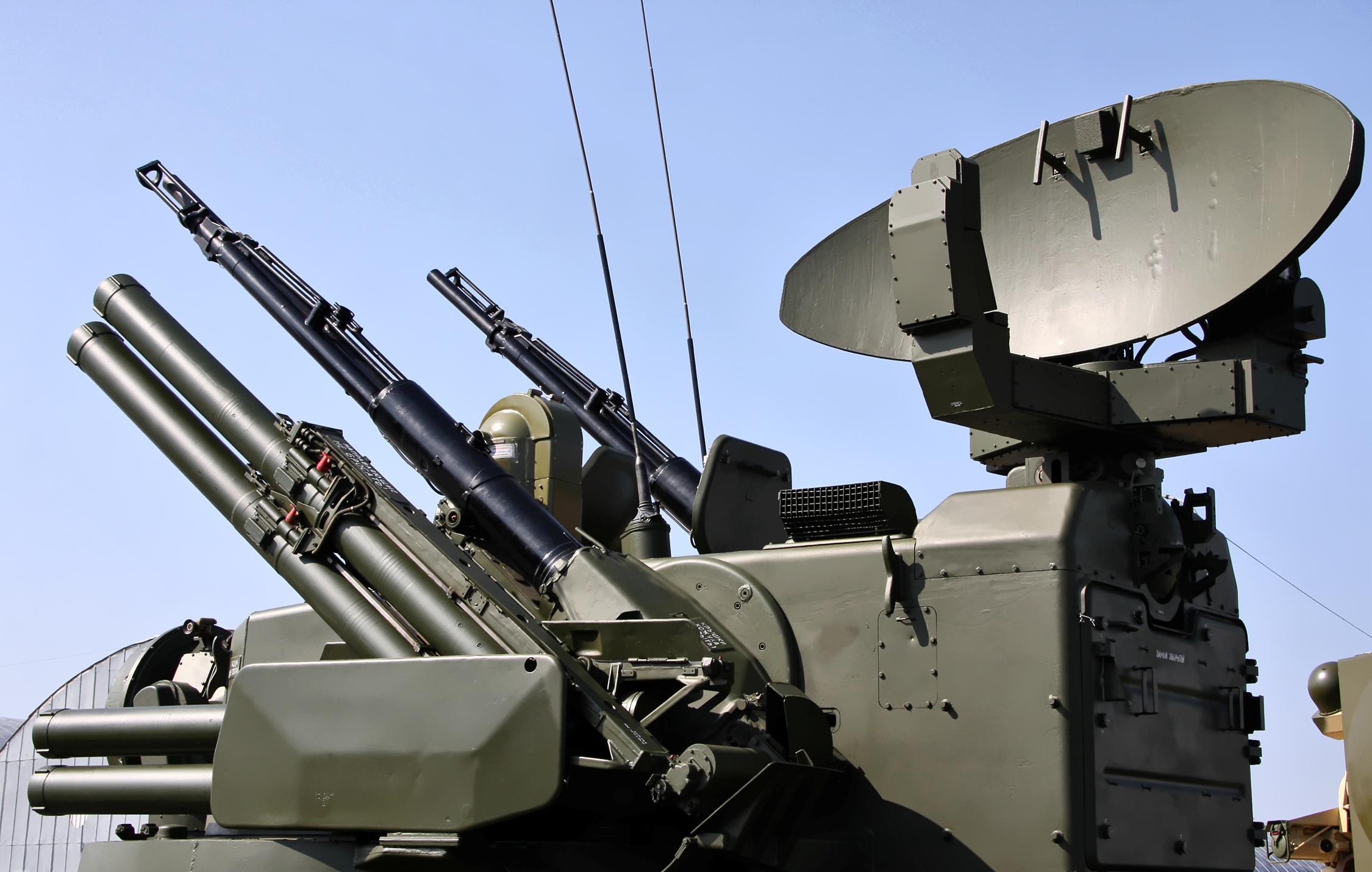
2K22M “Tunguska-M”: 2 × 30 mm 2A38M + 8 × 9M311 on the GM-352M chassis.
Status
In service · since 2024
Выпущено
≈ 250 units
Производитель
KBP (Tula) · UMZ (Ulyanovsk)

Role

A short-range air-defence gun/missile system designed to cover motorised rifle and tank units against low-flying aerial targets — aircraft, attack helicopters, cruise missiles and UAVs — out to 8 km and up to 3.5 km altitude. Uniquely combines two 30 mm twin automatic 2A38M cannons and eight 9M311 surface-to-air missiles in a single turret, allowing continuous engagement across the overlapping missile and gun envelopes. Search is provided by the 1RL144 radar, tracking by the 1RL144M, and missiles are radio-command guided over the tracking link. The GM-352M chassis (Minsk Tractor Plant) is tracked with hydropneumatic suspension.

Specifications

  • Combat mass 34 t
  • Hull length 7,93 m
  • Width 3,24 m
  • Height (turret roof) 3,36 m
  • Height (with radar antenna) 4,02 m
  • Crew 4 pers.
  • Chassis GM-352M
  • Engine V-46-2S1 · 710 hp diesel
  • Max speed (road) 65 km/h
  • Operational range 500 km
  • Cannons 2 × 30 mm 2A38M
  • Cannon rate of fire 4 800—5 000 rds/min
  • Gun ammunition load 1 904 rds
  • Cannon engagement range до 4 km
  • Missiles 8 × 9M311
  • Missile engagement range 2,5 — 8 km
  • Engagement altitude (missile) 15 — 3 500 m
  • Reaction time 6 — 8 s
  • Search radar 1RL144
  • Tracking radar 1RL144M

Модификации

2К22 «Тунгуска» (base model, since 1982) 2К22М «Тунгуска-М» (since 1990, new computer and comms) 2К22М1 «Тунгуска-М1» (since 2003, 9M311M missile, new optics)

Operators

SUN (USSR, original) RUS BLR UKR IND MAR MMR +4
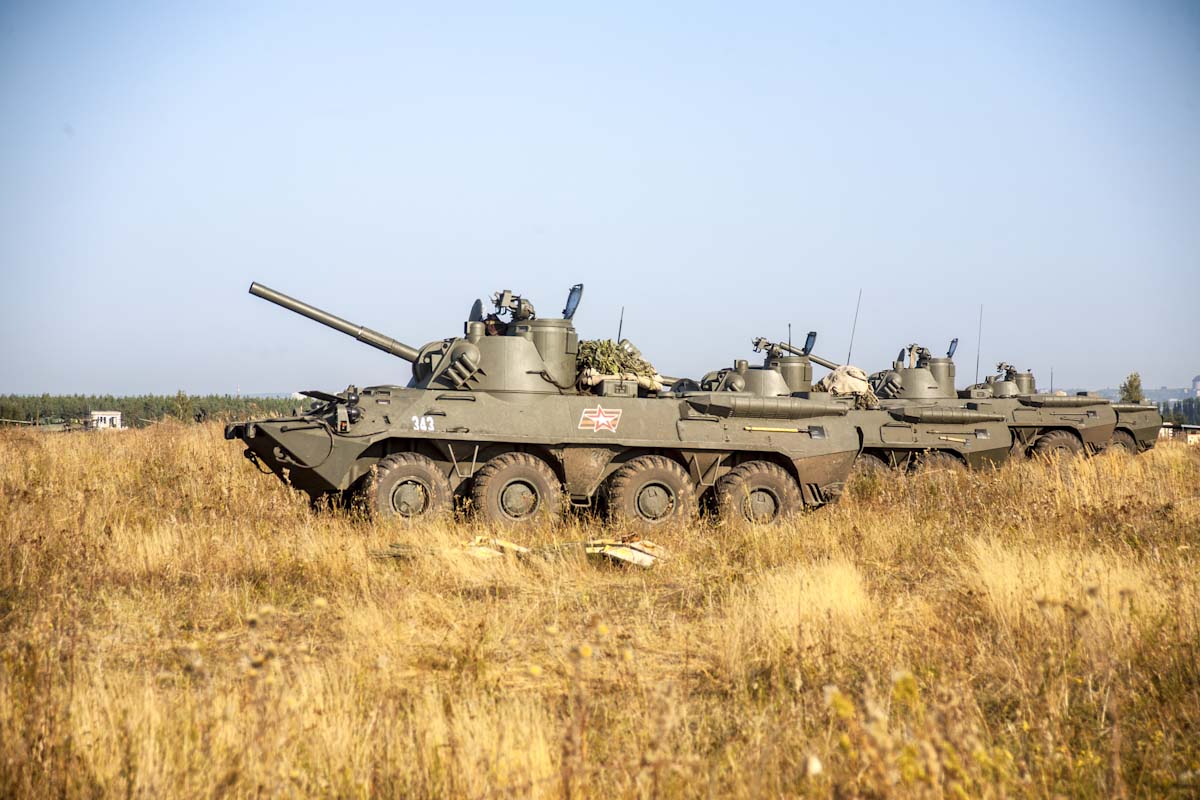
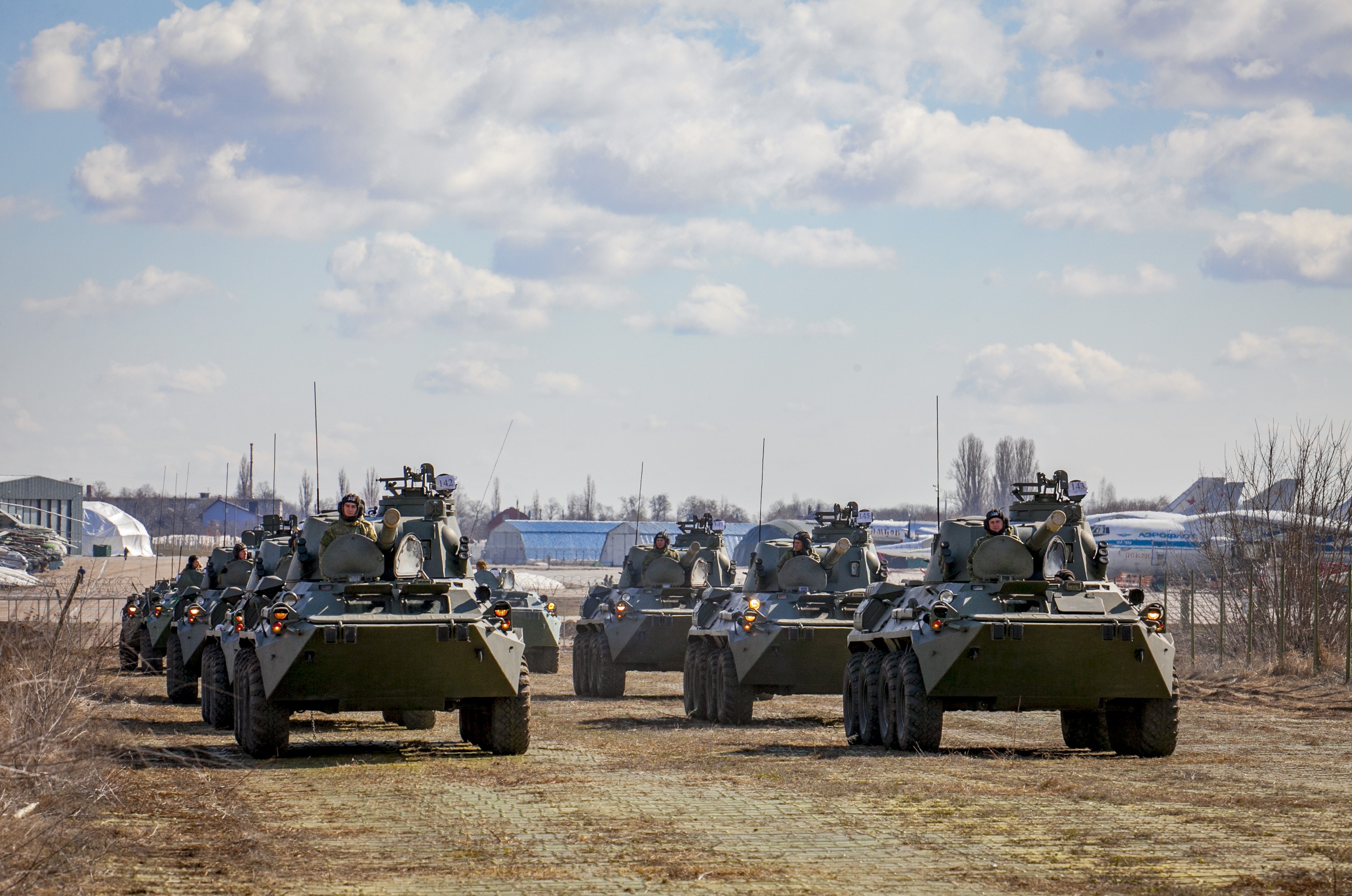
AFV · 02 · 023 Self-propelled Gun / Howitzer · Wheeled (8×8), battalion level USSR · Russia · RUS

2S23“Nona-SVK”

120 mm self-propelled artillery gun on BTR-80 chassis
2S23 Nona-SVK · TsNIITM
Fig. 02·023 — side view · photo silhouette
0 — 5 м
2S23 “Nona-SVK”: 120 mm 2A60 on the wheeled BTR-80 chassis.
Status
In service · since 2024
Выпущено
≈ 150 units
Производитель
TsNIITM (Moscow) · Motovilikha Plants (Perm)

Role

A wheeled self-propelled artillery gun — a “Nona” adapted to the BTR-80 chassis to support motorised rifle units mounted on wheeled vehicles, where the tracked airborne 2S9 “Nona-S” was logistically unsuitable. Retains the universal 120 mm rifled gun-mortar 2A60 in a turret mount, firing HE and rocket-assisted shells, several mortar bomb types, and the laser-guided “Kitolov-2” round. The vehicle is amphibious: it crosses water obstacles unprepared via two waterjets in the stern. The BTR-80 chassis (up to 80 km/h road speed, 600 km range) gives the system a mobility that no tracked SPG can match. Produced by the Motovilikha Plants (Perm), total run ≈ 150 units.

Specifications

  • Combat mass 14,5 t
  • Length 7,73 m
  • Width 2,90 m
  • Height 2,95 m
  • Ground clearance 0,48 m
  • Crew 4 pers.
  • Chassis BTR-80 (8×8)
  • Engine KamAZ-7403 · 260 hp diesel
  • Max speed (road) 80 km/h
  • Max speed (afloat) 10 km/h
  • Waterborne propulsion waterjets
  • Operational range 600 km
  • Main gun 120 mm 2A60 (rifled gun-mortar)
  • Loading type breech
  • Elevation −4 … +80 °
  • Traverse 360 °
  • Range, HE shell до 8,85 km
  • Range, rocket-assisted до 12,8 km
  • Mortar range 0,5 — 7,1 km
  • Ammunition load 30 rds
  • Rate of fire 8—10 rds/min
  • Armour до 10 mm (small-arms protection)

Модификации

2С23 «Нона-СВК» (on BTR-80 chassis, since 1990) 2С9 «Нона-С» (base airborne variant, on BTR-D) 2С31 «Вена» (upgrade on BMP-3)
Family 2S9-1M lineage: 4
  1. AFV · 02 · 009 2S9-1M “Nona-SM” САУ · RUS
  2. AFV · 02 · 023 2S23 “Nona-SVK” ← you are here САУ · RUS
  3. AFV · 02 · 031 2S31 “Vena” САУ · RUS
  4. AFV · 02 · 034 2S34 “Khosta” САУ · RUS

Operators

SUN (USSR, original) RUS VEN TKM IRQ (former)
AFV · 02 · 031 Self-propelled Gun / Howitzer · Tracked, mechanised (on BMP-3) Russia · RUS

2S31“Vena”

120 mm self-propelled artillery gun on BMP-3 chassis
2S31 Vena · TsNII “Burevestnik”
Fig. 02·031 — side view · photo silhouette
0 — 5 м
2S31 “Vena”: 120 mm 2A80 on the BMP-3 chassis with the “Kapustnik-B” FCS.
Status
In service · since 2024
Выпущено
≈ 50 units
Производитель
TsNII “Burevestnik” (N.Novgorod) · Motovilikha Plants

Role

A tracked self-propelled artillery system for direct fire support of motorised rifle units, built on the BMP-3 chassis. It is the final link in the Soviet/Russian “Nona” family (2S9 “Nona-S” on the BTR-D → 2S23 “Nona-SVK” on the wheeled BTR-80 → 2S31 “Vena” on the tracked BMP-3), preserving the common philosophy of a universal 120 mm rifled gun-mortar. Vena differs from its predecessors with a longer 2A80 barrel of 30 calibres (versus 24 in the 2A60), pushing HE range to 13 km, and the integrated “Kapustnik-B” fire-control suite: digital ballistic computer, commander’s thermal sight, satellite navigation, support for the “Kitolov-2” guided round. The vehicle is amphibious — it crosses water obstacles with two waterjets inherited from the BMP-3. Adopted in 2010; built in a small series of about 40 units.

Specifications

  • Combat mass 19,5 t
  • Length (gun forward) 7,20 m
  • Hull length 7,14 m
  • Width 3,15 m
  • Height 2,94 m
  • Ground clearance 0,45 m
  • Crew 4 pers.
  • Chassis BMP-3
  • Engine UTD-29 · 500 hp diesel
  • Power-to-weight 25,6 hp/t
  • Max speed (road) 70 km/h
  • Max speed (afloat) 10 km/h
  • Waterborne propulsion waterjets
  • Operational range 600 km
  • Main gun 120 mm 2A80 (rifled gun-mortar, L/30)
  • Loading type breech
  • Elevation −4 … +80 °
  • Traverse 360 °
  • Range, HE shell до 13 km
  • Range, rocket-assisted до 14,5 km
  • Mortar range 0,5 — 7,2 km
  • Ammunition load 70 rds
  • Rate of fire 8—10 rds/min
  • Fire-control system “Kapustnik-B”
  • Armour small-arms protection (BMP-3 level)

Модификации

2С31 «Вена» (serial, since 2010) 2С9 «Нона-С» (base airborne variant, on BTR-D, 1981) 2С23 «Нона-СВК» (wheeled, on BTR-80, 1990)
Family 2S9-1M lineage: 4
  1. AFV · 02 · 009 2S9-1M “Nona-SM” САУ · RUS
  2. AFV · 02 · 023 2S23 “Nona-SVK” САУ · RUS
  3. AFV · 02 · 031 2S31 “Vena” ← you are here САУ · RUS
  4. AFV · 02 · 034 2S34 “Khosta” САУ · RUS

Operators

RUS (Russian Ground Forces) AZE (≈18 units, export)
AFV · 02 · 034 Self-propelled Gun / Howitzer · Rifled gun-mortar, divisional level Russia · RUS

2S34“Khosta”

120 mm self-propelled artillery gun on 2S1 chassis
2S34 Khosta · UTM
Fig. 02·034 — side view · photo silhouette
0 — 5 м
2S34 “Khosta”: 120 mm 2A80-1 on the 2S1 chassis with the “Kapustnik-B” FCS.
Status
In service · since 2024
Выпущено
≈ 60 units
Производитель
Uraltransmash (Yekaterinburg)

Role

A self-propelled artillery gun combining howitzer, mortar, and anti-tank capabilities in a single turret mount — thanks to the 120 mm rifled gun-mortar 2A80-1, which can fire HE and rocket-assisted shells, several types of mortar bombs, and the laser-guided “Kitolov-2”. Built as a deep upgrade of the 2S1 “Gvozdika”: the amphibious MT-LB chassis and overall layout are retained, while the turret, gun, ammunition stowage, drives, and fire-control system (“Kapustnik-B”) are replaced — featuring a digital ballistic computer, commander’s thermal sight, and an automated “fire on the move” mode. Adopted by the Russian Armed Forces in 2008; produced in a small series at Uraltransmash.

Specifications

  • Combat mass 16 t
  • Length (gun forward) 7,40 m
  • Hull length 7,26 m
  • Width 2,85 m
  • Height 2,73 m
  • Crew 4 pers.
  • Chassis MT-LB (from 2S1)
  • Engine YaMZ-238N · 240 hp diesel
  • Max speed (road) 60 km/h
  • Max speed (afloat) 4,5 km/h
  • Operational range 500 km
  • Main gun 120 mm 2A80-1 (rifled gun-mortar)
  • Loading type breech
  • Elevation −2 … +80 °
  • Traverse 360 °
  • Range, HE shell до 8,85 km
  • Range, rocket-assisted до 13 km
  • Mortar range 0,5 — 7,2 km
  • Ammunition load 40 rds
  • Rate of fire 6—8 rds/min
  • Fire-control system “Kapustnik-B”
  • Armour до 20 mm (small-arms protection)

Модификации

2С34 «Хоста» (serial, since 2008) 2S34-1 (experimental) (new FCS, thermal channel)
Family 2S1M1 lineage: 2
  1. AFV · 02 · 001 2S1M1 “Gvozdika” САУ · RUS
  2. AFV · 02 · 034 2S34 “Khosta” ← you are here САУ · RUS

Operators

RUS (Ground Forces, Airborne)
AFV · 02 · 035 Self-propelled Gun / Howitzer · With unmanned turret, next generation Russia · RUS

2S35“Koalitsiya-SV”

152 mm self-propelled howitzer at divisional-army level
2S35 Koalitsiya-SV · UVZ
Fig. 02·035 — side view · photo silhouette
0 — 5 м
2S35 “Koalitsiya-SV”: unmanned turret with autoloader, 152 mm 2A88 (L/52), crew in the hull.
Status
In service · since 2024
Выпущено
small series units
Производитель
UVZ (Nizhny Tagil) · TsNII “Burevestnik”

Role

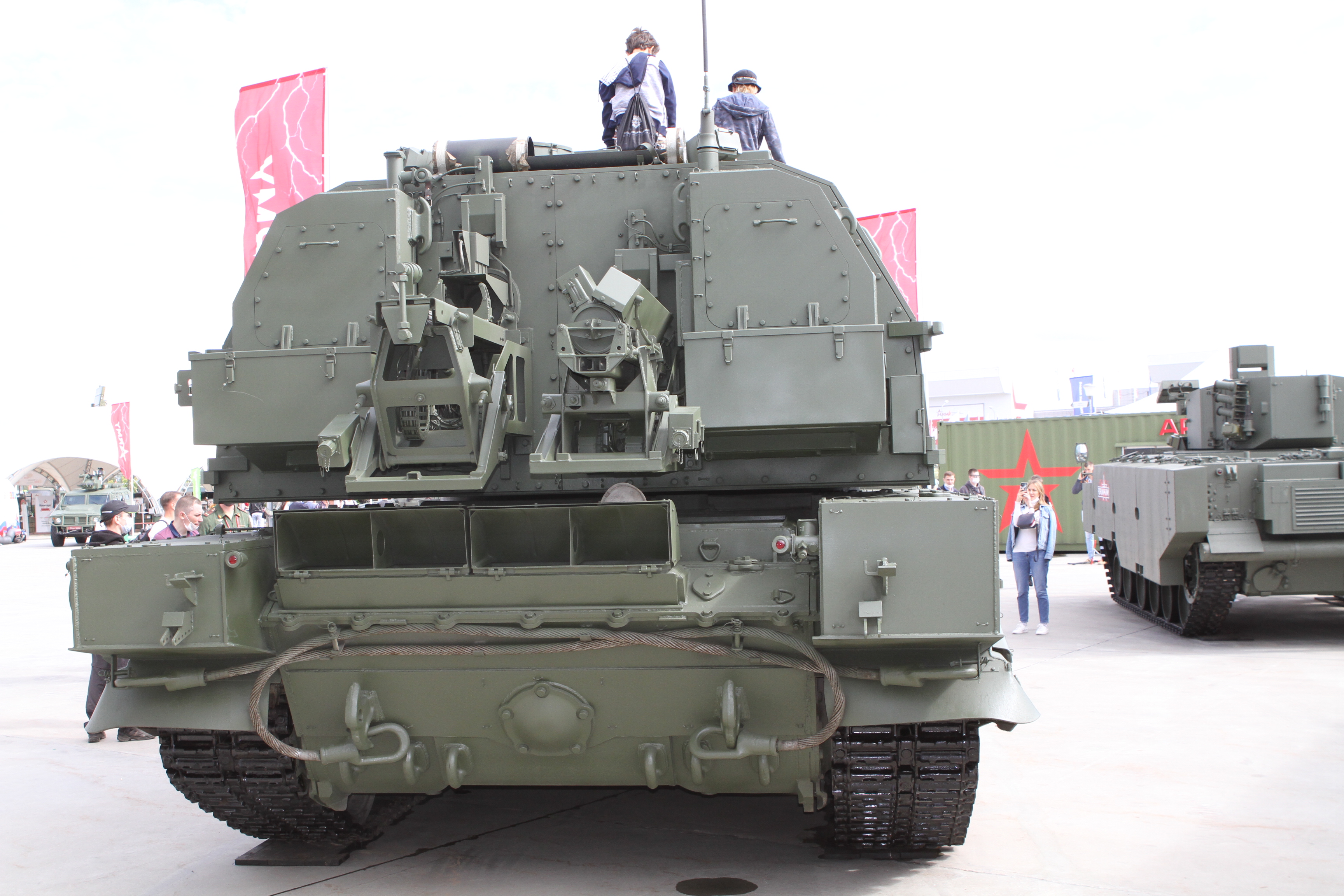
A next-generation self-propelled artillery system designed to replace the 2S19 “Msta-S” as the main 152 mm SPG at the divisional-army level. The principal innovation is an **unmanned turret** with an autoloader: the entire three-man crew is housed inside the armoured capsule in the hull, which sharply improves survivability under counter-battery fire. The 2A88 gun, with a 52-calibre barrel and reinforced ballistics, achieves a range of up to 40 km with the standard HE round and up to 70 km with a new-generation rocket-assisted guided shell. Rate of fire reaches 16 rounds per minute thanks to a two-flow feed system (projectile and charge fed separately). The chassis uses T-90A drivetrain components (originally developed for the “Armata” platform, but the production version reverted to the proven tank chassis). The vehicle has a digital fire-control system networked into the “Strelets” combat information system, a thermal observation suite, and GLONASS/GPS navigation. First shown at the 2015 Victory Day parade; the first batch was delivered to the Russian Armed Forces in 2020 and the system was formally accepted into service in 2024.

Specifications

  • Combat mass 48 t
  • Length (gun forward) 12,5 m
  • Hull length 7,12 m
  • Width 3,60 m
  • Height 3,40 m
  • Crew 3 pers. (inside hull)
  • Turret unmanned with autoloader
  • Chassis T-90A drivetrain components
  • Engine V-92S2F · 1 000 hp diesel
  • Power-to-weight 20,8 hp/t
  • Max speed (road) 60 km/h
  • Operational range 500 km
  • Main gun 152 mm 2A88 (L/52)
  • Elevation −5 … +75 °
  • Traverse 360 °
  • Range, HE shell до 40 km
  • Range, guided shell до 70 km
  • Ammunition load 70 rds
  • Rate of fire до 16 rds/min
  • Loading system two-flow autoloader shell + charge separate
  • Fire-control system digital, “Strelets” combat info network
  • AA machine gun 12.7 mm Kord remote-controlled
  • Armour small-arms protection (capsule hull)

Модификации

2С19 «Мста-С» (predecessor, since 1989) 2С35 «Коалиция-СВ» (serial, since 2020) 2С35-1 «Коалиция-СВ-КШ» (wheeled KamAZ-6560 chassis)
Family 2S3M2 lineage: 3
  1. AFV · 02 · 003 2S3M2 “Akatsiya-M2” САУ · RUS
  2. AFV · 02 · 019 2S19M2 “Msta-S” САУ · RUS
  3. AFV · 02 · 035 2S35 “Koalitsiya-SV” ← you are here САУ · RUS

Operators

RUS (Russian Ground Forces)
AFV · 02 · 041 Self-propelled Mortar · Battalion level · wheeled (4×4) Russia · RUS

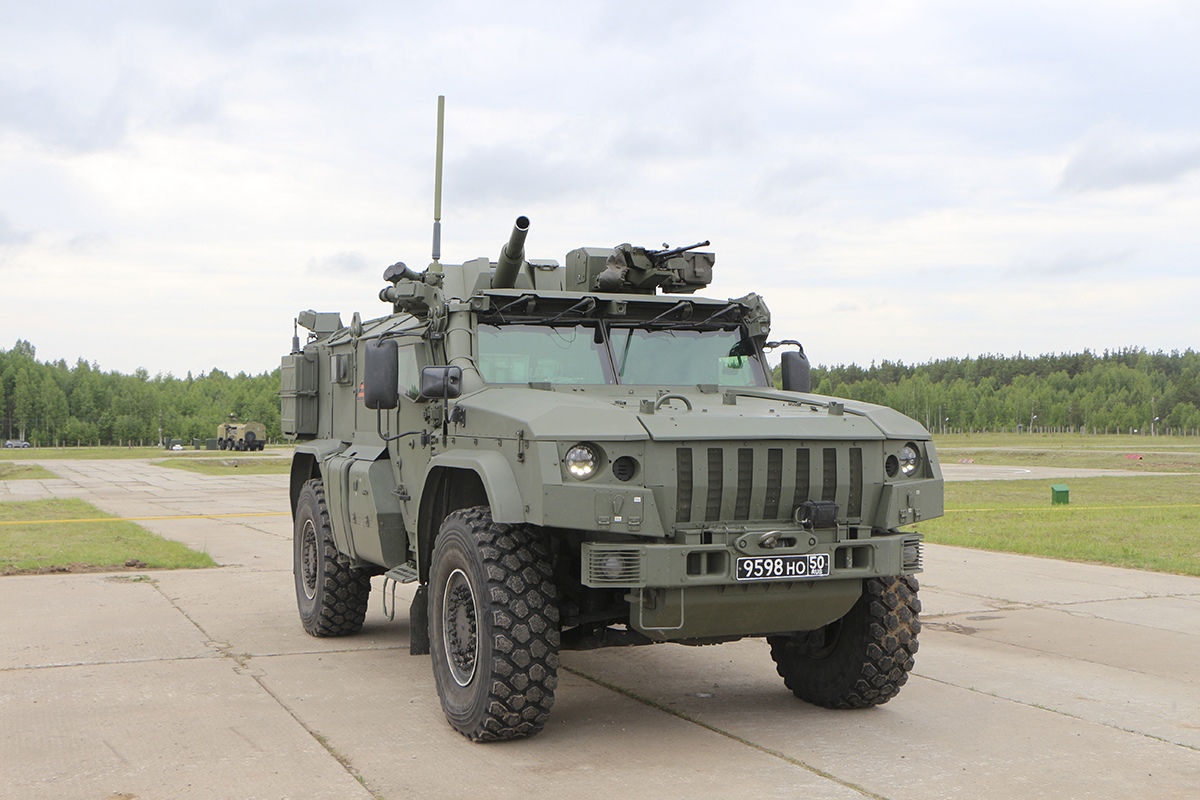
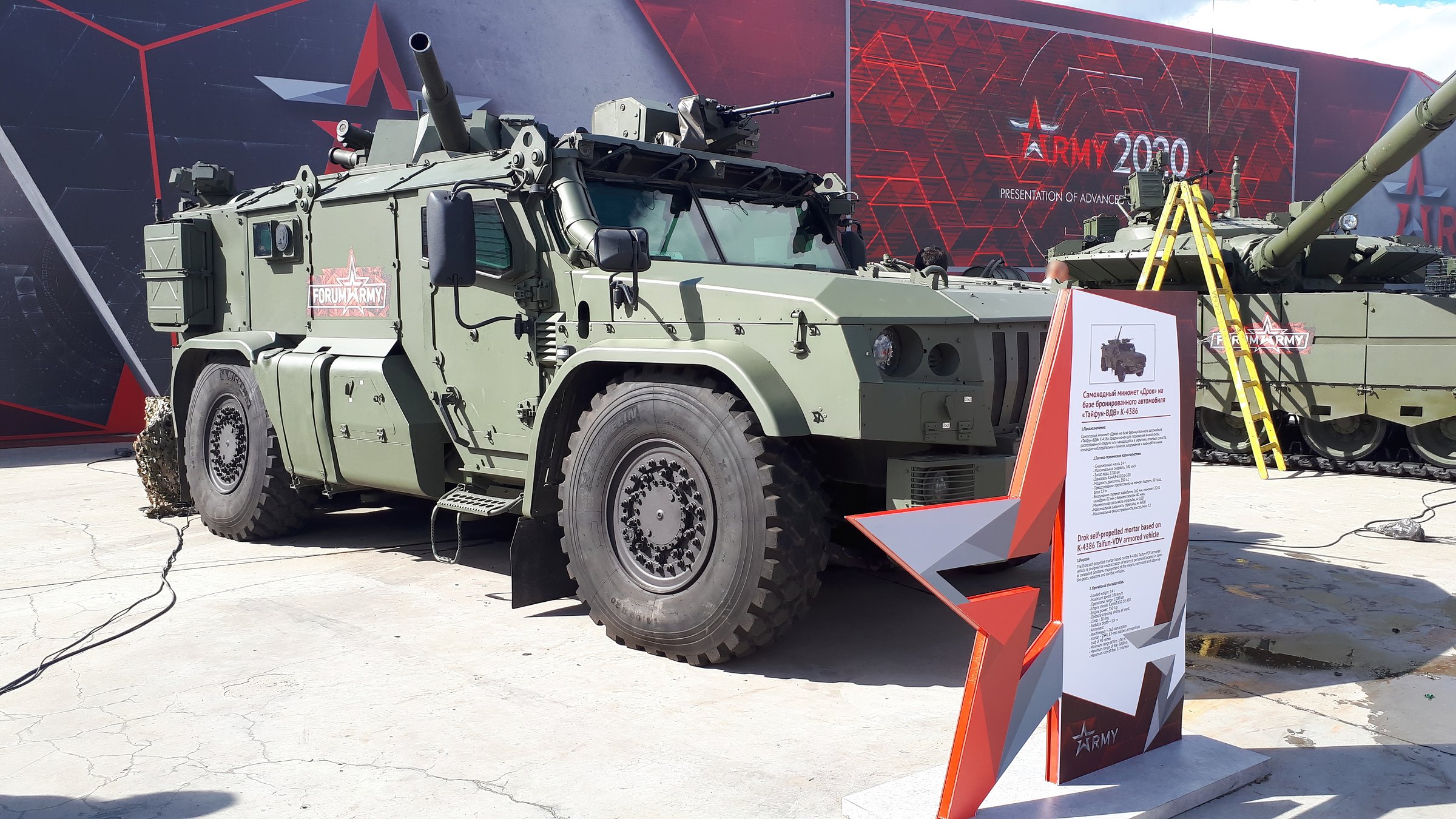
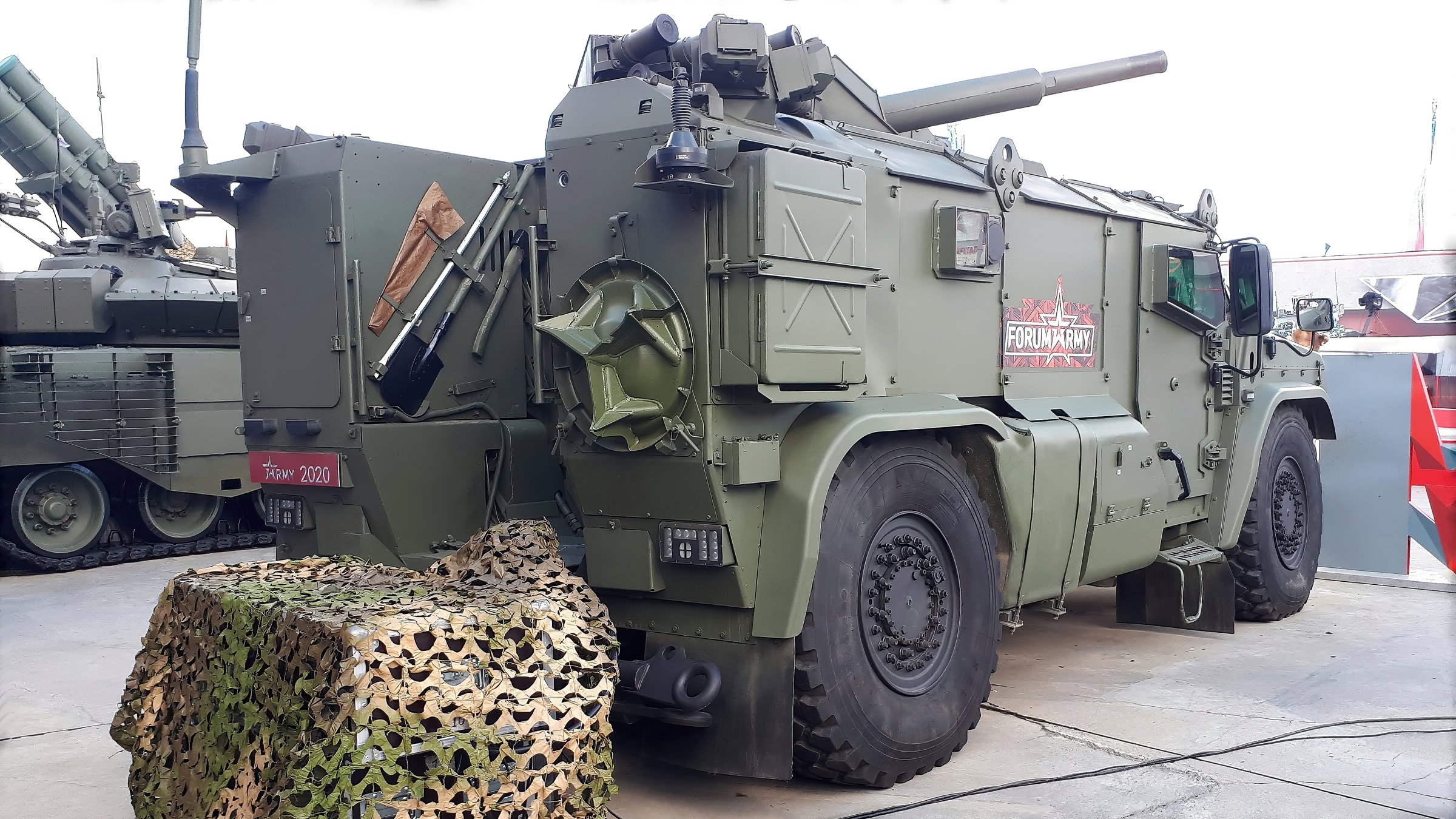
2S41“Drok”

82 mm self-propelled mortar on the “Typhoon-VDV” chassis
2S41 Drok · TsNII “Burevestnik” / UVZ
Fig. 02·041 — top view · photo silhouette
0 — 7 м
2S41 “Drok”: 82 mm 2B24 mortar on the K-4386 “Typhoon-VDV” chassis.
Status
In service · since 2023
Выпущено
small series units
Производитель
TsNII “Burevestnik” (N. Novgorod) · UVZ

Role

A Russian 82 mm self-propelled mortar on the armoured wheeled K-4386 “Typhoon-VDV” chassis (4×4), developed by TsNII “Burevestnik” together with UVZ. It carries the standard 82 mm 2B24 mortar in a remotely controlled combat module in the rear hull — the crew fires without leaving the armoured capsule. Transition from travel to firing position takes less than a minute, allowing the vehicle to leave the position quickly and reducing the risk of counter-battery fire. The ammunition load is more than 40 rounds (HE OF-50, smoke, illumination); rate of fire is over 10 rounds per minute; range — up to 6 km. Elevation angles are 45—85°, traverse ±35°. For self-defence a remotely controlled cupola with a 7.62 mm PKT machine gun is fitted. The chassis allows road speed over 100 km/h, an operational range of 1 200 km, and small-arms protection of STANAG 4569 level. Adopted by the Russian Armed Forces in 2023; the first batch was delivered to units in July 2023, with vehicles tested in the Special Military Operation zone.

Specifications

  • Combat mass 14,5 t
  • Hull length 7,30 m
  • Width 2,55 m
  • Height 3,00 m
  • Ground clearance 0,40 m (adjustable)
  • Crew 4 pers. (in armoured capsule)
  • Chassis K-4386 “Typhoon-VDV” (4×4)
  • Engine YaMZ-5347-25 · 350 hp diesel
  • Power-to-weight 24 hp/t
  • Max speed (road) 100 km/h
  • Operational range 1 200 km
  • Mortar 82 mm 2B24 (rifled, breech)
  • Elevation +45 … +85 °
  • Traverse ±35 ° (without chassis turn)
  • Firing range up to 6 km
  • Rate of fire > 10 rds/min
  • Ammunition stowage > 40 rds
  • Combat module remote-controlled
  • AA machine gun 7.62 mm PKT (remote-controlled)
  • Travel-to-firing < 1 min
  • Armour STANAG 4569 (small-arms protection)

Модификации

2S41 “Drok” (base model, since 2023)

Operators

RUS (Russian Ground Forces, VDV)
AFV · 02 · 077 Armoured Engineering Vehicle · Amphibious mine-clearing line charge, USMC USA · USA

AAVP-7A1 MICLIC

Amphibious assault vehicle with M58 mine-clearing line charge
FMC / BAE Systems
Fig. 02·077 — side view · photo silhouette
0 — 5 м
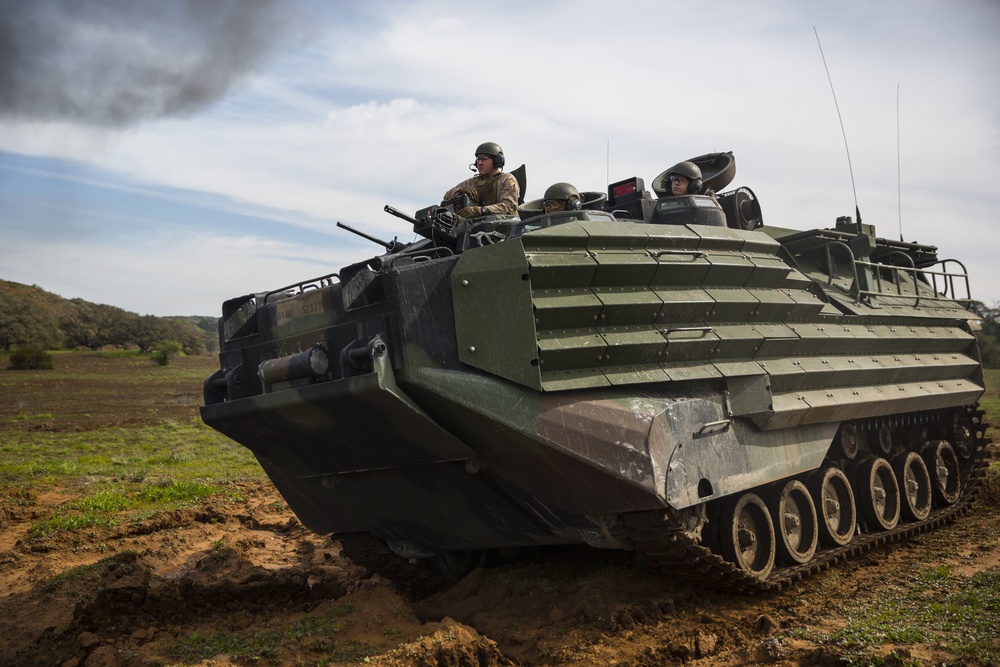
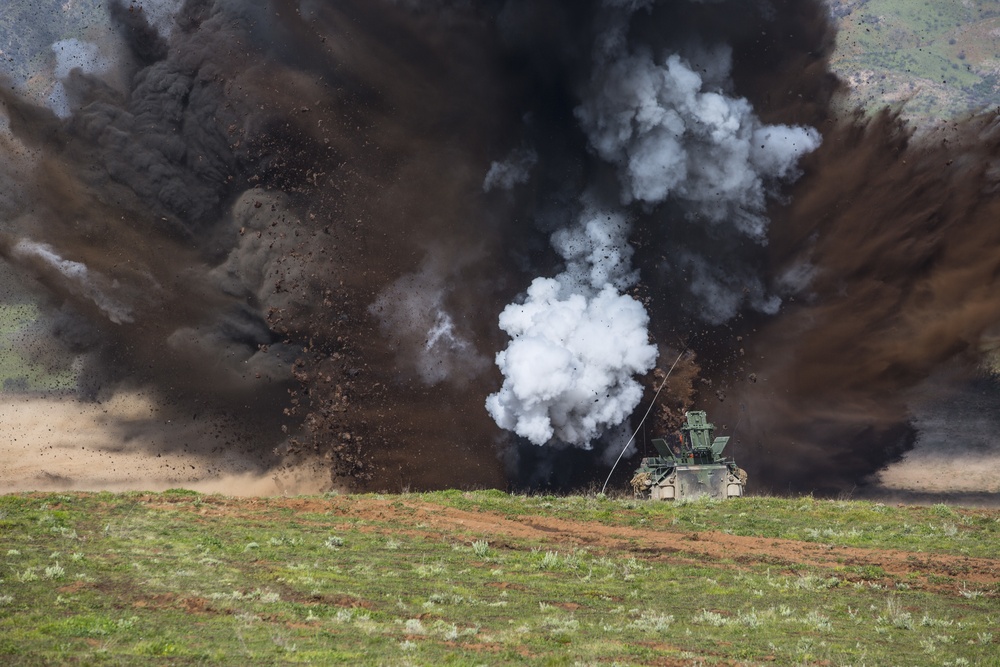
AAVP-7A1 with the MICLIC launcher in the stern; USMC amphibian.
Status
In service · since 2024
Выпущено
≈ 1 300 units
Производитель
FMC Corporation · BAE Systems Land

Role

An engineer variant of the U.S. Marine Corps amphibious armoured personnel carrier AAVP-7A1, fitted with the M58 MICLIC (Mine Clearing Line Charge) system. The complex is designed to breach minefields on the shore immediately after an amphibious landing: a rocket pulls out a 100 m line charge of C-4 whose detonation initiates mines across a corridor up to 14 m wide. The vehicle retains its amphibious capability and can launch from the well-deck of a landing ship. It is gradually being replaced in service by the ACV (Amphibious Combat Vehicle).

Specifications

  • Combat mass 22,8 t
  • Hull length 7,94 m
  • Width 3,27 m
  • Height (with launcher) 3,32 m
  • Crew 3 pers.
  • Engine Cummins VT400 · 400 hp diesel
  • Max speed (road) 72 km/h
  • Max speed (afloat) 13 km/h
  • Operational range 480 km
  • Armament 12,7 mm M2HB
  • System M58 MICLIC
  • Charge 100 m line · C-4
  • Cleared lane до 14 m
  • Launch rocket

Модификации

AAVP-7A1 (base APC) AAVP-7A1 MICLIC AAVP-7A1 RAM/RS (suspension upgrade, 525 hp)
Family AAVP-7A1 lineage: 3
  1. AFV · 02 · 079 AAVP-7A1 SU БТР · USA
  2. AFV · 02 · 077 AAVP-7A1 MICLIC ← you are here ИМР · USA
  3. AFV · 02 · 078 AAVP-7A1 EAAK БТР · USA

Operators

USA (USMC)
AFV · 02 · 078 Armoured Personnel Carrier · Amphibious APC, USMC USA · USA

AAVP-7A1 EAAK

USMC amphibious infantry carrier with appliqué armour kit
AAV-P7A1 · FMC / BAE Systems
Fig. 02·078 — top view · photo silhouette
0 — 7 м
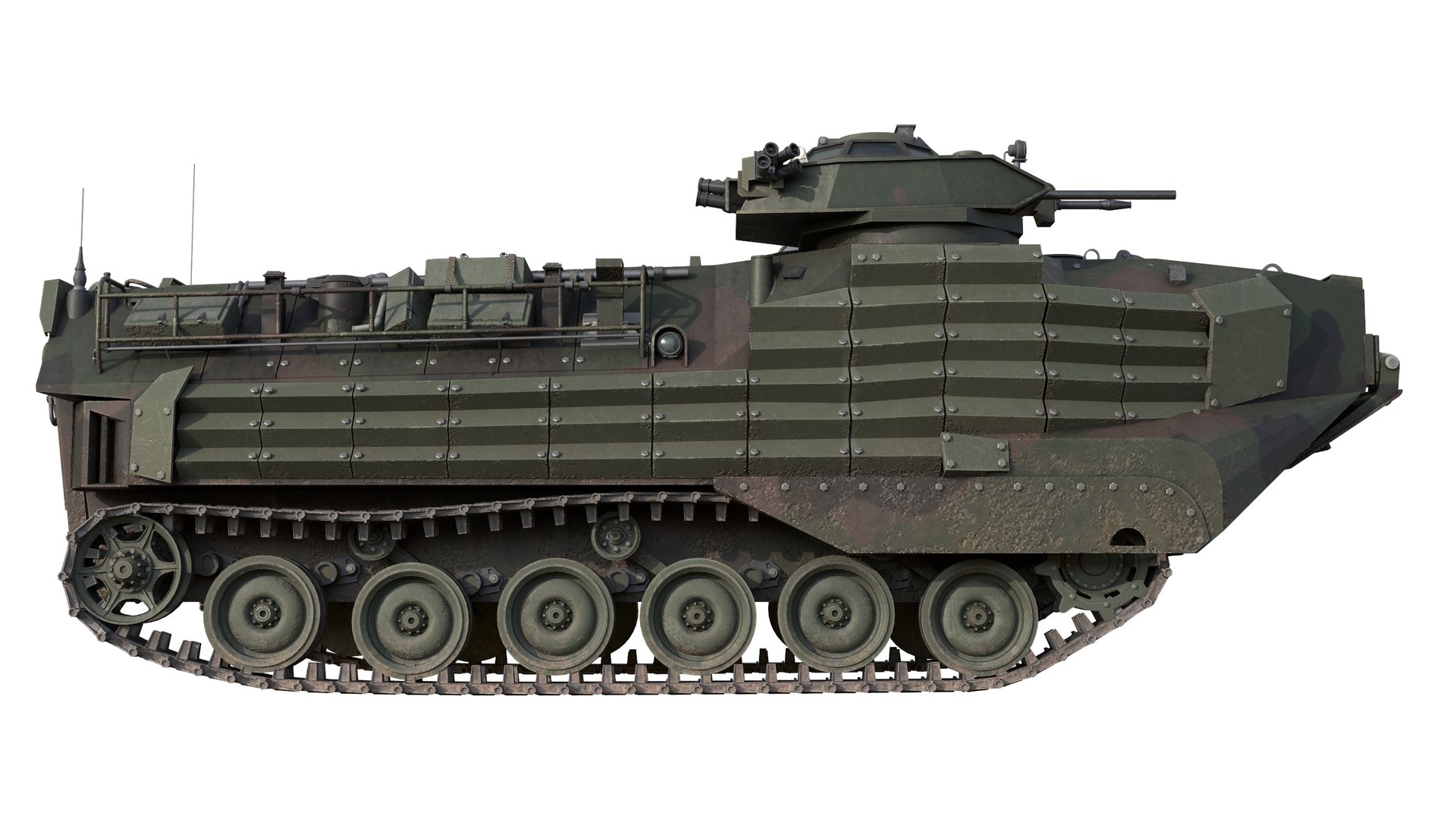
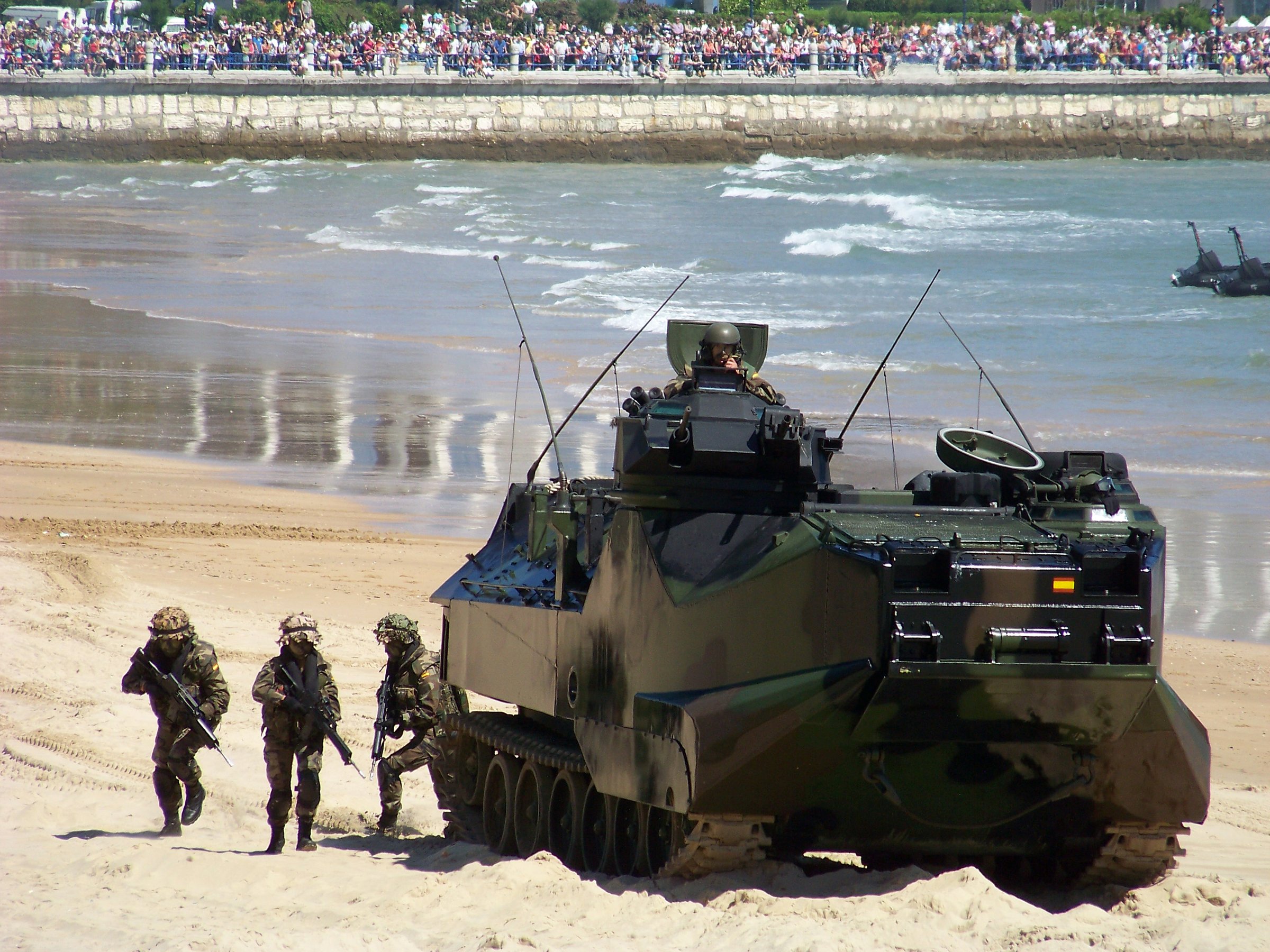
AAVP-7A1 EAAK: tracked amphibious APC with UGWS turret and appliqué armour panels.
Status
Retired · in 2025
Выпущено
≈ 1 350 units (whole family)
Производитель
FMC Corporation · United Defense · BAE Systems Land

Role

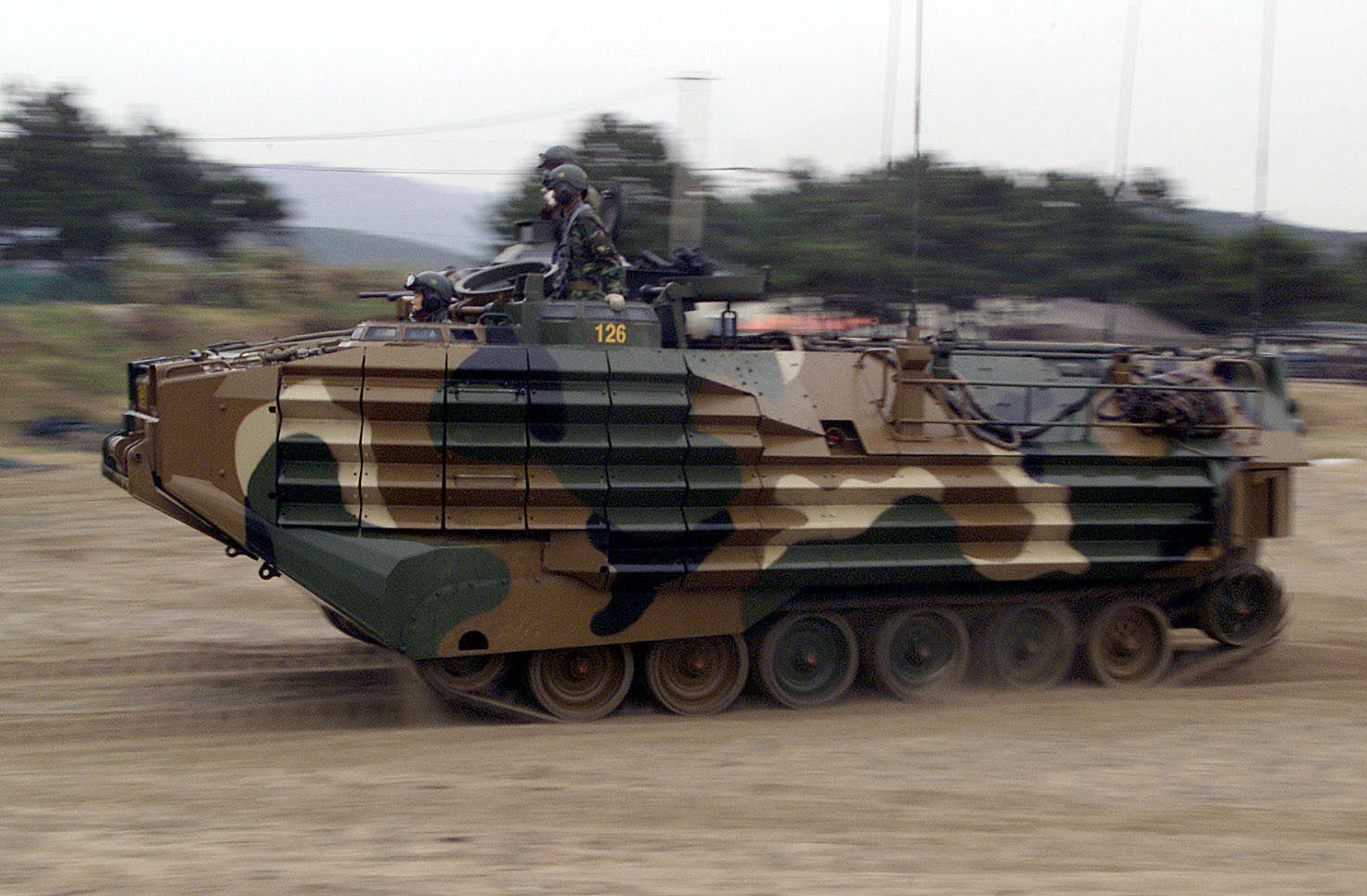
The standard infantry variant of the U.S. Marine Corps amphibious armoured personnel carrier AAV-P7A1 fitted with the Enhanced Appliqué Armor Kit (EAAK). The base LVT-7 was developed by FMC Corporation in the early 1970s as a replacement for the LVT-5 and was adopted in 1972. Between 1983 and 1986 the entire fleet passed through the Service Life Extension Programme (SLEP), emerging as the AAVP-7A1 — new Cummins VTA-525 engine (525 hp), redesigned suspension and transmission. The EAAK kit consists of removable ceramic tiles on an aluminium backing, mounted over the hull; it raises protection from anti-fragmentation level to defeating 14.5 mm rounds at 300 m. The kit was installed across the fleet from the early 1990s. From 1985 the vehicles carry the remotely controlled UGWS (Up-Gunned Weapon Station) turret with a 12.7 mm M2HB heavy machine gun and a 40 mm Mk 19 automatic grenade launcher. The vehicle is amphibious — it crosses water obstacles via two stern waterjets and launches from the well deck of an amphibious assault ship. It carries 3 crew plus 21 combat-equipped infantry. The AAVP-7A1 saw service in every USMC operation since the 1980s (Grenada, Lebanon, Panama, Desert Storm, Somalia, Iraq, Afghanistan). In 2025 the AAV-P7A1 was officially retired by the USMC and replaced by the ACV-30 (BAE Systems, 8×8). It remains in service with 14 other countries.

Specifications

  • Combat mass 25.7 t (with EAAK)
  • Hull length 7.94 m
  • Width 3.27 m
  • Height 3.31 m (over UGWS)
  • Ground clearance 0.41 m
  • Crew 3 + 21 pers. (crew + troops)
  • Chassis original (FMC) (on LVT components)
  • Engine Cummins VTA-525M · 525 hp diesel
  • Power-to-weight 20.4 hp/t
  • Max speed (road) 72 km/h
  • Max speed (afloat) 13 km/h
  • Waterborne propulsion two waterjets
  • Operational range 480 km
  • Armament UGWS station (M2HB + Mk 19)
  • Machine gun 12.7 mm M2HB (1 200 rounds)
  • Grenade launcher 40 mm Mk 19 Mod 3 (864 grenades)
  • Armour EAAK · 14.5 mm at 300 m (ceramic on aluminium)
  • Troop capacity 21 pers. fully equipped
  • Deployment rear ramp + 2 hatches
  • Ship launch via well deck (LHA / LHD / LSD)

Модификации

LVT-7 (base model, since 1972) AAVP-7A1 (SLEP upgrade, 1985) AAVP-7A1 EAAK (with appliqué armour, 1990s) AAVP-7A1 MICLIC (engineer, mine clearing) AAVC-7A1 (command vehicle) AAVR-7A1 (armoured recovery vehicle) ACV-30 (successor, 8×8 BAE, 2024+)
Family AAVP-7A1 lineage: 3
  1. AFV · 02 · 079 AAVP-7A1 SU БТР · USA
  2. AFV · 02 · 077 AAVP-7A1 MICLIC ИМР · USA
  3. AFV · 02 · 078 AAVP-7A1 EAAK ← you are here БТР · USA

Operators

USA (USMC, until 2025) ESP (Tercio de Armada) KOR (ROKMC) ITA (Lagunari · COMSUBIN) JPN (JGSDF · ARDB) TWN (ROCMC) BRA (Marine Corps) THA IDN +5 (NATO and SE Asia)
AFV · 02 · 079 Armoured Personnel Carrier · Amphibious APC, USMC · SU programme USA · USA

AAVP-7A1 SU

Amphibious infantry carrier with Survivability Upgrade package
AAV-SU · SAIC / BAE Systems
Fig. 02·079 — top view · shared AAVP-7A1 silhouette
0 — 7 м
AAVP-7A1 SU: same outer contour as EAAK; V-hull and ceramic armour are inside.
Status
Programme cancelled · 2018
Выпущено
21 prototypes (LRIP)
Производитель
SAIC · BAE Systems Land

Role

The Survivability Upgrade (SU) programme was the USMC effort to extend the service life of the AAV-7A1 to 2035 as a transitional platform between the EAAK fleet and the all-new ACV. In March 2015 SAIC was awarded a contract to develop the SU kit; in August 2017 a Low Rate Initial Production for 21 vehicles followed. The SU package replaced the angled EAAK plates with 49 buoyant ceramic panels with a bonded spall liner, added an aluminium V-hull belly plate at MRAP-equivalent protection against mines and IEDs, armoured external fuel tanks, blast-mitigating seats for the crew and the embarked Marines, a new Cummins QSC 8.3 engine (675 hp versus the original 525), a redesigned suspension and an increased reserve buoyancy. The programme initially intended to upgrade 392 vehicles. In September 2018 the USMC formally cancelled the programme, citing budget priorities and the decision to focus on the ACV-30 (8×8 BAE Systems) successor. The 21 prototypes were not transferred to operational units. The outer contour and silhouette are practically identical to the AAVP-7A1 EAAK (the differences are inside the hull and in the underbelly projection).

Specifications

  • Combat mass ≈ 28.5 t (with SU kit)
  • Hull length 7.94 m
  • Width 3.27 m
  • Height 3.31 m (over UGWS)
  • Crew 3 + 21 pers. (with blast seats)
  • Chassis original (FMC) (SU V-hull reinforcement)
  • Engine Cummins QSC 8.3 · 675 hp diesel
  • Power-to-weight 23.7 hp/t
  • Suspension redesigned (SU programme)
  • Max speed (road) ≈ 72 km/h
  • Max speed (afloat) ≈ 13 km/h
  • Reserve buoyancy increased (new buoyant panels)
  • Side armour 49 ceramic panels (spall liner)
  • Underbelly armour aluminium V-plate (MRAP level)
  • Fuel tanks armoured external
  • Seats blast-mitigating (crew and troops)
  • Armament UGWS station (M2HB + Mk 19)
  • Troop capacity 21 pers.
  • Original plan 392 vehicles (cancelled)
  • LRIP batch 21 prototypes

Модификации

LVT-7 (base model, since 1972) AAVP-7A1 (SLEP upgrade, 1985) AAVP-7A1 EAAK (with appliqué armour, 1990s) AAVP-7A1 SU (Survivability Upgrade, 2015—2018, cancelled) AAVP-7A1 MICLIC (engineer, mine clearing) ACV-30 (successor, 8×8 BAE, 2024+)
Family AAVP-7A1 lineage: 3
  1. AFV · 02 · 079 AAVP-7A1 SU ← you are here БТР · USA
  2. AFV · 02 · 077 AAVP-7A1 MICLIC ИМР · USA
  3. AFV · 02 · 078 AAVP-7A1 EAAK БТР · USA

Operators

USA (USMC, prototypes — programme cancelled 2018)