2S4“Tyulpan”
240 mm heavy self-propelled mortarRole
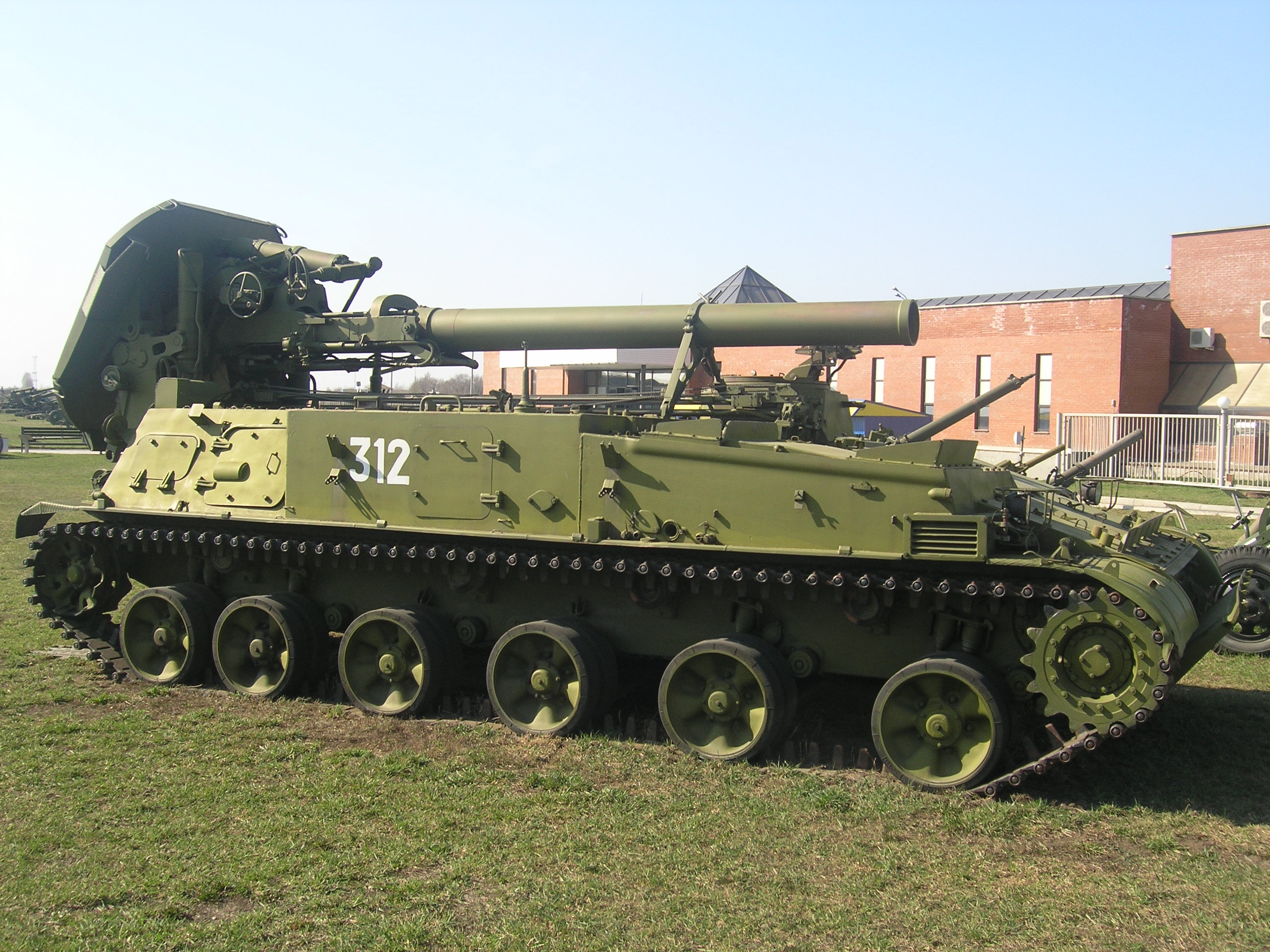
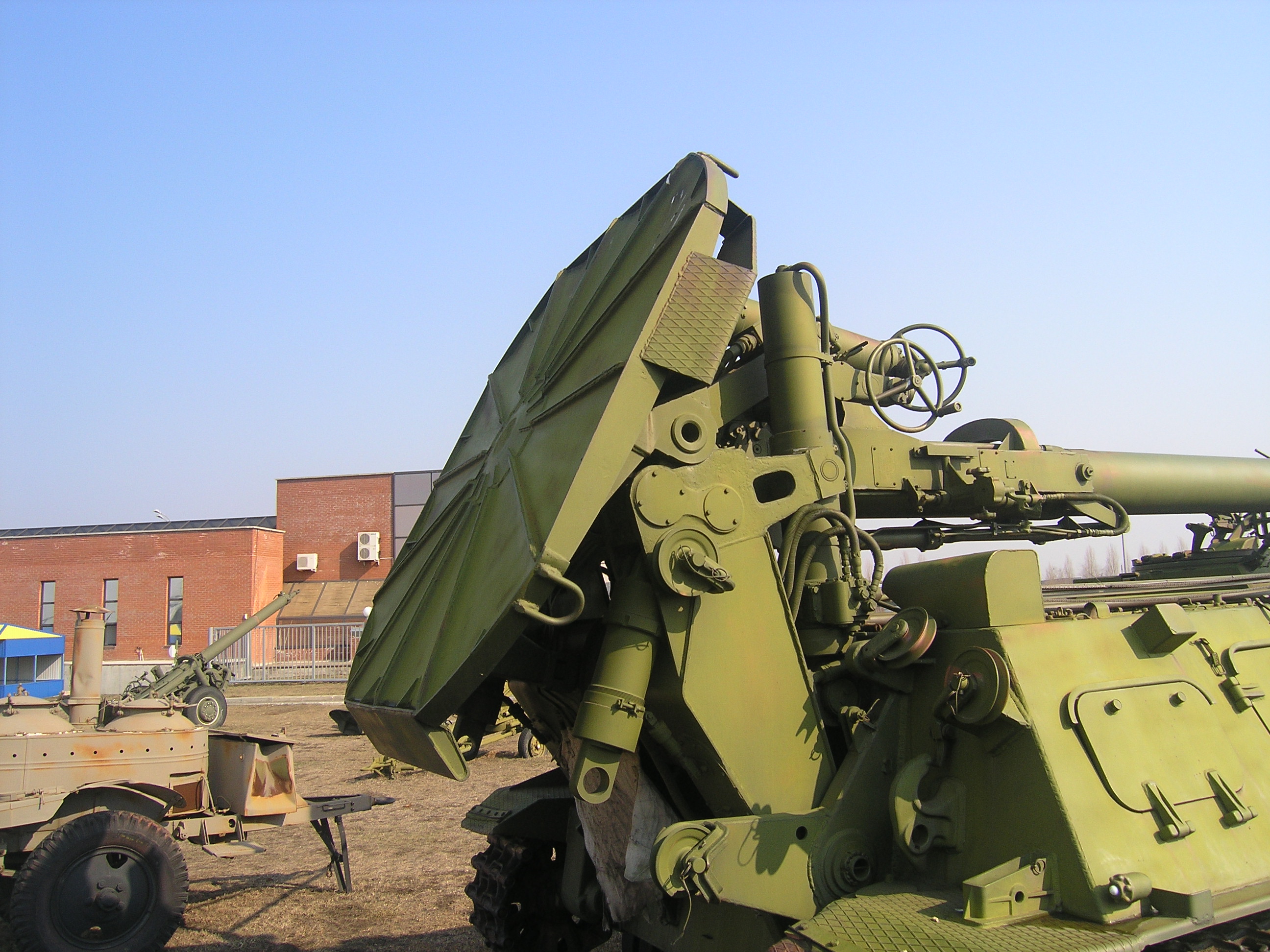
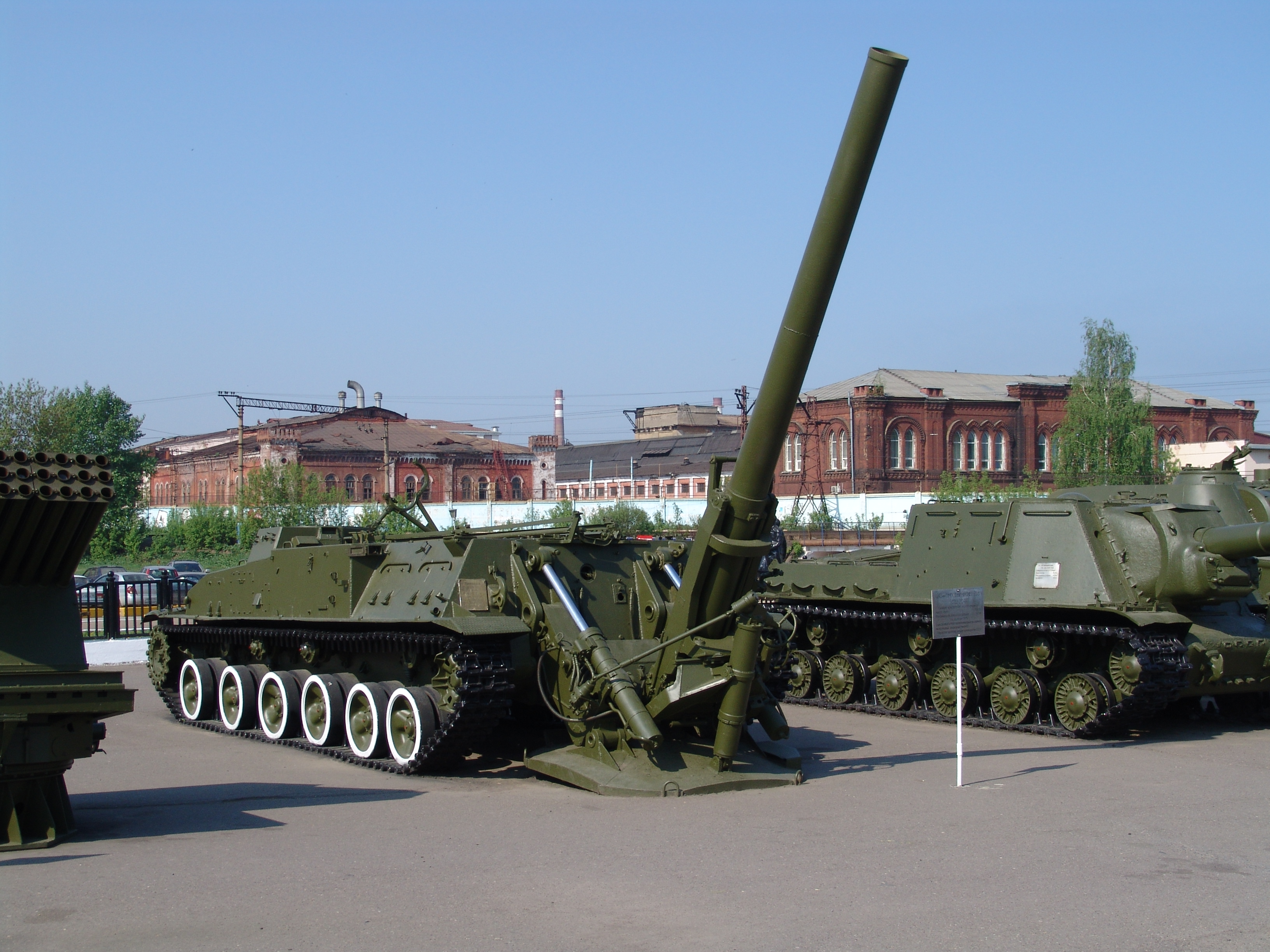
The only serially produced self-propelled mortar of 240 mm calibre in the world, developed at Uraltransmash in 1969 to replace the towed M-240 in the High Command Reserve artillery. Adopted in 1971. It uses the rifled, breech-loaded 2B8 mortar with hydraulic loading, mounted on the “Object 305” chassis (unified with the 2K11 “Krug” air-defence system). In travel mode the barrel is stowed on the roof; in firing mode it is raised over the rear and rests on a hydraulic spade dug into the ground. Designed to destroy hardened fortifications, bridges, command posts, ammunition depots, and concentrations of armour at ranges up to 9.5 km with the regular F-864 round (130 kg) and up to 19 km with the 3F2 “Gagara” rocket-assisted round. It can fire the laser-guided “Smelchak” round and the 3B4 “Smerch” tactical nuclear round of up to 2 kt yield. Used in Afghanistan (1979–1989), Chechnya (1999–2000), Syria (since 2017) and in the Russian-Ukrainian conflict. After thirty years in reserve some vehicles were brought back into service from 2017. Production ended in 1988 (~588 units).
Specifications
- Combat mass 27,5 t
- Length (travel) 8,50 m
- Hull length 6,45 m
- Width 3,25 m
- Height (travel) 3,20 m
- Height (firing position) ≈ 5,05 m (with barrel raised)
- Ground clearance 0,45 m
- Crew 4 + 5 pers. (crew)
- Chassis “Object 305” (unified with 2K11 “Krug”)
- Engine V-59 · 520 hp diesel
- Power-to-weight 18,9 hp/t
- Max speed (road) 62 km/h
- Operational range 500 km
- Mortar 240 mm 2B8 (rifled, breech-loaded)
- Elevation +50 … +80 °
- Traverse ±10 ° (without chassis turn)
- Range, HE mortar (F-864) до 9,5 km
- Range, rocket-assisted (3F2) до 19 km
- Range, “Smelchak” guided shell до 9,5 km (laser-guided)
- Nuclear round 3B4 “Smerch” (up to 2 kt)
- Ammunition stowage 40 rds (onboard 20+20)
- Rate of fire ≈ 1 rds/min
- Sight PG-1M · MPM-44M (panoramic)
- Ammunition resupply vehicle 2F106 (on MT-LB chassis)
- Armour до 20 mm (small-arms protection)
Модификации
Operators
Photographs