№ 02

Armoured Fighting Vehicles

2 entries

Showing entries of subtype Бронетранспортёр (Armoured Personnel Carrier) · БТР. show all

AFV · 02 · 078 Armoured Personnel Carrier · Amphibious APC, USMC USA · USA

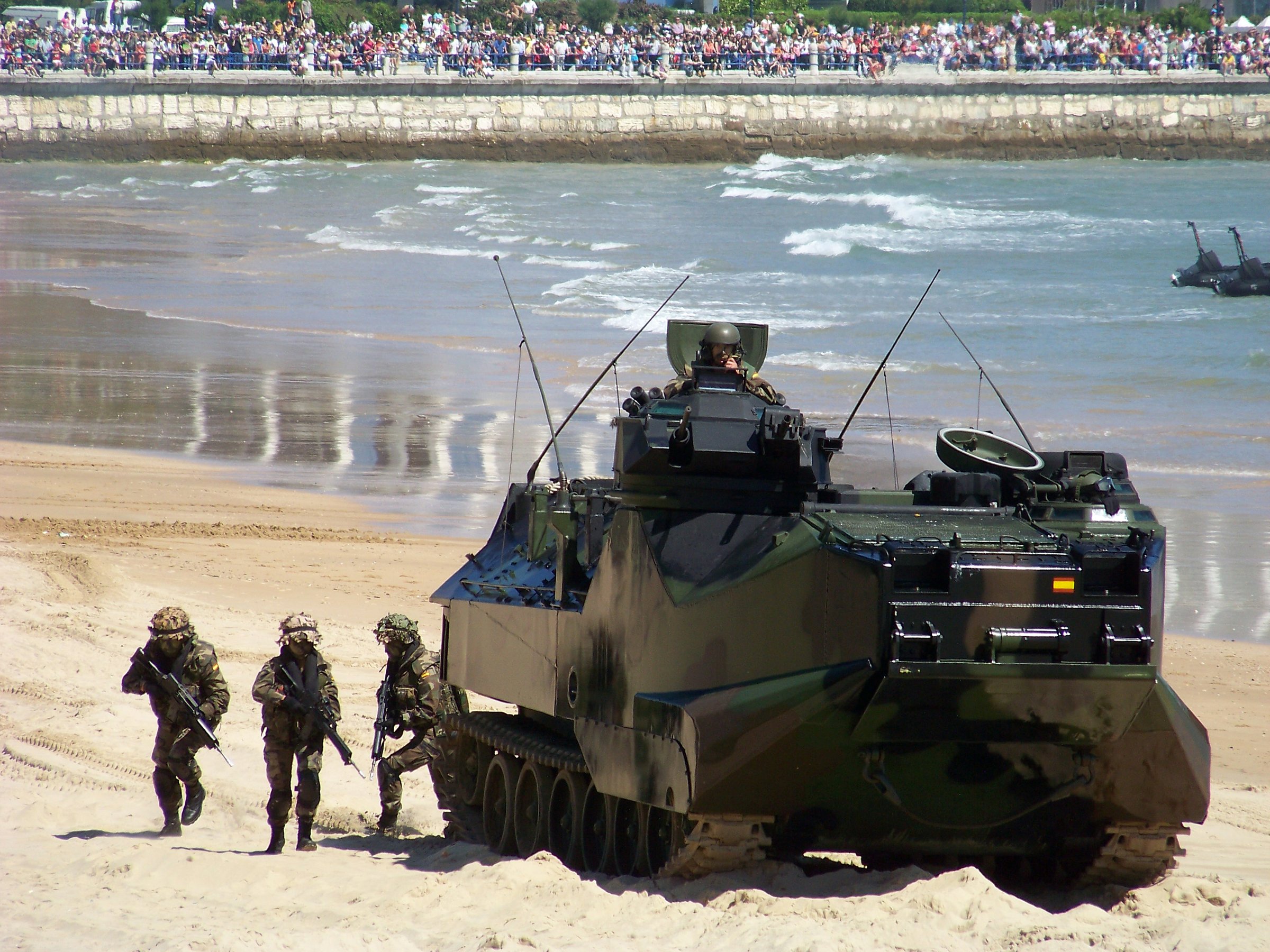
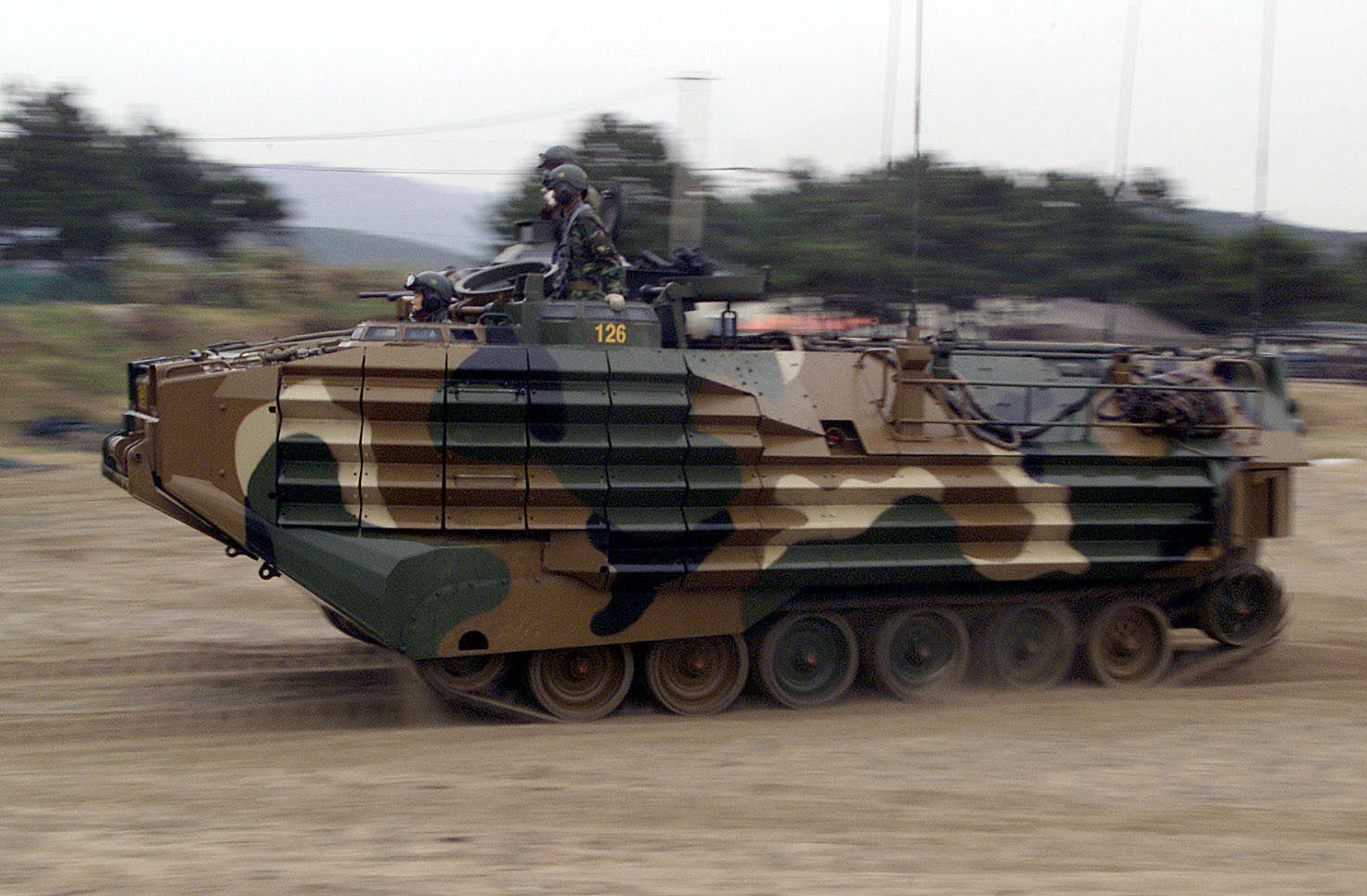
AAVP-7A1 EAAK

USMC amphibious infantry carrier with appliqué armour kit
AAV-P7A1 · FMC / BAE Systems
Fig. 02·078 — top view · photo silhouette
0 — 7 м
AAVP-7A1 EAAK: tracked amphibious APC with UGWS turret and appliqué armour panels.
Status
Retired · in 2025
Выпущено
≈ 1 350 units (whole family)
Производитель
FMC Corporation · United Defense · BAE Systems Land

Role

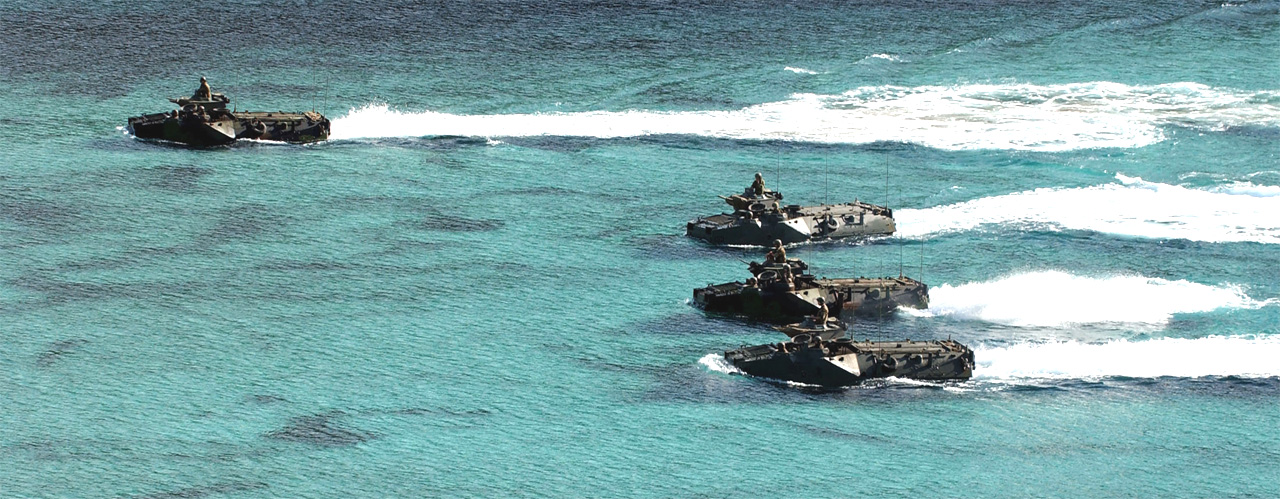
The standard infantry variant of the U.S. Marine Corps amphibious armoured personnel carrier AAV-P7A1 fitted with the Enhanced Appliqué Armor Kit (EAAK). The base LVT-7 was developed by FMC Corporation in the early 1970s as a replacement for the LVT-5 and was adopted in 1972. Between 1983 and 1986 the entire fleet passed through the Service Life Extension Programme (SLEP), emerging as the AAVP-7A1 — new Cummins VTA-525 engine (525 hp), redesigned suspension and transmission. The EAAK kit consists of removable ceramic tiles on an aluminium backing, mounted over the hull; it raises protection from anti-fragmentation level to defeating 14.5 mm rounds at 300 m. The kit was installed across the fleet from the early 1990s. From 1985 the vehicles carry the remotely controlled UGWS (Up-Gunned Weapon Station) turret with a 12.7 mm M2HB heavy machine gun and a 40 mm Mk 19 automatic grenade launcher. The vehicle is amphibious — it crosses water obstacles via two stern waterjets and launches from the well deck of an amphibious assault ship. It carries 3 crew plus 21 combat-equipped infantry. The AAVP-7A1 saw service in every USMC operation since the 1980s (Grenada, Lebanon, Panama, Desert Storm, Somalia, Iraq, Afghanistan). In 2025 the AAV-P7A1 was officially retired by the USMC and replaced by the ACV-30 (BAE Systems, 8×8). It remains in service with 14 other countries.

Specifications

  • Combat mass 25.7 t (with EAAK)
  • Hull length 7.94 m
  • Width 3.27 m
  • Height 3.31 m (over UGWS)
  • Ground clearance 0.41 m
  • Crew 3 + 21 pers. (crew + troops)
  • Chassis original (FMC) (on LVT components)
  • Engine Cummins VTA-525M · 525 hp diesel
  • Power-to-weight 20.4 hp/t
  • Max speed (road) 72 km/h
  • Max speed (afloat) 13 km/h
  • Waterborne propulsion two waterjets
  • Operational range 480 km
  • Armament UGWS station (M2HB + Mk 19)
  • Machine gun 12.7 mm M2HB (1 200 rounds)
  • Grenade launcher 40 mm Mk 19 Mod 3 (864 grenades)
  • Armour EAAK · 14.5 mm at 300 m (ceramic on aluminium)
  • Troop capacity 21 pers. fully equipped
  • Deployment rear ramp + 2 hatches
  • Ship launch via well deck (LHA / LHD / LSD)

Модификации

LVT-7 (base model, since 1972) AAVP-7A1 (SLEP upgrade, 1985) AAVP-7A1 EAAK (with appliqué armour, 1990s) AAVP-7A1 MICLIC (engineer, mine clearing) AAVC-7A1 (command vehicle) AAVR-7A1 (armoured recovery vehicle) ACV-30 (successor, 8×8 BAE, 2024+)
Family AAVP-7A1 lineage: 3
  1. AFV · 02 · 079 AAVP-7A1 SU БТР · USA
  2. AFV · 02 · 077 AAVP-7A1 MICLIC ИМР · USA
  3. AFV · 02 · 078 AAVP-7A1 EAAK ← you are here БТР · USA

Operators

USA (USMC, until 2025) ESP (Tercio de Armada) KOR (ROKMC) ITA (Lagunari · COMSUBIN) JPN (JGSDF · ARDB) TWN (ROCMC) BRA (Marine Corps) THA IDN +5 (NATO and SE Asia)
AFV · 02 · 079 Armoured Personnel Carrier · Amphibious APC, USMC · SU programme USA · USA

AAVP-7A1 SU

Amphibious infantry carrier with Survivability Upgrade package
AAV-SU · SAIC / BAE Systems
Fig. 02·079 — top view · shared AAVP-7A1 silhouette
0 — 7 м
AAVP-7A1 SU: same outer contour as EAAK; V-hull and ceramic armour are inside.
Status
Programme cancelled · 2018
Выпущено
21 prototypes (LRIP)
Производитель
SAIC · BAE Systems Land

Role

The Survivability Upgrade (SU) programme was the USMC effort to extend the service life of the AAV-7A1 to 2035 as a transitional platform between the EAAK fleet and the all-new ACV. In March 2015 SAIC was awarded a contract to develop the SU kit; in August 2017 a Low Rate Initial Production for 21 vehicles followed. The SU package replaced the angled EAAK plates with 49 buoyant ceramic panels with a bonded spall liner, added an aluminium V-hull belly plate at MRAP-equivalent protection against mines and IEDs, armoured external fuel tanks, blast-mitigating seats for the crew and the embarked Marines, a new Cummins QSC 8.3 engine (675 hp versus the original 525), a redesigned suspension and an increased reserve buoyancy. The programme initially intended to upgrade 392 vehicles. In September 2018 the USMC formally cancelled the programme, citing budget priorities and the decision to focus on the ACV-30 (8×8 BAE Systems) successor. The 21 prototypes were not transferred to operational units. The outer contour and silhouette are practically identical to the AAVP-7A1 EAAK (the differences are inside the hull and in the underbelly projection).

Specifications

  • Combat mass ≈ 28.5 t (with SU kit)
  • Hull length 7.94 m
  • Width 3.27 m
  • Height 3.31 m (over UGWS)
  • Crew 3 + 21 pers. (with blast seats)
  • Chassis original (FMC) (SU V-hull reinforcement)
  • Engine Cummins QSC 8.3 · 675 hp diesel
  • Power-to-weight 23.7 hp/t
  • Suspension redesigned (SU programme)
  • Max speed (road) ≈ 72 km/h
  • Max speed (afloat) ≈ 13 km/h
  • Reserve buoyancy increased (new buoyant panels)
  • Side armour 49 ceramic panels (spall liner)
  • Underbelly armour aluminium V-plate (MRAP level)
  • Fuel tanks armoured external
  • Seats blast-mitigating (crew and troops)
  • Armament UGWS station (M2HB + Mk 19)
  • Troop capacity 21 pers.
  • Original plan 392 vehicles (cancelled)
  • LRIP batch 21 prototypes

Модификации

LVT-7 (base model, since 1972) AAVP-7A1 (SLEP upgrade, 1985) AAVP-7A1 EAAK (with appliqué armour, 1990s) AAVP-7A1 SU (Survivability Upgrade, 2015—2018, cancelled) AAVP-7A1 MICLIC (engineer, mine clearing) ACV-30 (successor, 8×8 BAE, 2024+)
Family AAVP-7A1 lineage: 3
  1. AFV · 02 · 079 AAVP-7A1 SU ← you are here БТР · USA
  2. AFV · 02 · 077 AAVP-7A1 MICLIC ИМР · USA
  3. AFV · 02 · 078 AAVP-7A1 EAAK БТР · USA

Operators

USA (USMC, prototypes — programme cancelled 2018)